The short answer: The agencies describe mold allergy symptoms much like hay fever: sneezing, a runny or stuffy nose, red, itchy or watery eyes, coughing, wheezing and skin rash. If your question is about the house rather than your health, a mold inspection by a Florida licensed mold assessor is the service that looks for the growth and the water behind it.
We are a referral service, not a doctor or a mold company. Nothing on this page is our own medical opinion, and it cannot tell you whether mold is the cause of what you feel.
What MedlinePlus Calls a Mold Allergy
MedlinePlus, the National Library of Medicine's health site, puts it simply: when your asthma or allergies become worse due to mold, you are said to have a mold allergy. It calls mold a common trigger for people with sensitive airways.
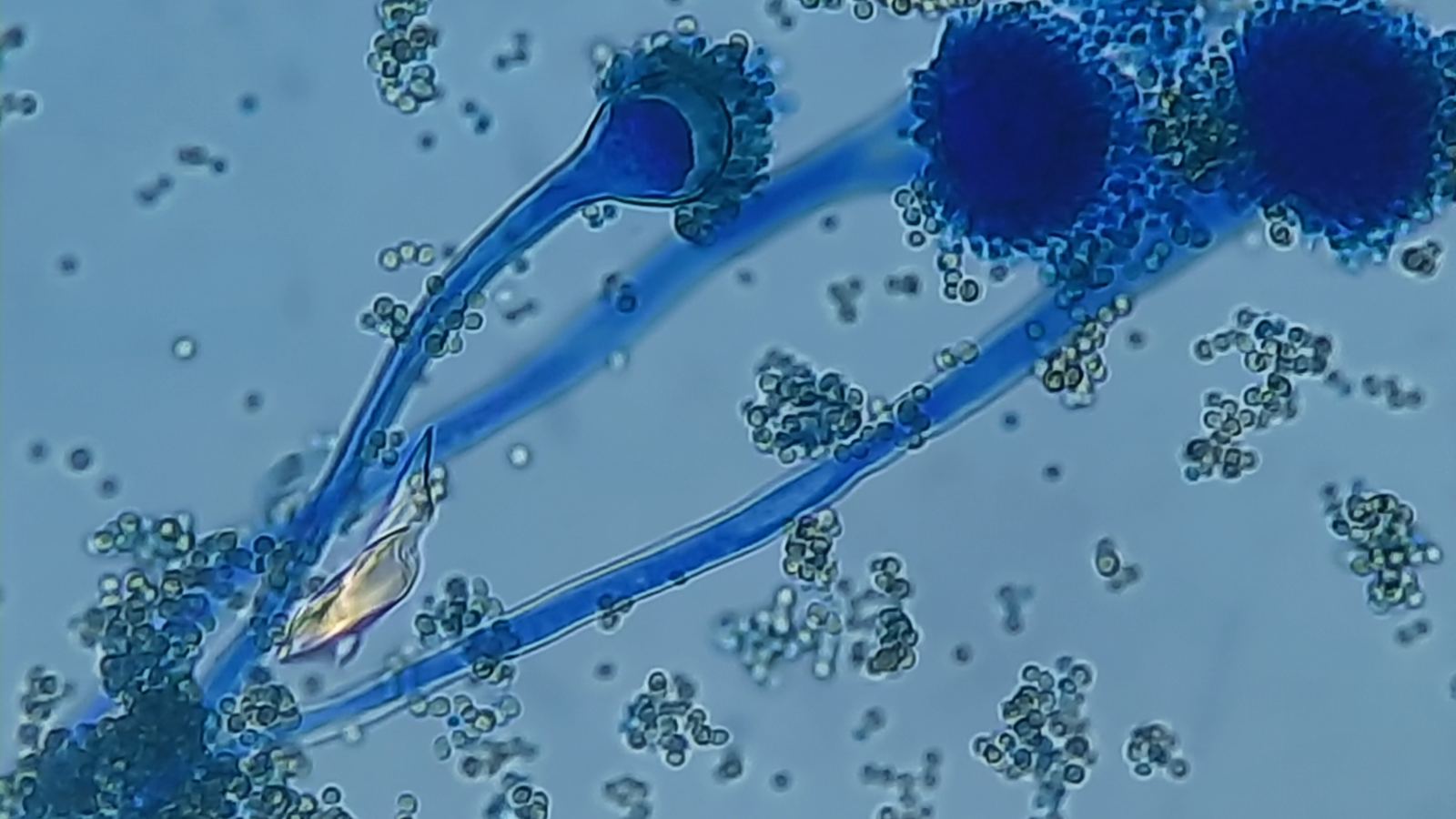
The same page explains the route in. Molds send out tiny spores that cannot be seen with the naked eye, and those spores float through the air indoors and out.
The Nose and Eye Symptoms MedlinePlus Lists
MedlinePlus lists the symptoms under allergic rhinitis, the group of nose symptoms that follow breathing in something you are allergic to. It names mold among the allergens, although that article mainly discusses pollen.
Soon After Contact
These are the symptoms MedlinePlus says may occur shortly after contact with the substance you are allergic to:
- Itchy nose, mouth, eyes, throat, skin, or any area
- Problems with smell
- Runny nose
- Sneezing
- Watery eyes
Symptoms That Come Later
MedlinePlus lists a second group that may develop later:
- Stuffy nose (nasal congestion)
- Coughing
- Clogged ears and decreased sense of smell
- Sore throat
- Dark circles or puffiness under the eyes
- Fatigue and irritability
- Headache
Mold and Asthma in the MedlinePlus Overview
The MedlinePlus Molds overview says inhaling or touching mold or mold spores may cause allergic reactions or asthma attacks in sensitive people. It adds that mold exposure may irritate the eyes, skin, nose, throat and lungs.
The Symptoms the CDC Lists
The CDC starts from the point that damp and moldy places may cause a variety of health effects, or none at all. For some people, it says, mold can cause a stuffy nose, sore throat, coughing or wheezing, burning eyes, or skin rash.
For people who are sensitive to molds, the CDC lists a stuffy nose, wheezing, and red or itchy eyes or skin. It says people with asthma or who are allergic to mold may have severe reactions.
Stronger Reactions the CDC Describes
Fever and shortness of breath are the severe reactions the CDC names, and it places them among workers exposed to large amounts of mold at work, such as farmers around moldy hay.
What the Institute of Medicine Found
The CDC cites a 2004 Institute of Medicine finding. It found sufficient evidence to link indoor mold exposure with upper respiratory tract symptoms, cough and wheeze in otherwise healthy people, and with asthma symptoms in people with asthma.
Children and Asthma
The CDC also notes recent studies that suggest a possible link between early mold exposure and asthma developing in some children, particularly children who may be genetically susceptible.
How the EPA and Florida Health Describe the Symptoms
The EPA says molds produce allergens and irritants. It describes the allergic responses as hay fever type symptoms, such as sneezing, runny nose, red eyes and skin rash.
The EPA calls allergic reactions to mold common. It says they can be immediate or delayed.
The Florida Department of Health List
The Florida Department of Health lists what may occur for people who are sensitive to molds:
- Nasal and sinus irritation or congestion
- Dry hacking cough
- Wheezing
- Skin rashes or burning
- Watery or reddened eyes
The department says people with severe allergies to molds may have more serious reactions, such as hay fever like symptoms or shortness of breath. It also says molds can trigger asthma attacks in people with asthma.
Complaints the Department Says Are Not Understood
Headaches, memory problems, mood swings, nosebleeds and body aches are sometimes reported in mold complaints, the department says. It adds that the causes of these physical symptoms are not yet understood.
Allergy, Irritation and Other Effects
The Florida Department of Health names four kinds of health problems from mold exposure: allergic illness, irritant effects, infection and toxic effects. It calls allergic disease the most likely health problem related to mold exposure.
Irritation is not limited to people with an allergy. The EPA says the eyes, skin, nose, throat and lungs can all be irritated by mold exposure, in people with a mold allergy and in people without one.
What the EPA Says Is Rarely Reported
The EPA says symptoms other than the allergic and irritant types are not commonly reported as a result of inhaling mold. It adds that research on mold and health effects is ongoing, and that its summary does not describe every possible effect.
When to See a Doctor, in the Agencies' Words
The Florida Department of Health says people with special health concerns should consult a medical doctor if they feel indoor mold is affecting their health. It names babies and children, elderly people, people with chronic respiratory conditions, allergies or asthma, and people with weakened immune systems as groups that may be affected sooner and more severely.
Who is most at risk has its own guide, mold health risks.
MedlinePlus on Contacting a Provider
The MedlinePlus allergic rhinitis article says to contact your provider for an appointment in three cases:
- You have severe hay fever symptoms
- Treatment that once worked for you no longer works
- Your symptoms do not respond to treatment
More broadly, MedlinePlus says its information should not be used as a substitute for professional medical care, and to contact a health care provider if you have questions about your health.
Where the EPA Sends Readers
For more detailed information, the EPA says to consult a health professional, your state or local health department, or the CDC mold website.
Before Any Cleanup
Before a cleanup, the Florida Department of Health says the person doing it should not have symptoms or allergies. If you have concerns about your health before starting, it says to consult your doctor.
Symptoms as a Clue About the House
The Florida Department of Health treats symptoms as one clue among several. It says that if mold allergic people have some of the symptoms it lists when in your home, you may have a mold problem.
Its other clues are physical: visible growth, signs of water damage such as leaks, stains or condensation, and an earthy or musty odor. The department says indoor mold growth can usually be seen or smelled.
Exposure Rises When Mold Is Disturbed
The department says exposure increases when indoor moldy materials become dried, damaged or disturbed, releasing spores and other mold cells into the air to be inhaled. Handling moldy materials directly can also raise exposure.
The agencies' lists are the same for a house in Plantation as anywhere else. If your home is in Fort Lauderdale, see what a mold inspection in Fort Lauderdale covers.
Mold Allergy Symptoms: Short Answers
Do mold allergy symptoms start right away?
Not always. The EPA says allergic reactions to mold can be immediate or delayed. MedlinePlus likewise separates symptoms that occur shortly after contact, such as sneezing and watery eyes, from ones that may develop later, such as a stuffy nose, coughing and headache.
Can mold bother someone who is not allergic?
Yes. In the EPA's account, irritation can affect people who are not allergic to mold as well as those who are, and the Florida Department of Health files irritant effects apart from allergic illness.
Are symptoms worse with black mold or toxic mold?
The Florida Department of Health says there are very few reports that so called toxic molds inside homes cause unique or rare health conditions. It says you do not need to find out what type of mold you have, and that all molds should be treated the same with respect to health risks and removal.
Can a mold test show that mold is causing my symptoms?
The Florida Department of Health says there are no health or exposure based standards that can be used to evaluate a mold sampling result, and it does not recommend testing to see if you have a mold problem. The mold testing page explains what sampling is used for. For questions about your health, MedlinePlus says to contact a health care provider.
Sources
- MedlinePlus (National Library of Medicine), Allergies, asthma, and molds (review date May 3, 2026). https://medlineplus.gov/ency/patientinstructions/000488.htm. Read 2026-11-23.
- MedlinePlus (National Library of Medicine), Allergic rhinitis (review date January 20, 2026). https://medlineplus.gov/ency/article/000813.htm. Read 2026-11-23.
- MedlinePlus (National Library of Medicine), Molds. https://medlineplus.gov/molds.html. Read 2026-11-23.
- Centers for Disease Control and Prevention, Mold (September 26, 2024). https://www.cdc.gov/mold-health/about/index.html. Read 2026-11-23.
- U.S. Environmental Protection Agency, Mold and Health. https://www.epa.gov/mold/mold-and-health. Read 2026-11-23.
- Florida Department of Health, Mold. https://www.floridahealth.gov/community-environmental-public-health/environmental-public-health/air-quality/mold/. Read 2026-11-23.
The service
Mold inspection: how a Florida licensed mold assessor looks for growth and the moisture feeding it.
Other guides
How to ask
Send a request through the short form; you do not pay us to ask. A company whose mold assessor holds a Florida license may pay us for the introduction.