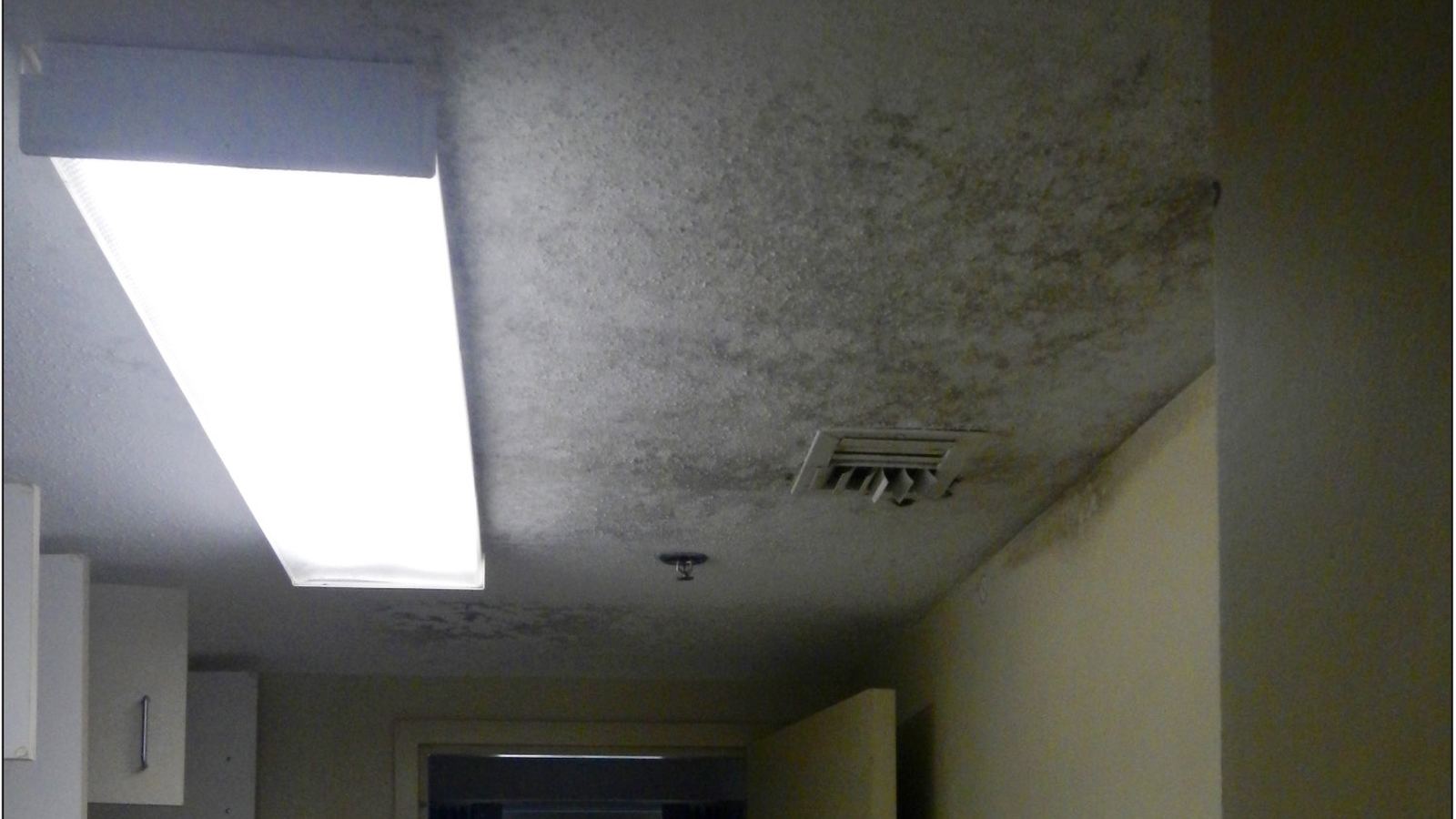
What a commercial inspection answers
A commercial mold inspection looks at a building other people use every day: tenants, staff, customers. Its job is to find out whether mold is growing, where the moisture behind it comes from and how far it reaches.
Florida law puts that job in one sentence. A mold assessment is a process that includes physical sampling and a detailed evaluation of data from a building history and inspection, to form an initial hypothesis about the origin, identity, location and extent of mold growth of greater than 10 square feet (section 468.8411, Florida Statutes).
We are a referral service, not a mold company. The inspection itself is done by a Florida licensed mold assessor at the company doing the work.
How a commercial inspection usually runs

1. They take the history
The assessor asks about complaints, leaks, repairs and changes in how the space is used. The EPA's own questions include whether maintenance was delayed or the building was recently remodeled.

2. They walk the building
The assessor looks for visible growth, stains and damp, including the hidden spaces the EPA lists. That can mean ceiling voids, pipe chases and air handling units.

3. They sample if needed
Where the source is unclear or a dispute is likely, the assessor may take air or surface samples for a lab. Ask what question each sample is meant to answer.

4. They write it up
Florida law describes the aim of an assessment as the origin, identity, location and extent of the mold growth. Ask for that in writing for your building records.
Inspection first, removal second
This page is about finding and describing the problem. Cleaning it up is a separate job with its own page: commercial mold removal.
The EPA guide written for schools and commercial buildings asks for a plan before any cleanup starts. It says to assess the size of the mold or moisture problem and the type of damaged materials before planning the remediation work.
That assessment is what an inspection gives you. Without it, a cleanup quote has nothing firm to stand on.
When tenants or staff complain
Complaints are one way an owner learns there may be a problem. The EPA's list of questions to consider before remediating includes two about people in the building: are occupants reporting musty or moldy odors, and are they reporting health problems.
A musty smell with nothing to see
The EPA says you may suspect hidden mold if a building smells moldy but you cannot see the source. The same applies, it says, if you know there has been water damage and occupants are reporting health problems.
For a hidden problem, the EPA says you may want to consider hiring an experienced professional. It warns that opening up likely sites, such as peeling back wallpaper, can release a large amount of spores.
Health complaints: what the EPA says
We do not judge anyone's symptoms, and neither does a mold inspection. The EPA guide says that if building occupants are reporting serious health concerns, you should consult a health professional.
Keeping people informed
The EPA guide has a whole appendix on talking with occupants. It notes that people's perception of the health risk may rise if they feel information is being withheld from them.
Its suggestions include naming one person occupants can contact with questions, and posting regular updates while work goes on. An inspection report gives that person something factual to share.
Rental buildings and Florida law
For homes and apartments rented to tenants, section 83.51, Florida Statutes says the landlord at all times during the tenancy shall comply with the requirements of applicable building, housing and health codes.
Where there are no such codes, the same section names the roofs, windows, exterior walls and other structural parts to keep in good repair, and the plumbing in reasonable working condition. We do not give legal advice; ask your own attorney how the law applies to your property.
Tenants reading this can find their side in our guide to mold in an apartment in Florida.
After a leak in a commercial building
Larger buildings hide water well. The EPA lists possible locations of hidden mold, and most are spaces nobody walks into.
- Pipe chases and utility tunnels with leaking or condensing pipes
- Condensate drain pans inside air handling units
- Porous thermal or acoustic liners inside ductwork
- Roof materials above ceiling tiles, from roof leaks or too little insulation
- Walls behind furniture, where condensation forms
The drying deadline
The EPA's prevention tips for commercial buildings say to clean and dry wet or damp spots within 48 hours. One of its questions before cleanup is whether building materials have been wet more than 48 hours.
The air conditioning system
The EPA says not to run the HVAC system if you know or suspect it is contaminated with mold. It also says to keep HVAC drip pans clean, flowing properly and unobstructed.
For a home rather than a business, see mold inspection after water damage.
Commercial mold testing: when sampling helps
Commercial mold testing is not always part of the job. The EPA says that in most cases, if visible mold growth is present, sampling is unnecessary.
It names specific cases where sampling may be considered as part of a site evaluation: when litigation is involved, when the source of the mold is unclear, and when health concerns are a problem.
No EPA or other federal threshold limits have been set for mold or mold spores, the EPA says, so sampling cannot be used to check a building's compliance with federal mold standards.
A sampling plan comes first
The EPA says sampling should be done only after developing a plan with a confirmable theory about suspected mold sources and routes of exposure. In its words: figure out what you think is happening and how to prove or disprove it before you sample.
Kinds of samples
Air samples
The EPA compares an air sample to a snapshot: it shows what was in the air only at the moment it was taken. See mold air sampling and indoor air quality testing.
Surface samples
The EPA says surface sampling may also be useful to find out whether an area has been adequately cleaned or remediated. See mold surface sampling.
The health department's view
The Florida Department of Health does not recommend mold testing or sampling to see if you have a mold problem, and says there are no health or exposure based standards for judging a sampling result. Our mold testing page goes further into what a lab result can tell you.
Records worth keeping
A building owner often needs paper as much as answers: for tenants, for a buyer, for an insurer or for a dispute. Ask the assessor before the visit what the written report will contain.
| Moisture | The water or moisture problem has been completely fixed. |
|---|---|
| Visible signs | None present: no visible mold, no mold damaged materials, no moldy odors. |
| If samples were taken | Kinds and concentrations of mold in the building should be similar to those found outside. |
| Follow up visit | Revisit the site shortly after remediation; it should show no signs of water damage or mold growth. |
The EPA adds that sampling before and after remediation may be useful in judging whether the work was effective. A report from before the cleanup gives that later check something to compare against.
Who carries out the inspection
The Florida Department of Business and Professional Regulation licenses and regulates mold assessors and mold remediators. Florida licenses those people, not the companies they work for: the department's FAQ says only individuals are licensed to perform these services (DBPR, Mold-Related Services FAQs).
Ask the company for the name of the assessor who will visit, and look that person up on the department's site. Each assessor chooses their own methods; the ones that may come up are visual inspection, thermal imaging and the sampling above.
The wider picture is on mold inspection and testing, and the home page shows how a request works.
Commercial Mold Inspection: Common Questions
What is a commercial mold inspection?
It is a mold assessment of a building used by a business or rented to tenants, such as an office, a store or an apartment building. Florida law describes an assessment as sampling plus a detailed evaluation of the building's history and an inspection, aimed at the origin, location and extent of the mold growth. It is done by a Florida licensed mold assessor.
Is commercial mold testing always needed?
No. The EPA says that in most cases, if visible mold growth is present, sampling is unnecessary. It may be considered when the source is unclear, when health concerns are a problem or when litigation is involved. The EPA also says sampling should follow a plan with a theory to prove or disprove.
Can a mold test show that a building meets a legal standard?
No. The EPA says no EPA or other federal threshold limits have been set for mold or mold spores, so sampling cannot be used to check compliance with federal mold standards. What sampling can do, the EPA says, is help locate a source, identify some of the species present and tell mold from soot or dirt.
Where does mold hide in office and rental buildings?
The EPA lists pipe chases and utility tunnels, condensate drain pans in air handling units, liners inside ductwork, roof materials above ceiling tiles, and walls behind furniture. It also names the back side of drywall, wallpaper and paneling, the top of ceiling tiles and the underside of carpets and pads.
Who can do a mold assessment in Florida?
A person licensed as a mold assessor by the Florida Department of Business and Professional Regulation, which licenses and regulates mold assessors and mold remediators. Ask the company which assessor will come, and check that person's license on the department's site.
Does your service do the inspection?
No. We are a referral service run by Pensacola SEO Company. Any work is done by a company whose mold assessor holds a Florida license, which may pay us for the introduction.
Sources
- U.S. Environmental Protection Agency, Mold Remediation in Schools and Commercial Buildings Guide, Chapter 1. https://www.epa.gov/mold/mold-remediation-schools-and-commercial-buildings-guide-chapter-1. Read 2026-11-23.
- U.S. Environmental Protection Agency, Mold Remediation in Schools and Commercial Buildings Guide, Chapter 2 (Mold Prevention). https://www.epa.gov/mold/mold-remediation-schools-and-commercial-buildings-guide-chapter-2. Read 2026-11-23.
- U.S. Environmental Protection Agency, Mold Remediation in Schools and Commercial Buildings Guide, Chapter 3. https://www.epa.gov/mold/mold-remediation-schools-and-commercial-buildings-guide-chapter-3. Read 2026-11-23.
- U.S. Environmental Protection Agency, Mold Remediation in Schools and Commercial Buildings Guide, Appendix C (Communicating with Building Occupants). https://www.epa.gov/mold/mold-remediation-schools-and-commercial-buildings-guide-appendix-c. Read 2026-11-23.
- Florida Department of Health, Indoor Mold and Your Health. https://www.floridahealth.gov/community-environmental-public-health/environmental-public-health/air-quality/mold/. Read 2026-11-23.
- Florida Department of Business and Professional Regulation, Mold-Related Services. https://www2.myfloridalicense.com/mold-related-services/. Read 2026-11-23.
- Florida Statutes section 468.8411, mold-related services: definitions. https://www.leg.state.fl.us/statutes/index.cfm?App_mode=Display_Statute&URL=0400-0499/0468/Sections/0468.8411.html. Read 2026-11-23.
- Florida Statutes section 83.51, landlord's obligation to maintain premises. https://www.leg.state.fl.us/statutes/index.cfm?App_mode=Display_Statute&URL=0000-0099/0083/Sections/0083.51.html. Read 2026-11-23.
- Florida Department of Business and Professional Regulation, Mold-Related Services FAQs. https://www2.myfloridalicense.com/mold-related-services/faqs/. Read 2026-11-23.
Where we take requests
We take requests from Plantation, Davie, Fort Lauderdale, Miami and other parts of Broward County. See all areas.
Ask for a commercial mold inspection
Send the short form. Any work is done by a company whose mold assessor holds a Florida license, which may pay us for the introduction.