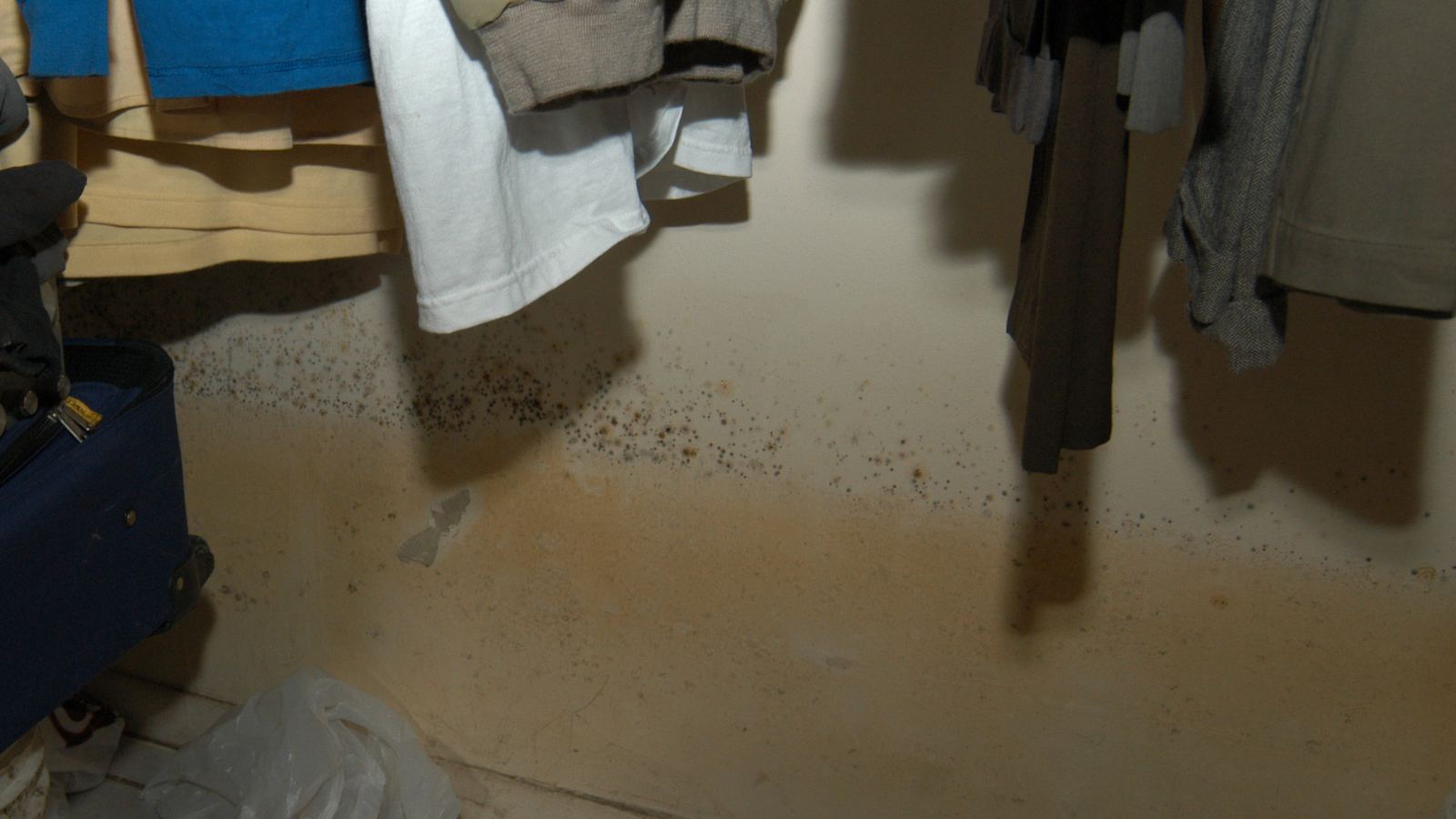
Why water damage leads to mold
A mold inspection after water damage answers one question: did the water leave something wet long enough for mold to start? The U.S. Environmental Protection Agency (EPA) says mold may begin growing indoors when mold spores land on surfaces that are wet, and that no mold will grow without water or moisture.
So the water comes first and the mold follows it. The Florida Department of Health puts it the same way: controlling moisture is the key to stopping indoor mold growth.
We are a referral service, not a mold company. The inspection is done by a Florida licensed mold assessor at the company doing the work.
What the assessor does on the visit

1. They take the history
The mold assessor asks where the water came from, when it happened and how long things stayed wet. Florida law builds a mold assessment on the building's history and an inspection.

2. They read the moisture
The assessor may use a moisture meter on walls, floors and ceilings near the water's path. The EPA says these meters measure the moisture content of building materials following water damage.

3. They sample if needed
Where the source is unclear, the assessor may take air or surface samples for a lab. Ask what question each sample answers.

4. They report the findings
Florida law says the aim of an assessment is the origin, identity, location and extent of the mold growth. Ask the assessor for the findings in writing so you can show them to a remediation company.
Flood, storm, roof leak or pipe leak
The Florida Department of Health lists where indoor moisture comes from. Four items on its list are covered below, and each one sends an assessor to a different part of the building.
Mold inspection after a flood
The health department's list starts with flooding from the outside: storm water, overflowing lakes and streams, and storm surge. It also lists flooding from indoors, such as overflow from sinks, tubs, toilets and air conditioner drain pans.
A federal guide to mold cleanup after disasters, written by the EPA with FEMA, HUD, the CDC and the National Institutes of Health, is blunt about floods. If your home was flooded and you were not able to dry it, furniture and other items included, within 24 to 48 hours, you should assume you have mold growth.
When the flood water was dirty
The same guide warns that flood water may have carried sewage or chemicals into the home. The EPA says that if the water or mold damage was caused by sewage or other contaminated water, you should call in a professional who has experience cleaning and fixing buildings damaged by contaminated water.
Mold inspection after a storm
Storm water does not have to flood a house to wet it. The health department also lists water leaks from outside the building, through the roof, the walls and the floors.
After a storm, those three places are where a check for damp starts: under the roof, along the outside walls and at floor level.
Mold inspection after a roof leak
A roof leak wets the materials you never look at. The EPA names roof materials above ceiling tiles, wet from roof leaks or insufficient insulation, as one of the places where hidden mold is found.
A ceiling stain shows where the water came through. It does not show how far the water ran above the ceiling before it did.
Mold inspection after a pipe leak
Indoor plumbing leaks and broken water pipes are on the health department's list too. The EPA points to the areas inside walls around leaking or condensing pipes as a possible location of hidden mold.
A pipe inside a wall is out of sight. The EPA says you may suspect hidden mold when a building smells moldy but you cannot see the source.
How soon to check after water
No official source sets a deadline for a mold inspection. What the sources give is a drying window, and it is short.
| U.S. EPA | If wet or damp materials or areas are dried within 24 to 48 hours after a leak or spill happens, in most cases mold will not grow. |
|---|---|
| Florida Department of Health | When water stands for even 24 hours, common molds can take hold. Dry out wet building materials and carpets within 24 hours. |
| Federal disaster guide (EPA, FEMA, HUD, CDC, NIH) | If your home was flooded and you could not dry it within 24 to 48 hours, you should assume you have mold growth. |
The first two days: drying comes first
In the first two days the job is to stop the water and dry what got wet. The federal disaster guide calls drying your home and removing water damaged items your most important step for preventing mold damage.
After two days: when a check makes sense
Once the drying window has passed, the question changes from preventing mold to finding out whether it has started. This is the point where a mold inspection after water damage earns its place.
Signs that point to hidden mold
- An earthy or musty odor. The Florida Department of Health says that if you can smell one, you may have a mold problem.
- Water stains, standing water or condensation. The department lists these as signs of moisture or water damage to look for.
- A moldy smell with no visible source. The EPA gives this as a reason to suspect hidden mold.
If you can already see the mold
Then the finding part is done. Both the EPA and the Florida Department of Health say that in most cases, if visible mold growth is present, sampling is not needed.
Our guide to mold after water damage goes through the timing in more detail.
What a mold assessor checks after water
Florida law describes a mold assessment as a process that includes physical sampling and a detailed evaluation of data from a building history and inspection. Its aim is a first explanation of the origin, identity, location and extent of mold growth of greater than 10 square feet.
Each assessor works in their own way, and we do not direct their work. The parts below are the ones the official guides describe.
Our pages on a mold visual inspection and a thermal imaging mold inspection describe two of the ways an assessor may look for damp it cannot see.
Moisture readings
The EPA's remediation guide says moisture meters may be helpful for measuring the moisture content in a variety of building materials following water damage. They can also be used to monitor the drying of damaged materials.
The meter has a thin probe that is pushed into the material or pressed against its surface. The EPA says it can be used on carpet, wallboard, wood, brick and concrete.
Thermal imaging is a different tool, and its page says what a camera can and cannot show.
Hidden cavities
Water runs to places you cannot see. The EPA lists these hidden surfaces and locations:
- The back side of drywall, wallpaper or paneling
- The top side of ceiling tiles
- The underside of carpets and pads
- Inside walls around leaking or condensing pipes
- Inside ductwork
- Roof materials above ceiling tiles
Why opening a wall is a job for a professional
The EPA says investigating hidden mold may be difficult and requires caution when it means disturbing possible sites of mold growth. Its example is wallpaper: removing it can lead to a massive release of spores if mold is growing on the underside.
The agency's advice for anyone who believes they have a hidden mold problem is to consider hiring an experienced professional.
Air samples and surface samples
Sampling is the part people expect, and the part the official sources are most careful about. The Florida Department of Health says it does not recommend mold testing or sampling to find out whether you have a mold problem or what kind of mold is growing.
When sampling can help
The EPA's remediation guide says sampling may be considered in specific instances, such as when the source of the mold contamination is unclear. It adds that sampling may help locate the source, and that surface sampling may be useful to determine whether an area has been adequately cleaned or remediated.
Our pages on mold testing, mold air sampling, mold surface sampling and indoor air quality testing describe each kind of sample.
What a lab number cannot tell you
The EPA says no EPA or other federal limits have been set for mold or mold spores, so sampling cannot be used to check a building against federal mold standards. The Florida Department of Health says there are no health or exposure based standards that you can use to evaluate a mold sampling result.
A fair question to ask before the visit
Ask a company that receives your request which samples it plans to take, what question each one answers, and what each one costs.
The water source
An inspection that finds mold and misses the leak has done half the job. The EPA says that if you clean up the mold but do not fix the water problem, then, most likely, the mold problem will come back.
Our guide to finding the leak behind mold covers where leaks start and how they are traced.
If the air conditioning got wet: the EPA says not to run the heating, ventilation and air conditioning system if you know or suspect that it is contaminated with mold, because it could spread mold throughout the building.
Inspection path or remediation path
After water damage people want one of two things. Some want to know whether there is mold, and others can see it and want it gone.
Florida issues a separate license for each: mold assessor and mold remediator.
The inspection path
Choose this when you do not know whether there is mold, where it is or how far it goes. A mold assessor is the person who performs or directly supervises a mold assessment.
Our page on mold inspection and testing explains the visit.
For an office, a shop or a rental building, see commercial mold inspection.
The remediation path
Choose this when the mold is in plain sight and the water source is known. Florida law defines mold remediation as the removal, cleaning, sanitizing, demolition or other treatment of mold or mold contaminated matter of greater than 10 square feet.
Our page on mold remediation and removal covers that work.
Small areas
For a patch under about 10 square feet, roughly 3 feet by 3 feet, the EPA says that in most cases you can handle the job yourself by following its guidelines. It makes exceptions for a lot of water damage, for contaminated water, and for anyone with health concerns, who it says should consult a health professional before starting cleanup.
Why one company rarely does both
Florida Statutes section 468.8419 limits when a mold assessor may perform or offer to perform mold remediation on a structure where the assessor or the assessor's company provided a mold assessment. A matching limit applies to remediators, and our guide to Florida mold license rules gives both.
The statute carves out certain certified contractors.
Insurance and FEMA: what official sources say
We are not an insurer and we do not give insurance advice. Whether a policy pays for mold or for an inspection is a question for your own insurer, and the answer is in your own policy.
Two general facts come from federal sources. The National Flood Insurance Program, on its FEMA branded FloodSmart site, says most homeowners and renters insurance does not cover flood damage.
Our article Does homeowners insurance cover mold in Florida? collects what the official sources say.
Who does the work
Cobalt Heron Mold Referrals is a referral service and does no inspecting, testing or removal itself. Any work is done by an independent company whose mold assessor or remediator holds a Florida license, and that company may pay us for the introduction.
Check the license yourself
The Florida Department of Business and Professional Regulation is responsible for licensing and regulating mold assessors and mold remediators. Look up the license of the assessor or remediator a company sends before you hire it, including a company you reach through us.
Where requests are taken
To see whether we take requests for your city, open the areas page, or start from our home page.
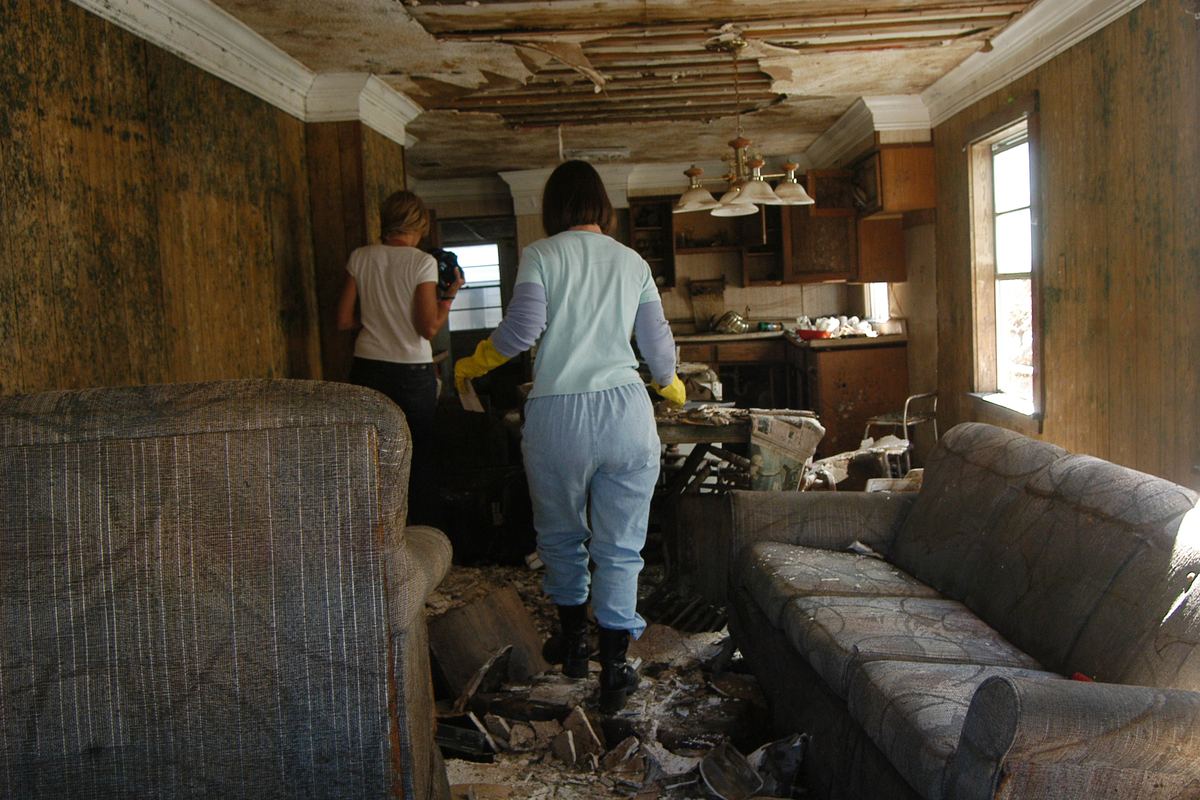
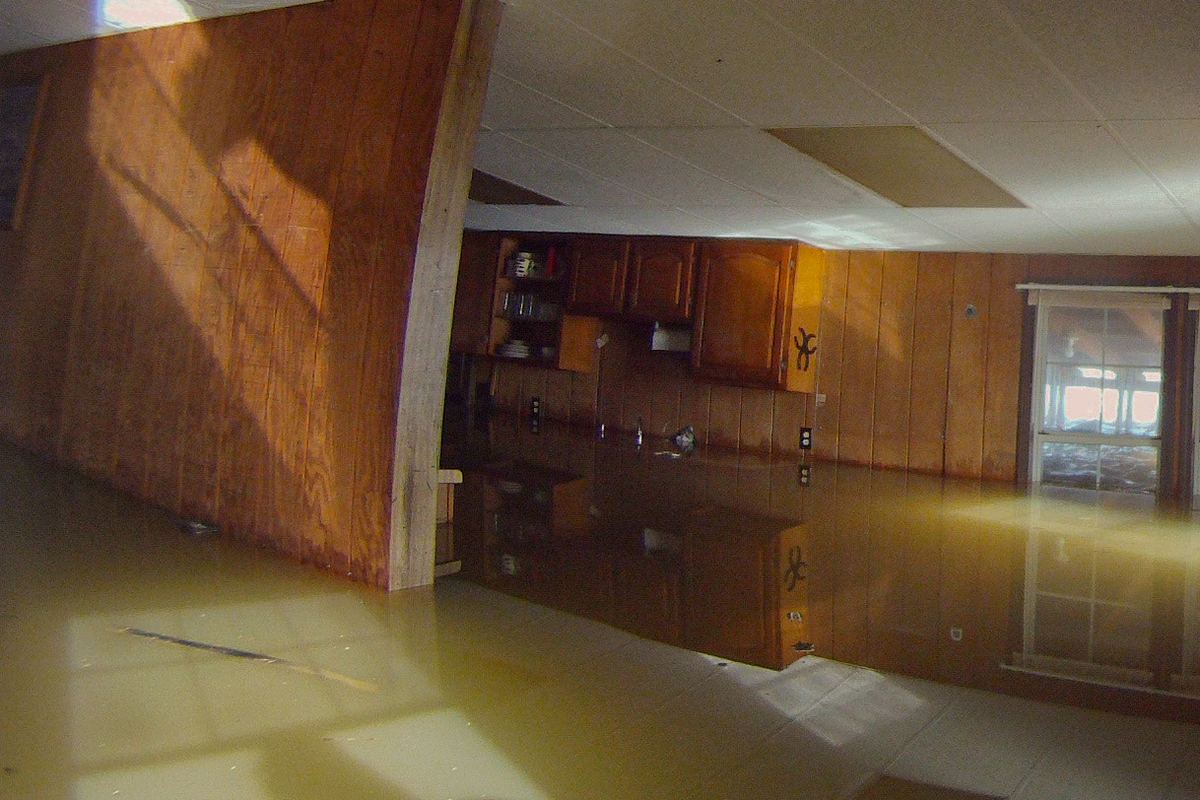
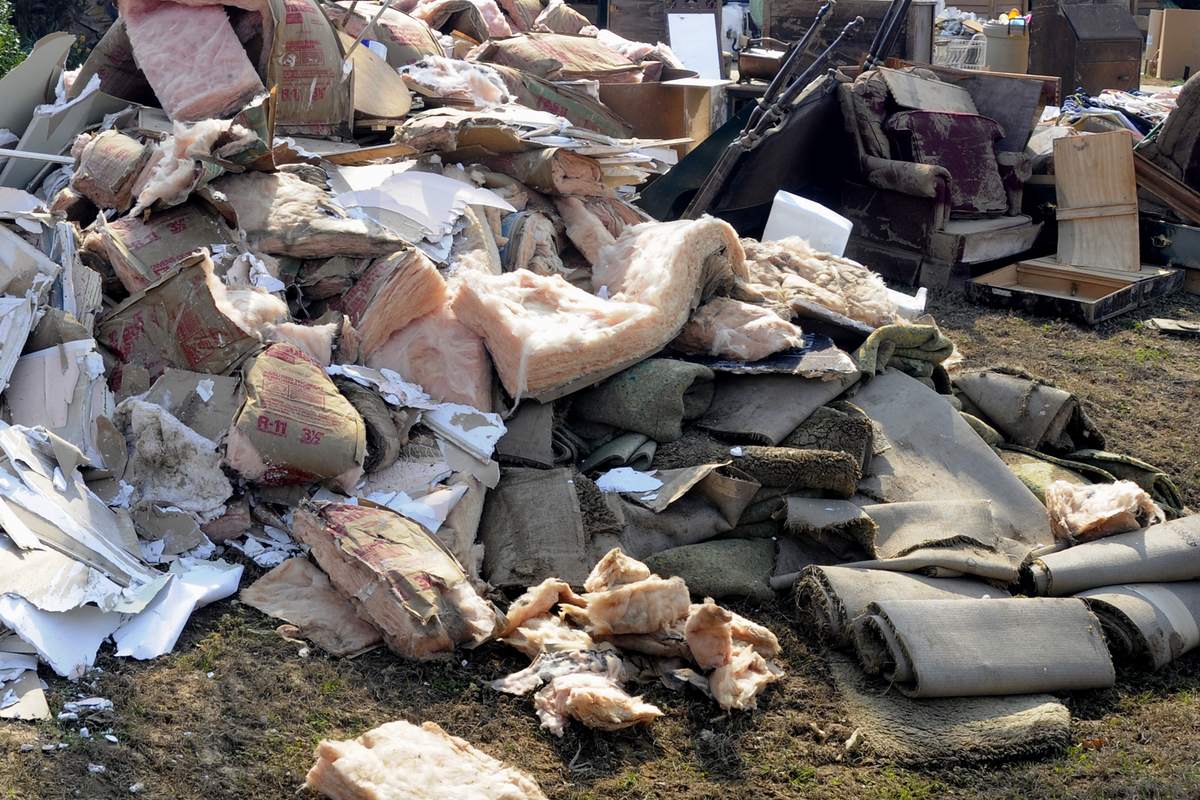
What This Work Looks Like
Public domain photos of other homes, shown to illustrate the work. They are not jobs arranged through this site.
Mold Inspection After Water Damage: Common Questions
How soon after water damage should a home be checked for mold?
The official sources give a drying window, not a deadline for an inspection. The EPA says that if wet or damp materials are dried within 24 to 48 hours after a leak or spill, in most cases mold will not grow. A federal disaster guide says that if a flooded home could not be dried within 24 to 48 hours, you should assume there is mold growth. So a check makes the most sense once that window has passed and something stayed wet.
Do I need mold testing after a flood?
Often not. The Florida Department of Health does not recommend mold testing or sampling to see if you have a mold problem. The federal disaster guide adds that no matter what kind of mold is in your home, you need to clean it up and fix the moisture problem. The EPA says sampling may be considered in specific instances, such as when the source of the mold is unclear.
Can mold grow inside walls after a leak?
Yes. The EPA says mold may be hidden on the back side of drywall, wallpaper or paneling, and in areas inside walls around leaking or condensing pipes. It says you may suspect hidden mold if a building smells moldy but you cannot see the source. That is the case a mold inspection after water damage is meant for.
Does homeowners insurance cover mold after water damage?
We do not give insurance advice, and the answer depends on your own policy, so ask your own insurer. One general fact from the National Flood Insurance Program is that most homeowners and renters insurance does not cover flood damage. Our article Does homeowners insurance cover mold in Florida? lists what the official sources say.
Should I ask for an inspection or go straight to remediation?
Ask for an inspection when you do not know whether there is mold, where it is or how far it has spread. Ask for remediation when you can see the growth and you know what leaked. Florida law limits when the assessor of a structure may also remediate it, so ask each company which of the two jobs it does. See mold inspection and testing and mold remediation and removal.
Who carries out the inspection?
Not us. We are a referral service; our about page says how the referral works. A company that receives your request sets its own price and decides what the visit includes. You can check the assessor's license with the Florida Department of Business and Professional Regulation before you agree to anything.
Sources
- U.S. Environmental Protection Agency, A Brief Guide to Mold, Moisture and Your Home. https://www.epa.gov/mold/brief-guide-mold-moisture-and-your-home. Read 2026-11-22.
- U.S. Environmental Protection Agency, Mold Remediation in Schools and Commercial Buildings Guide, Chapter 3. https://www.epa.gov/mold/mold-remediation-schools-and-commercial-buildings-guide-chapter-3. Read 2026-11-22.
- EPA, HUD, FEMA, NIH and CDC, Homeowner's and Renter's Guide to Mold Cleanup After Disasters (June 2015). https://www.epa.gov/sites/default/files/2017-08/documents/mold._homeowners_and_renters_guide_to_cleanup_after_disasters.pdf. Read 2026-11-22.
- Florida Department of Health, Indoor Mold and Your Health. https://www.floridahealth.gov/community-environmental-public-health/environmental-public-health/air-quality/mold/. Read 2026-11-22.
- Florida Department of Business and Professional Regulation, Mold-Related Services. https://www2.myfloridalicense.com/mold-related-services/. Read 2026-11-22.
- Florida Statutes section 468.8411, mold-related services: definitions. https://www.leg.state.fl.us/statutes/index.cfm?App_mode=Display_Statute&URL=0400-0499/0468/Sections/0468.8411.html. Read 2026-11-22.
- Florida Statutes section 468.8419, mold-related services: prohibitions; penalties. https://www.leg.state.fl.us/statutes/index.cfm?App_mode=Display_Statute&URL=0400-0499/0468/Sections/0468.8419.html. Read 2026-11-22.
- National Flood Insurance Program (FEMA), Buy a Flood Insurance Policy. https://www.floodsmart.gov/get-insured/buy-a-policy. Read 2026-11-22.
Where we take requests
We take requests from Plantation, Davie, Fort Lauderdale and other parts of Broward County, and from Miami. See all areas.
Ask for a mold check after water damage
Send the short form. Any work is done by a company whose mold assessor holds a Florida license, which may pay us for the introduction.