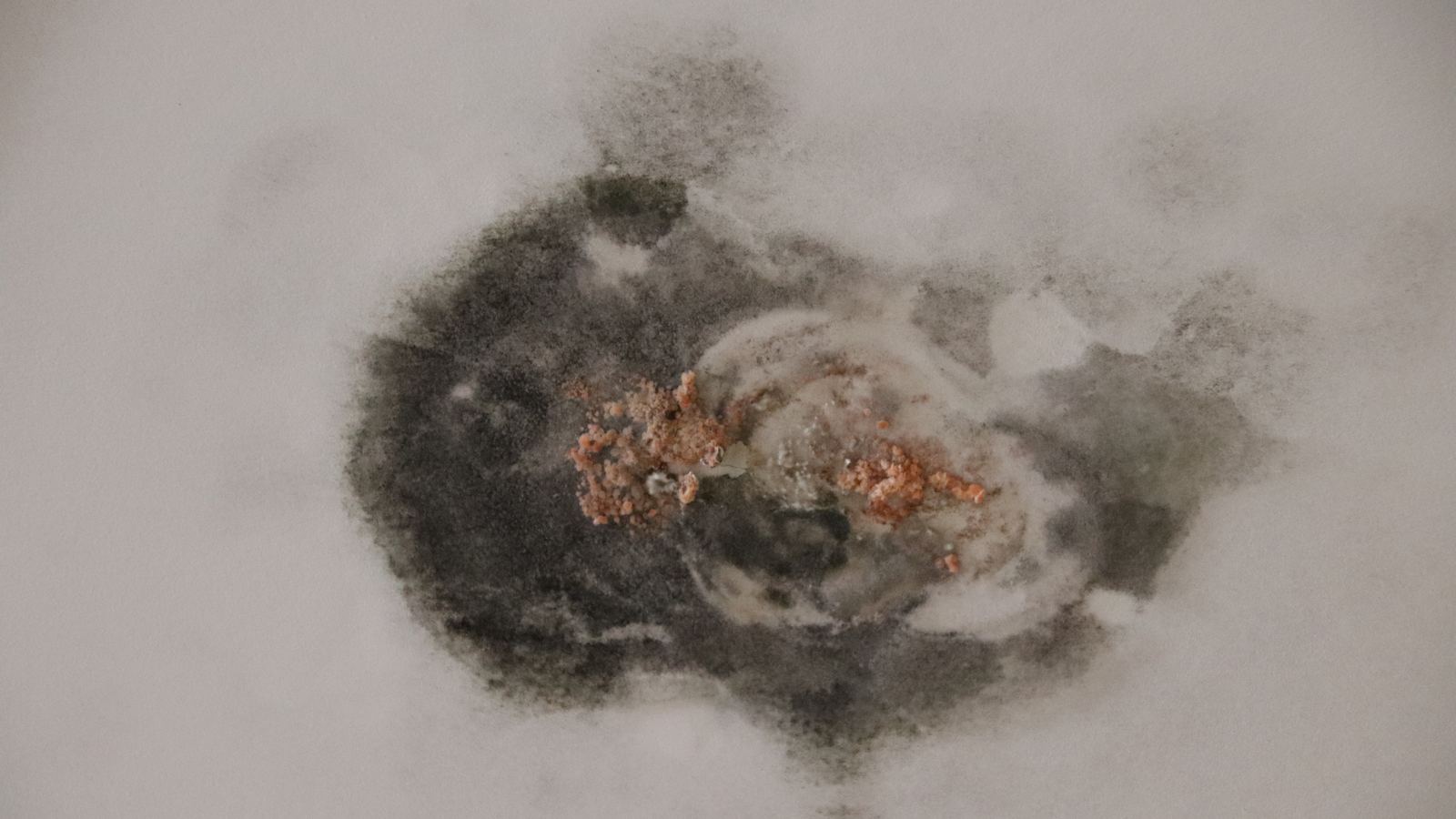
What a mold visual inspection is
A mold visual inspection is the looking part of a mold assessment: rooms, surfaces and equipment checked by eye for growth and for signs of water. It comes before any sample, because what is seen decides whether a sample would answer anything.
Florida law builds an assessment from three parts: a building history, an inspection, and physical sampling, used to form a first view of where mold started and how far it goes (Florida Statutes 468.8411). The visual check is the inspection part of that list.
This page is about that one step. The whole visit, history to report, is on the mold inspection and testing page.
| What it is | Looking for mold growth and signs of moisture |
|---|---|
| Where it sits | The inspection part of a Florida mold assessment (Florida Statutes 468.8411) |
| Who does a mold assessment | A mold assessor licensed by Florida DBPR |
| Main tools | Eyes and nose (Florida Department of Health); a moisture meter can help (EPA) |
| Blind spots | Hidden surfaces such as the back of drywall and the inside of ducts (EPA) |
| Sampling after it | Not needed in most cases when growth is visible (Florida Department of Health) |
The four stages of a mold visual inspection

1. Hear the water story
The assessor asks where leaks, spills or damp spots have been. That history tells them where to look first.

2. Walk every room
They check walls, ceilings, floors and air conditioning parts for growth, stains and condensation. They also follow any musty smell to its source.

3. Measure the damp
Where a surface looks dry but may not be, they can use a moisture meter. The reading shows how wet a material is.

4. Decide on samples
They write down what they saw and where. If looking cannot answer the question, they explain which sample might.
What mold visual inspection services look at
The signs below are the ones the Florida Department of Health and the U.S. Environmental Protection Agency (EPA) name. An assessor may check more, but these are the ones the agencies tell homeowners about.
Growth on surfaces
The health department describes growth that can be cottony, velvety, rough or leathery, in colors from white and gray to brown, black, yellow or green (Florida Department of Health, Mold).
It adds that mold often shows up as staining or fuzzy growth on walls, ceilings, furniture, or anything made of wood or paper.
Signs of water
The same page lists the water clues to look for: leaks, standing water, water stains and condensation. EPA notes that condensation on windows, walls or pipes can be a sign of high humidity (EPA, A Brief Guide to Mold, Moisture and Your Home).
Smell
A visual inspection is not only visual. The health department says an earthy or musty odor may mean a mold problem, and it points people to search the areas where they notice it.
Air conditioning parts
Air handlers get their own look. The Florida Department of Health names standing water around the unit, and the evaporator coils, liner surfaces, drain pans and drain lines, as things to inspect.
Tools that help the eye
EPA says moisture meters, with a thin probe pushed into the material or pressed on its surface, can measure moisture in carpet, wallboard, wood, brick and concrete (EPA, Mold Remediation in Schools and Commercial Buildings, chapter 3).
Seeing heat differences behind a surface is a separate method, covered on the thermal imaging mold inspection page.
What looking cannot find
The eye only sees surfaces. EPA's commercial building guide shows a wallboard whose front looks fine while its back side is covered with mold.
Places EPA says mold can hide
- the back side of drywall, wallpaper or paneling
- the top of ceiling tiles and the roof materials above them
- the underside of carpets and pads
- pipe chases with leaking or condensing pipes
- walls behind furniture, where condensation forms
- condensate drain pans inside air handling units
- porous liners inside ductwork
Surfaces that trap moisture
EPA adds that some finishes, such as vinyl wallpaper over drywall or wood paneling, can act as vapor barriers. They hold moisture underneath, out of sight, where mold can grow.
When hidden mold is suspected
EPA says to suspect hidden mold when a building smells moldy but the source cannot be seen, or when there has been water damage and people in the building report health problems.
Why opening things up takes care
EPA warns that looking for hidden mold "may be difficult and will require caution" when it means disturbing places where mold may grow. Its example: pulling off wallpaper can release a large burst of spores from mold on the underside.
Telling mold from dirt
Dark spots are not always mold. EPA lists telling mold apart from soot or dirt as one of the things sampling can help with, which means the eye alone does not always settle it.
When sampling follows the look
For most homes, the health agencies say the visual step is enough to know mold is there.
"Indoor mold growth can usually be seen or smelled. In most cases, if visible mold growth is present, sampling is not needed." Source: Florida Department of Health, Mold, read 2026-11-23.
EPA also says no EPA or other federal limits have been set for mold or mold spores (EPA, Mold Testing or Sampling). So a sample cannot be measured against a federal standard.
The cases EPA names
EPA's commercial building guide says sampling may be considered in specific instances:
- litigation is involved
- the source of the mold is unclear
- health concerns are a problem
- checking whether an area has been adequately cleaned, by surface sampling
The same guide says a sampling plan should come first, built on a theory about where the mold is coming from that the samples can prove or disprove.
Where each kind of sample is explained
Mold testing covers sampling in general. Mold surface sampling covers samples taken from a surface, and mold air sampling covers samples of the air.
Who does this work in Florida
Florida licenses people for this work, not companies: DBPR says it does not license mold assessment or mold remediation businesses (Florida DBPR, Mold-Related Services FAQs). The Department of Business and Professional Regulation (DBPR) says it is responsible for licensing and regulating mold assessors and mold remediators (Florida DBPR, Mold-Related Services).
State law defines a mold assessor as any person who performs or directly supervises a mold assessment (Florida Statutes 468.8411).
You can check a license by name or number on the DBPR license search before anyone comes to the house.
Other checks in the same group
Other services in this group look at different things. Indoor air quality testing looks at the air in the home, and mold inspection after water damage starts from a known leak or flood.
For an office, store or rental building, see commercial mold inspection. The home page has the short version of how a request works.
Questions to ask before the visit
These are questions for the company doing the work, so you know what the visual step will include.
- Who will do the walk through, and what is their Florida license number?
- Which rooms, attic spaces and air conditioning parts will be looked at?
- Will a moisture meter be used, and where?
- If a sample is suggested, what question will it answer?
- What will the written findings say, and when will you get them?
Mold Visual Inspection Questions
What does a mold visual inspection include?
It is a room by room look for mold growth and for the water that feeds it: stains, leaks, standing water and condensation. The Florida Department of Health also names musty odors and air conditioning parts such as drain pans and coils. EPA adds that a moisture meter can measure how damp building materials are after water damage.
Can a visual inspection find hidden mold?
Not directly. EPA lists hidden spots such as the back of drywall, the top of ceiling tiles and the inside of ducts. A musty smell with no visible source, or known water damage, are the clues EPA gives for suspecting it.
Do I need mold testing after a visual inspection?
Often not. Both the Florida Department of Health and EPA say sampling is usually unnecessary when growth can be seen. EPA names cases where it may help, such as an unclear source or checking a cleanup, and the mold testing page explains them.
Who can do a mold visual inspection in Florida?
The visual step is part of a mold assessment, and Florida licenses mold assessors through DBPR. Ask for the assessor's license number and check it on the DBPR license search. We do not rank or rate any company.
How do I find mold visual inspection services?
Send a request through our form. Any work is done by a company whose mold assessor holds a Florida license, which sets its own fee and schedule. Ask it what the visual step covers before you agree to a visit.
Sources
- Florida Department of Health, Mold. https://www.floridahealth.gov/community-environmental-public-health/environmental-public-health/air-quality/mold/. Read 2026-11-23.
- U.S. EPA, A Brief Guide to Mold, Moisture and Your Home. https://www.epa.gov/mold/brief-guide-mold-moisture-and-your-home. Read 2026-11-23.
- U.S. EPA, Mold Testing or Sampling. https://www.epa.gov/mold/mold-testing-or-sampling. Read 2026-11-23.
- U.S. EPA, Mold Remediation in Schools and Commercial Buildings Guide, chapter 3. https://www.epa.gov/mold/mold-remediation-schools-and-commercial-buildings-guide-chapter-3. Read 2026-11-23.
- Florida DBPR, Mold-Related Services. https://www2.myfloridalicense.com/mold-related-services/. Read 2026-11-23.
- Florida DBPR, license search (Verify a Licensee). https://www.myfloridalicense.com/portalsearches/VerifyLicensee. Read 2026-11-23.
- Florida Statutes 468.8411, Definitions. https://www.leg.state.fl.us/statutes/index.cfm?App_mode=Display_Statute&URL=0400-0499/0468/Sections/0468.8411.html. Read 2026-11-23.
- Florida DBPR, Mold-Related Services FAQs. https://www2.myfloridalicense.com/mold-related-services/faqs/. Read 2026-11-23.
Where we take requests
Plantation, Fort Lauderdale, Davie, Miami and the rest of Broward County. See all areas.
Related services
Mold inspection and testing, thermal imaging, mold testing, surface sampling, air sampling, indoor air quality testing, commercial mold inspection and inspection after water damage. See all services.
Read first
Ask for a Florida Licensed Mold Assessor
Send a request through the form. Any work is done by a company whose mold assessor holds a Florida license, which may pay us for the referral.