The short answer: Mold spores float in nearly all indoor air, but they become an air problem when moisture lets them grow, because growing mold releases more spores, fragments and odors. This guide is about that link; measuring what is in the air is the job of indoor air quality testing.
We are a referral service, not a mold company. The facts below are quoted or closely paraphrased from the agency named beside each one.
What the EPA Means by Indoor Air Quality
The EPA defines indoor air quality as the air quality within and around buildings, especially as it relates to the health and comfort of the people inside. It names sources that release gases or particles into the air as the primary cause of indoor air problems.
Two other things make those problems worse, in the EPA's account. Too little ventilation lets pollutants build up, and high temperature and humidity can raise the levels of some pollutants.
Where Mold Fits Among Indoor Pollutants
Excess moisture is on the EPA's list of indoor pollution sources, beside fuel burning appliances, tobacco, cleaning products and radon. The agency groups mold with what it calls biological contaminants, along with bacteria, viruses, dust mites, pollen, pet allergens and pests.
The same EPA page says people spend about 90 percent of their time indoors on average. It says that is where much of their exposure to biological contaminants happens.
How Moisture Turns Spores Into an Air Problem
Some mold in the air is expected. The Florida Department of Health says there will always be mold in a home in the form of spores and pieces of mold cells, and that mold in the air is normal.
The change comes with water. The EPA's Brief Guide says molds are usually not a problem indoors unless spores land on a wet or damp spot and begin growing, and that none of them will grow without water or moisture.
From Moldy Material to the Air You Breathe
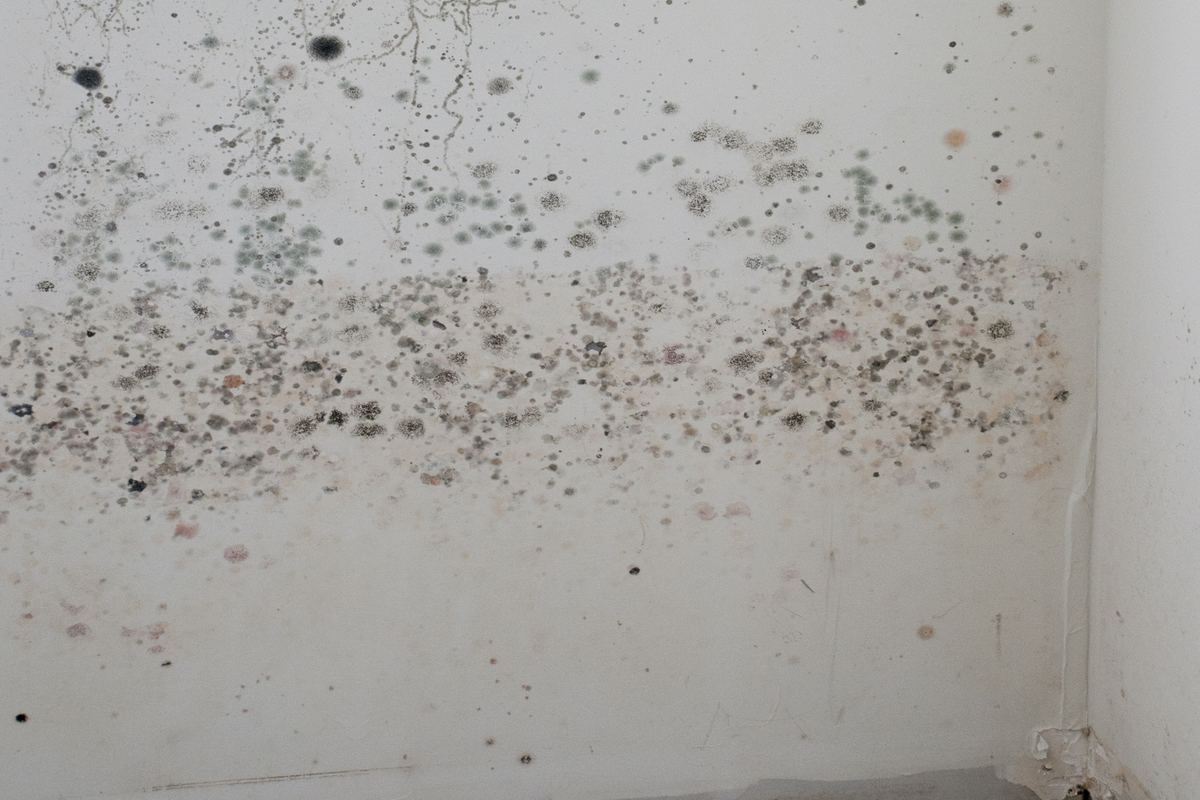
Growth on a wall or a carpet does not stay put. The Florida Department of Health says exposure increases when moldy materials become dried, damaged or disturbed, which releases spores and other mold cells into the air where they are inhaled.
Disturbing Growth Can Release a Lot at Once
The EPA gives an example. It says peeling off wallpaper with mold on its underside can lead to a massive release of spores, which is why it calls looking for hidden mold a job that needs caution.
Hidden Growth Still Reaches the Air
Mold does not have to be in sight to affect the air. The EPA lists hidden places such as the back of drywall, the top of ceiling tiles, the underside of carpet pads, walls behind furniture where condensation forms, and the inside of ductwork.
The Musty Smell
The odor is part of the air picture too. The EPA's mold course says some mold compounds, called microbial volatile organic compounds, are quickly released into the air and can be the source of the musty smell linked to mold growth.
A moldy odor, it says, suggests mold is growing in the building and should be investigated. The Brief Guide adds that you may suspect hidden mold if a building smells moldy but you cannot see the source.
Where the Damp Air Comes From
The EPA's biological contaminants page names everyday sources: water leaking in from outside, showers and even cooking. It says that when humid air meets a cold surface, the water vapor can condense, much like the outside of a cold glass on a humid day.
Warm, Humid Climates
The EPA adds a point that fits a Florida summer. In warm and humid climates, it says, outdoor air that is warmer than the air inside can bring in more moisture even when its relative humidity is lower.
Air conditioning can reduce humidity, the EPA says, but if indoor humidity stays above 60 percent, a specific dehumidification strategy should be used.
The Air Conditioner Itself
The cooling system can hold water of its own. The Florida Department of Health suggests checking around air handling units for standing water and routinely inspecting the evaporator coils, liner surfaces, drain pans and drain lines.
It also says a central air conditioner should be examined for problems if it takes a dehumidifier to get humidity under 60 percent.
What Health Agencies Say About Moldy Indoor Air
We give no health advice of our own. What follows is what the agencies publish, closely paraphrased.
The EPA's Mold and Health page says molds produce allergens and irritants, and the Brief Guide adds potentially toxic substances in some cases. It says inhaling or touching mold or spores may cause allergic reactions in sensitive people, such as sneezing, runny nose, red eyes and skin rash.
The EPA says molds can cause asthma attacks in people with asthma who are allergic to mold. It also says mold exposure can irritate the eyes, skin, nose, throat and lungs of people with or without a mold allergy.
People the Florida Department of Health Names
The department says the long term presence of indoor mold may eventually become unhealthy for anyone. It lists people who may be affected sooner and more severely than others:
- Babies and children
- Elderly persons
- People with chronic respiratory conditions, allergies or asthma
- People with weakened immune systems
Anyone with special health concerns who feels indoor mold is affecting them, the department says, should consult a medical doctor.
Symptoms Can Have Other Causes
The EPA's course lists symptoms people in a building with mold may report, including headaches, difficulty breathing and skin irritation. It then says all of these may be caused by things unrelated to mold, so mold should not be assumed to be the cause.
The EPA's Order for Cleaner Indoor Air
For mold and indoor air quality, the EPA puts the steps in an order. Source control comes first, and the agency says it is usually the most effective way to address indoor air quality problems.
- Source control: prevent conditions such as excess moisture that let biological contaminants multiply
- Ventilation: dilute and remove pollutants with outdoor air when conditions allow, and with kitchen and bathroom exhaust fans
- Filtration and air cleaning: a supplement to the first two, since filters remove some but not all biological contaminants
Drying and Humidity Targets
On moisture, the EPA says to dry wet materials thoroughly as soon as possible, ideally within 24 to 48 hours, and to keep indoor relative humidity below 60 percent, ideally between 30 and 50 percent.
The Florida Department of Health puts the best level below 50 percent, for controlling both mold growth and dust mites.
Fixing the Water Comes Before the Air
The Brief Guide says that if mold is cleaned up but the water problem is not fixed, the mold problem will most likely come back. That is the reason the agencies treat the air and the moisture as one problem.
Measuring the Air Is a Separate Question
Knowing the link is not the same as knowing what is in your air. The EPA says no EPA or other federal limits have been set for mold or mold spores, and the Florida Department of Health says it does not recommend mold testing or sampling to see whether you have a mold problem.
If you want numbers for humidity, particles and other pollutants in your own rooms, that is what indoor air quality testing is for. For a home in Plantation, or to see what a mold inspection in Fort Lauderdale looks at, start with those pages.
Mold and Indoor Air Quality: Short Answers
Can an air purifier fix a mold problem?
Not on its own, according to the EPA. It says filters and portable air cleaners should supplement source control and ventilation because they remove some, but not all, biological contaminants in the air. The growth and the moisture behind it stay where they are.
Should I keep running the air conditioner if I think it has mold in it?
The EPA's Brief Guide says not to run the heating and cooling system if you know or suspect it is contaminated with mold, because it could spread mold through the building. The Florida Department of Health says that, ideally, the system should be shut down while cleaning or mold removal is done, and it points to the EPA's guide on air duct cleaning before taking further action.
Can dead mold still affect the air?
Yes, the agencies say. The EPA's course says mold does not have to be alive to cause an allergic reaction, and the Brief Guide says that because dead mold may still cause allergic reactions in some people, it is not enough to kill the mold; it must also be removed.
Who can I ask about health effects from mold in my home?
The EPA says to consult a health professional or your state or local health department for detailed information on mold and health. For questions about health effects and safe removal, the Florida Department of Health points to your local county health department's Office of Environmental Public Health, Radon and Indoor Air Program.
Sources
- U.S. Environmental Protection Agency, Introduction to Indoor Air Quality (last updated March 19, 2026). https://www.epa.gov/indoor-air-quality-iaq/introduction-indoor-air-quality. Read 2026-11-23.
- U.S. Environmental Protection Agency, Biological Contaminants and Indoor Air Quality (last updated April 1, 2026). https://www.epa.gov/indoor-air-quality-iaq/biological-pollutants-impact-indoor-air-quality. Read 2026-11-23.
- U.S. Environmental Protection Agency, A Brief Guide to Mold, Moisture and Your Home (last updated February 18, 2026). https://www.epa.gov/mold/brief-guide-mold-moisture-and-your-home. Read 2026-11-23.
- U.S. Environmental Protection Agency, Mold Course Chapter 1 (last updated February 18, 2026). https://www.epa.gov/mold/mold-course-chapter-1. Read 2026-11-23.
- U.S. Environmental Protection Agency, Mold and Health (last updated February 18, 2026). https://www.epa.gov/mold/mold-and-health. Read 2026-11-23.
- Florida Department of Health, Mold. https://www.floridahealth.gov/community-environmental-public-health/environmental-public-health/air-quality/mold/. Read 2026-11-23.
The service
Indoor air quality testing: what measuring the air covers, beyond mold alone.
Other guides
How to ask
Send a request through the short form; you do not pay us to ask. A company whose mold assessor holds a Florida license may pay us for the introduction.