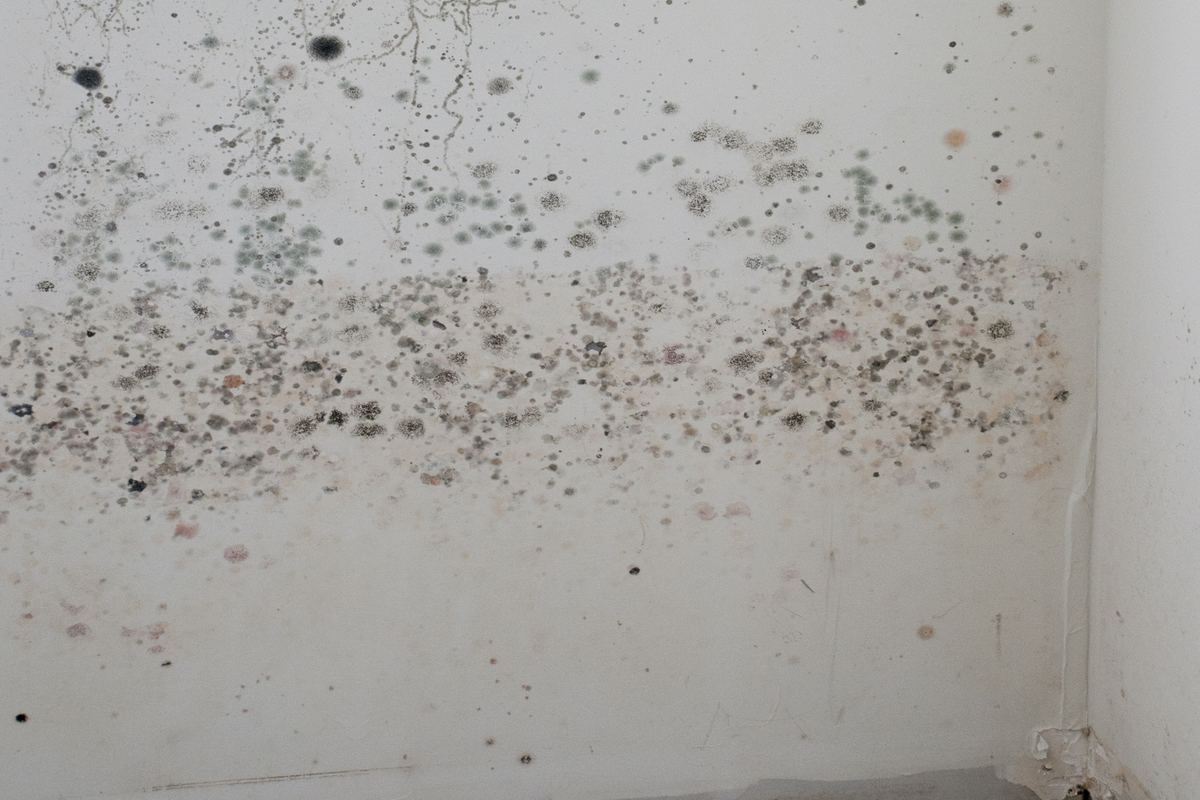
Mold Inspection in Broward County: A State License, Not a County One
Florida law calls a mold inspection a mold assessment. It is a process performed by a mold assessor that includes physical sampling and a detailed evaluation of the building's history and an inspection, to work out the origin, identity, location and extent of mold growth of greater than 10 square feet (Florida Statutes 468.8411).
That assessor answers to the state, not to the county or a city. "The Department of Business and Professional Regulation is responsible for licensing and regulating mold assessors and mold remediators" (Florida DBPR), and its search lets you verify a license by name or number.
We do not inspect anything: Cobalt Heron Mold Referrals is a referral service run by Pensacola SEO Company. If a company takes your request, mold inspection in Broward County is done by one whose mold assessor holds a Florida license.
One county, 31 cities, towns and villages
The FEMA Flood Insurance Study for Broward County lists 31 incorporated cities, towns and villages, plus the unincorporated areas. The form asks for your ZIP code because a company that takes your request needs to know where the home is.
If the home is in Plantation, Fort Lauderdale or Davie, start there for that city's own facts. For a home anywhere else in the county, read on.
What Happens After You Send a Request

1. You ask
Send the short form from anywhere in Broward County. Four fields: what you need, your ZIP code, your name and your email address.

2. Who does the work
A company that accepts a Broward County request works through its own Florida licensed mold assessor. It may pay us for the introduction.

3. Any visit is theirs, not ours
The assessor is the company's, and so is the visit. Ask for the price and the assessor's license number before anyone comes out.

4. Report and next step
Ask for the findings in writing. Removal is generally a job for a different company, one whose mold remediator holds a Florida license.
Mold Testing in Broward County
Mold testing means taking samples. Florida's definition of a mold assessment includes physical sampling, so testing is one part of an assessment and not a separate trade.
The state health department is cautious about it. "The Florida Department of Health does not recommend mold testing or sampling to see if you have a mold problem, or to see what kind of mold might be growing" (Florida Department of Health).
The same page adds: "There are no health or exposure-based standards that you can use to evaluate a mold sampling result."
If an assessor proposes samples for mold testing in Broward County, ask what question each sample answers and what you would do differently once you have the result.
Mold Remediation and Mold Removal in Broward County
Mold remediation is defined in Florida law as the removal, cleaning, sanitizing, demolition or other treatment, including preventive activities, of mold or mold contaminated matter of greater than 10 square feet (Florida Statutes 468.8411). Mold removal is the part of that job you can see.
The EPA says that if there is mold growth in your home, "you must clean up the mold and fix the water problem" (EPA, A Brief Guide to Mold, Moisture and Your Home). In Broward County that water problem can start outside the house as well as inside it.
Why the inspector and the remover are separate companies
A Florida mold assessor may not perform or offer to perform mold remediation on a structure that the assessor or the assessor's company assessed within the last 12 months, and the same rule runs the other way for a mold remediator (Florida Statutes 468.8419). The statute makes an exception for certain certified contractors.
So mold remediation in Broward County, like mold removal, is work for a company whose mold remediator holds a Florida license, and an inspection is work for a company whose mold assessor holds one. We do neither kind of work.
Black Mold Removal in Broward County
For black mold removal in Broward County, the Florida Department of Health has a direct answer about the color: "you do not need to find out what type of mold you may have. All molds should be treated the same when it comes to health risks and removal."
On health, we quote the department and add nothing: "Those with special health concerns should consult a medical doctor if they feel their health is affected by indoor mold."
What Makes Mold Likely in Broward County Homes
The EPA says there are many types of mold and none of them will grow without water or moisture, and that the key to mold control is moisture control (EPA, A Brief Guide to Mold, Moisture and Your Home). This section is about where Broward County's water comes from.
| Average elevation | Six feet |
|---|---|
| Homes built in the 1970s | 25.8 percent, the largest share of any decade |
| Normal yearly rain, Fort Lauderdale Hollywood airport | 60.95 inches |
Flat, low land over wet ground
The FEMA Flood Insurance Study for Broward County gives the county an average elevation of six feet. It describes a nearly level plain in the west, nearly level land dotted with small ponds in the middle, and low, sandy ridges in the east.
Of the western and central areas it says: "Under natural conditions, water stands in both of these areas for months, but where these soils have been drained water typically only stands for short periods."
The water district describes the same ground from below: flat, low lying terrain, a shallow and highly permeable aquifer, and strong interaction between surface water and groundwater (South Florida Water Management District, Broward Basins study). It lists high groundwater tables among the conditions that have increased since the flood control system was designed.
Canals, levees and tide gates
FEMA's study says the major drainage systems in Broward County flow from west to east and discharge to the Atlantic Ocean, through many canals that include some starting in the Everglades and crossing the county. The canals are under the control of the South Florida Water Management District (FEMA Flood Insurance Study for Broward County).
Where the built up part of the county sits
The Everglades Wildlife Management Area and the Water Conservation Areas lie to the west, and the water district describes the urbanized regions as the eastern ones.
The water district's flood study covers the land between the East Coast Protective Levee and the Intracoastal Waterway. It describes the watersheds there as "all exposed or vulnerable to flooding" (South Florida Water Management District, Broward Basins study).
What high tides do to the canals
The district's gravity water control structures only drain when the water behind the gate is higher than the water in front of it. The same study says high sea levels have been observed limiting that gravity discharge, at times exceeding the top of existing gate structures during extreme high tides.
It adds that the number of hours the gates stay closed has increased, because average tides are higher than inland water levels for longer periods. A closed gate is not sending rainwater to the ocean.
Rain: how much and when
NOAA's 1991 to 2020 climate normals give 60.95 inches of rain a year at Fort Lauderdale Hollywood International Airport (NOAA, U.S. Climate Normals, station FT LAUDERDALE HOLLYWOOD AP). Other stations in the county record different totals, which is why another page may show another figure.
FEMA's study puts the wet season from June through October. At the airport station those five months bring 38.24 of the 60.95 inches, about 63 percent of the year's rain, by our sum of NOAA's monthly normals for the same station.
FEMA calls the climate mild and subtropical. The EPA's advice for any home is to keep indoor humidity below 60 percent, ideally between 30 and 50 percent, and to use air conditioners or dehumidifiers when needed (EPA, A Brief Guide to Mold, Moisture and Your Home).
The housing: mostly built before 1990
Age of the homes
The 1970s produced 25.8 percent of Broward County's housing units, more than any other decade, followed by the 1980s at 18.1 percent and the 1960s at 13.3 percent (U.S. Census Bureau, American Community Survey 2020 to 2024).
Added up, about 68 percent of the county's homes were built before 1990.
Age matters to water. The water district's study says that "low finished floor elevations of older homes contribute to urban flooding, especially in vulnerable basins during extreme rainfall" (South Florida Water Management District, Broward Basins study).
Type of home
Detached houses
Single family detached houses are 40.0 percent of the county's housing units. In a detached house the whole building, roof to floor, is one owner's to check.
Large buildings
Another 28.8 percent of units are in buildings of 20 or more units. A written report matters more there, because more than one owner may need to see it.
Renters occupy 36.4 percent of the occupied homes. If you rent, the Florida Department of Health has separate information for mold complaints about an apartment.
Flood zones and floods on the record
FEMA's study names two kinds of flooding here. Heavy rainfall floods lowland areas and the streams and canals that drain them, and the coast along the Atlantic Ocean is subject to storm surge from hurricanes and tropical storms (FEMA Flood Insurance Study for Broward County).
Its maps mark the areas with a 1 percent chance of flooding in any year.
You can look up any Broward County address at the FEMA Flood Map Service Center, which FEMA describes as the official public source for flood hazard information.
The 2014 edition of the study also records past events. On December 17, 2009, heavy rain flooded southeastern Broward County, worst in Dania Beach, Hollywood, Hallandale Beach and Pembroke Park.
After Tropical Storm Leslie on October 3 and 4, 2000, some floodwater lingered up to a week in Pembroke Park.
Set that beside the EPA's figure: it is important to dry water damaged areas and items within 24 to 48 hours to prevent mold growth (EPA, A Brief Guide to Mold, Moisture and Your Home).
These are facts about Broward County, not a finding about your home. Only a visit by a Florida licensed mold assessor can say what is growing, where, and what water is feeding it.
Broward County Mold Inspection: Common Questions
How much does a mold inspection cost in Broward County?
No government or university source publishes a Florida price for a mold inspection, so we print none for Broward County. A company that receives your request gives its own price in writing: ask what the visit includes and whether samples cost extra.
Is a mold inspection free in Broward County?
You do not pay us to ask. The visit is another matter: each company decides whether to charge for it, and we cannot promise a visit at no charge because the visits are not ours.
Who do I call about mold in Broward County?
It depends on what you need. For questions about health effects and safe removal, the Florida Department of Health points you to your local county health department's indoor air program, and it says it does not provide mold testing. To check a license, use the Florida DBPR. To ask for an inspection, send a request; any work is done by a company whose mold assessor holds a Florida license.
Will the assessor take samples at my Broward County home?
Not always. The health department quoted above does not recommend testing to see if you have a mold problem, so ask the assessor what a result would change.
How do I check whether my Broward County home is in a flood zone?
Enter the address at the FEMA Flood Map Service Center. A flood zone does not tell you whether a home has mold. It does say something about how water behaves on the lot, which is worth passing on to the assessor.
Sources
- FEMA, Flood Insurance Study, Broward County, Florida and Incorporated Areas, number 12011CV000A (revised August 18, 2014, reprinted with corrections August 9, 2016). https://map1.msc.fema.gov/data/12/S/PDF/12011CV000A.pdf. Read 2026-11-22.
- FEMA Flood Map Service Center. https://msc.fema.gov/portal/home. Read 2026-11-22.
- South Florida Water Management District, Central and Southern Florida Flood Resiliency (Section 203) Study for Broward Basins, Integrated Feasibility Study and Environmental Assessment, Main Report. https://www.sfwmd.gov/sites/default/files/documents/BB-203_FS-EA_Main_Report.pdf. Read 2026-11-22.
- U.S. Census Bureau, American Community Survey 2020 to 2024 5-Year Estimates, Table DP04, Selected Housing Characteristics, Broward County, Florida. https://data.census.gov/table/ACSDP5Y2024.DP04?g=050XX00US12011. Read 2026-11-22.
- NOAA National Centers for Environmental Information, U.S. Climate Normals Quick Access, 1991 to 2020 normals, station FT LAUDERDALE HOLLYWOOD AP (USW00012849). https://www.ncei.noaa.gov/access/us-climate-normals/#dataset=normals-annualseasonal&timeframe=30&location=FL&station=USW00012849. Read 2026-11-22.
- NOAA National Centers for Environmental Information, U.S. Climate Normals 1991 to 2020, annual precipitation, three Broward County stations (data file). https://www.ncei.noaa.gov/access/services/data/v1?dataset=normals-annualseasonal-1991-2020&stations=USW00012849,USW00012885,USW00092805&dataTypes=ANN-PRCP-NORMAL&format=csv&includeStationName=true&units=standard. Read 2026-11-22.
- NOAA National Centers for Environmental Information, U.S. Climate Normals 1991 to 2020, monthly precipitation, three Broward County stations (data file). https://www.ncei.noaa.gov/access/services/data/v1?dataset=normals-monthly-1991-2020&stations=USW00012849,USW00092805,USW00012885&dataTypes=MLY-PRCP-NORMAL&format=csv&includeStationName=true&units=standard. Read 2026-11-22.
- Florida Department of Health, Mold. https://www.floridahealth.gov/community-environmental-public-health/environmental-public-health/air-quality/mold/. Read 2026-11-22.
- U.S. EPA, A Brief Guide to Mold, Moisture and Your Home. https://www.epa.gov/mold/brief-guide-mold-moisture-and-your-home. Read 2026-11-22.
- Florida DBPR, Mold-Related Services. https://www2.myfloridalicense.com/mold-related-services/. Read 2026-11-22.
- Florida Statutes 468.8411, Definitions. https://www.leg.state.fl.us/statutes/index.cfm?App_mode=Display_Statute&URL=0400-0499/0468/Sections/0468.8411.html. Read 2026-11-22.
- Florida Statutes 468.8419, Prohibitions; penalties. https://www.leg.state.fl.us/statutes/index.cfm?App_mode=Display_Statute&URL=0400-0499/0468/Sections/0468.8419.html. Read 2026-11-22.
Nearby areas
Fort Lauderdale, Davie and Plantation. We take requests from Miami too.
How this works
We are a referral service and do no mold work ourselves. If a company takes your request in Broward County, the work is done by one whose mold assessor or remediator holds a Florida license.
Ready to ask
The form is short: send a request.
Ask for a Licensed Mold Assessor in Broward County
Send the short form with your ZIP code. If a company takes your request, the work is done by one whose mold assessor holds a Florida license, and it may pay us for the introduction.