The short answer: Florida's landlord and tenant law does not use the word mold in the sections this guide quotes, so whether mold is the landlord's to fix depends on the codes, your lease and the facts. A mold inspection by a Florida licensed mold assessor is one way to get the problem on paper, and we cover where it fits further down.
We are a referral service, not a law firm and not a mold company, and nothing here is legal advice. We quote the Florida Statutes and state and federal agencies, and we point you to a lawyer or legal aid for your own case.
Florida's landlord and tenant law, chapter 83 part II of the Florida Statutes, does not use the word mold in any of the sections this guide quotes (83.51, 83.52, 83.56, 83.60 and 83.64). Whether mold in your unit counts as a landlord's failure under those sections depends on the codes that apply, your lease and the facts. That is a question for a lawyer or a legal aid office.
| The law | Florida Statutes chapter 83, part II (residential tenancies) |
|---|---|
| Is mold named in it | Not in sections 83.51, 83.52, 83.56, 83.60 or 83.64 |
| Landlord's upkeep duty | Section 83.51 |
| Tenant's upkeep duty | Section 83.52 |
| Ending the lease over a landlord's failure | Section 83.56(1): written notice, then 7 days |
| Rent defense in court | Section 83.60: written notice, 7 days, and rent paid into the court registry |
| State mold testing | The Florida Department of Health does not provide it |
What the state health department says about mold
The Florida Department of Health says there will always be some mold in a home as spores, and that "the presence of mold in the air is normal." It also says "one should not let mold grow and multiply indoors" (Florida Department of Health, Mold).
Health effects, in the department's words
The department lists four kinds of health problems that come from exposure to mold: allergic illness, irritant effects, infection and toxic effects. It says "allergic disease is now considered the most likely health problem related to mold exposures."
It also says "the long-term presence of indoor mold may eventually become unhealthy for anyone," and that some people may be affected sooner and more severely than others:
- babies and children
- elderly persons
- people with chronic respiratory conditions, allergies or asthma
- people with weakened immune systems
The department's own line on what to do about symptoms is this: "Those with special health concerns should consult a medical doctor if they feel their health is affected by indoor mold." We give no health advice beyond pointing you to that page.
Where the state sends apartment complaints
The Department of Health says it "does not provide mold testing." It adds that some counties may provide onsite indoor air quality consultations and that many counties will answer indoor air quality questions over the phone (Florida Department of Health, Indoor Air Quality).
For apartments, the same page says they are "regulated as public lodging establishments" by the Florida Department of Business and Professional Regulation (DBPR), and it tells people with an apartment complaint to file it with DBPR. If DBPR cannot investigate, the page says you may file with the Florida Department of Agriculture and Consumer Services.
That page does not say what either agency will do about mold in a particular unit.
What EPA tells renters
The U.S. Environmental Protection Agency (EPA) has one line for renters: "Report all plumbing leaks and moisture problems immediately to your building owner, manager, or superintendent." Where persistent water problems are not addressed, it says "you may want to contact local, state, or federal health or housing authorities" (EPA, A Brief Guide to Mold, Moisture and Your Home).
Mold in apartment: Florida tenant rights in the statute
One law covers the duties of landlords and tenants: chapter 83, part II of the Florida Statutes. Each section below is given in the statute's own terms, with a link to it on leg.state.fl.us.
What the landlord must maintain (section 83.51)
Under section 83.51(1), the landlord "at all times during the tenancy shall" comply with "the requirements of applicable building, housing, and health codes."
Where no such codes apply, the section says the landlord must keep "the roofs, windows, doors, floors, steps, porches, exterior walls, foundations, and all other structural components in good repair" and "the plumbing in reasonable working condition."
Extra duties for apartments
Section 83.51(2) adds duties for a dwelling unit "other than a single-family home or duplex," unless otherwise agreed in writing. The landlord must make reasonable provisions for:
- the extermination of rats, mice, roaches, ants, wood-destroying organisms and bedbugs
- locks and keys
- the clean and safe condition of common areas
- garbage removal and outside receptacles
- functioning facilities for heat during winter, running water and hot water
Mold is not on either list
Neither list names mold, humidity or air quality, though roofs, windows, exterior walls and plumbing are named. Whether a given leak or mold problem is a failure under 83.51 is not something the statute answers by name.
When the landlord is not responsible
Section 83.51(4) says the landlord is not responsible under that section "for conditions created or caused by the negligent or wrongful act or omission of the tenant, a member of the tenant's family, or other person on the premises with the tenant's consent."
What the tenant must do (section 83.52)
Section 83.52 puts duties on the renter too. Among them, the tenant must:
- "keep that part of the premises which he or she occupies and uses clean and sanitary"
- keep all plumbing fixtures in the unit "clean and sanitary and in repair"
- "use and operate in a reasonable manner all electrical, plumbing, sanitary, heating, ventilating, air-conditioning and other facilities and appliances"
Mold is not named here either. The Florida Department of Health does say that using an air conditioner or a dehumidifier to keep indoor humidity below 60% is one way to prevent the conditions that lead to mold growth.
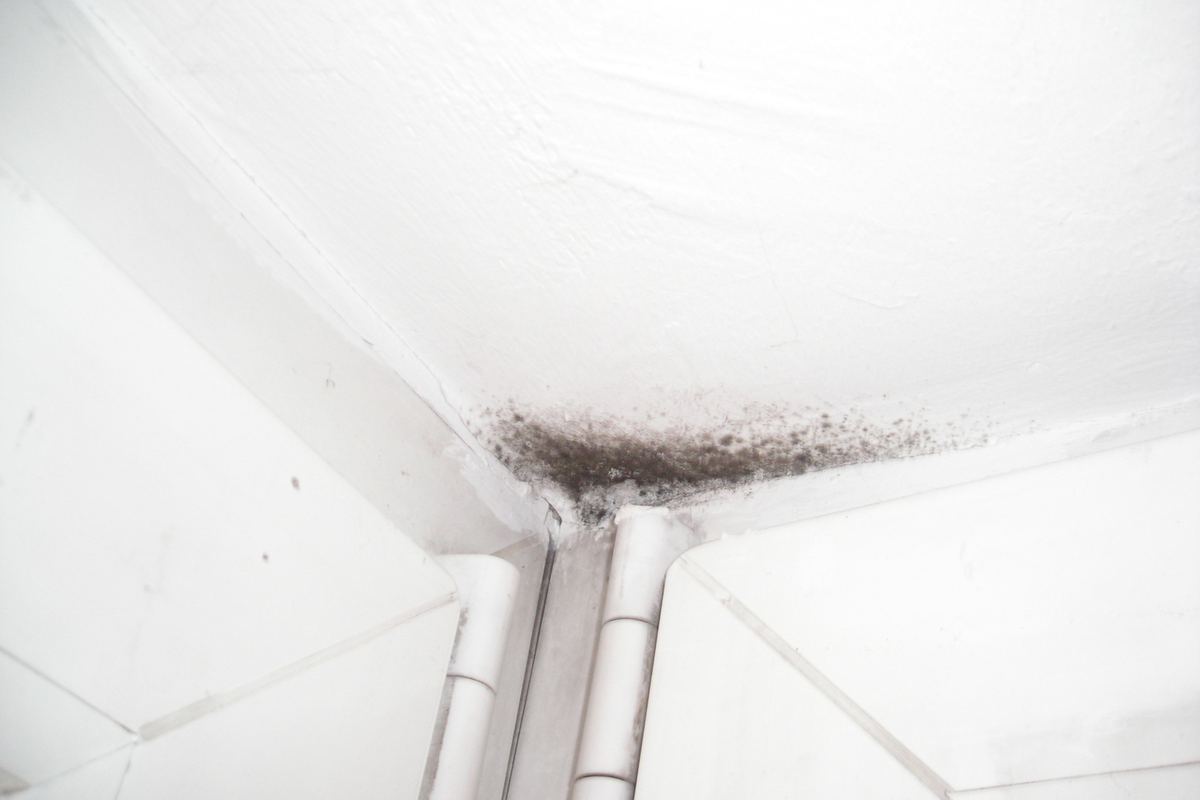
Breaking a lease over mold in Florida
The statute does not say by name whether a renter can break a lease because of mold. What it does is describe when a tenant may end a rental agreement over a landlord's failure, and the steps for doing it.
The 7 day written notice (section 83.56)
Section 83.56(1) reads: if the landlord "materially fails to comply with s. 83.51(1) or material provisions of the rental agreement within 7 days after delivery of written notice by the tenant specifying the noncompliance and indicating the intention of the tenant to terminate the rental agreement by reason thereof, the tenant may terminate the rental agreement."
In that sentence the statute asks for four things:
- a material failure to comply with section 83.51(1) or with a material part of the lease
- a written notice from the tenant
- a notice that names the failure and says the tenant intends to end the rental agreement because of it
- 7 days after delivery without the landlord complying
How the notice is delivered
Section 83.56(4) says the written notices are delivered "by mailing, delivering a true copy thereof, e-mailing in accordance with s. 83.505, or, if the tenant is absent from the premises, by leaving a copy thereof at the residence." It also says these notice requirements "may not be waived in the rental agreement."
When the cause is beyond the landlord's control
Section 83.56(1) also covers a failure "due to causes beyond the control of the landlord" where the landlord "has made and continues to make every reasonable effort to correct" it. In that case the rental agreement may be terminated or altered by the parties.
- If the failure "renders the dwelling unit untenantable and the tenant vacates," the tenant is not liable for rent while the unit remains uninhabitable.
- If it does not, and the tenant stays, the rent is reduced "in proportion to the loss of rental value caused by the noncompliance."
What the statute leaves open
The statute does not say whether mold is a material failure, how much mold makes a unit untenantable, or who decides. Talk to a lawyer or legal aid before you send a notice or move out.
Holding back rent (section 83.60)
Section 83.60 deals with a landlord's court action for possession or unpaid rent. It says the tenant "may defend upon the ground of a material noncompliance with s. 83.51(1)."
The statute says that defense may be raised "if 7 days have elapsed after the delivery of written notice by the tenant to the landlord, specifying the noncompliance and indicating the intention of the tenant not to pay rent by reason thereof."
Rent goes into the court registry
Section 83.60(2) says that in an action for possession, a tenant who raises any defense other than payment "shall pay into the registry of the court the accrued rent as alleged in the complaint or as determined by the court," plus the rent that comes due while the case runs.
Failing to pay it in, or to file a motion to determine the amount, within 5 days after service of process, not counting Saturdays, Sundays and legal holidays, "constitutes an absolute waiver of the tenant's defenses other than payment." The landlord is then entitled to an immediate default judgment for removal of the tenant.
So the statute does not describe simply stopping rent: it describes a written notice, a wait, and a court process with strict deadlines. This is the point where a lawyer matters most.
Retaliation (section 83.64)
Section 83.64 says it is unlawful for a landlord to discriminatorily raise rent, cut services, or bring or threaten an action for possession "primarily because the landlord is retaliating against the tenant."
Its examples include a tenant who complained to a government agency responsible for enforcing a building, housing or health code, and a tenant who complained to the landlord under section 83.56(1). The tenant must have acted in good faith, and the section does not apply if the landlord proves the eviction is for good cause.
Mold inspection for renters
An inspection does not decide a legal question. It can give you a written record of what was found, where, and what moisture is behind it.
Who may do it
Florida law calls the work a mold assessment and defines it as covering mold growth "of greater than 10 square feet" (Florida Statutes 468.8411). A person may not perform or offer to perform a mold assessment without complying with the state's licensing law (Florida Statutes 468.8419).
One listed exemption is "a person who performs mold assessment on property owned or leased by the person," as long as that person is not in the business of mold assessment for the public (Florida Statutes 468.841).
A separate exemption covers a residential property owner on his or her own property.
Whether testing is needed
The Florida Department of Health says "in most cases, if visible mold growth is present, sampling is not needed," and that "there are no health or exposure-based standards that you can use to evaluate a mold sampling result."
EPA says the same about federal limits: none have been set for mold or mold spores, so "sampling cannot be used to check a building's compliance with federal mold standards." So a lab number cannot show that a unit passes or fails a federal mold standard, because there is none.
Who pays and who gives access
The sections quoted in this guide do not say who pays for a mold inspection in a rental.
Section 83.52 says a tenant must not "destroy, deface, damage, impair, or remove any part of the premises." Whether an inspection that opens a wall or ceiling needs the landlord's consent is a question for your lease and a lawyer.
How we fit in
We take requests from renters and owners in Plantation, requests for a mold inspection in Fort Lauderdale, and requests from nearby parts of Broward County. We may pass your request to a company whose mold assessor holds a Florida license, and that company may pay us for the introduction.
The company that contacts you sets its own price and schedule. Ask it for both in writing, and ask for the name and Florida license number of the mold assessor it sends before you agree to anything.
Where to get legal help
For your own case, speak to a Florida lawyer or a legal aid office. Two places to start:
- The Florida Bar Lawyer Referral Service, which matches people with lawyers and also points to legal aid programs.
- Florida Law Help, a legal information site with a housing section.
It helps to have your lease, your written notices, dated photos and any inspection report together when you call.
Renter Mold Questions
Can you break a lease due to black mold in Florida?
The Florida statute does not mention black mold or any mold by name. Section 83.56(1) lets a tenant terminate a rental agreement if the landlord materially fails to comply with section 83.51(1) or material provisions of the lease within 7 days after the tenant's written notice. Whether your mold problem meets that test is a legal question about your facts. Ask a lawyer or legal aid before you act.
Does the type of mold matter?
The Florida Department of Health says you do not need to find out what type of mold you have. In its words, "all molds should be treated the same when it comes to health risks and removal," and all indoor mold growth should be removed promptly no matter what type is present.
Can I stop paying rent until the mold is fixed?
The statute does not describe simply stopping payment. Section 83.60 allows a defense based on a material noncompliance with section 83.51(1) once 7 days have passed from the tenant's written notice saying rent will be withheld for that reason. In a possession case the tenant must also pay the rent into the court registry, and missing the deadline waives defenses other than payment. Get legal advice first.
Will the health department test my apartment for mold?
No. The Florida Department of Health says it "does not provide mold testing." It says some counties may provide onsite indoor air quality consultations and many will answer questions by phone. A written report on mold in an apartment is the work of a Florida licensed mold assessor.
Sources
- Florida Statutes 83.51, Landlord's obligation to maintain premises. https://www.leg.state.fl.us/statutes/index.cfm?App_mode=Display_Statute&URL=0000-0099/0083/Sections/0083.51.html. Read 2026-11-22.
- Florida Statutes 83.52, Tenant's obligation to maintain dwelling unit. https://www.leg.state.fl.us/statutes/index.cfm?App_mode=Display_Statute&URL=0000-0099/0083/Sections/0083.52.html. Read 2026-11-22.
- Florida Statutes 83.56, Termination of rental agreement. https://www.leg.state.fl.us/statutes/index.cfm?App_mode=Display_Statute&URL=0000-0099/0083/Sections/0083.56.html. Read 2026-11-22.
- Florida Statutes 83.60, Defenses to action for rent or possession; procedure. https://www.leg.state.fl.us/statutes/index.cfm?App_mode=Display_Statute&URL=0000-0099/0083/Sections/0083.60.html. Read 2026-11-22.
- Florida Statutes 83.64, Retaliatory conduct. https://www.leg.state.fl.us/statutes/index.cfm?App_mode=Display_Statute&URL=0000-0099/0083/Sections/0083.64.html. Read 2026-11-22.
- Florida Statutes 468.8411, Definitions. https://www.leg.state.fl.us/statutes/index.cfm?App_mode=Display_Statute&URL=0400-0499/0468/Sections/0468.8411.html. Read 2026-11-22.
- Florida Statutes 468.841, Exemptions. https://www.leg.state.fl.us/statutes/index.cfm?App_mode=Display_Statute&URL=0400-0499/0468/Sections/0468.841.html. Read 2026-11-22.
- Florida Statutes 468.8419, Prohibitions; penalties. https://www.leg.state.fl.us/statutes/index.cfm?App_mode=Display_Statute&URL=0400-0499/0468/Sections/0468.8419.html. Read 2026-11-22.
- Florida Department of Health, Mold. https://www.floridahealth.gov/community-environmental-public-health/environmental-public-health/air-quality/mold/. Read 2026-11-22.
- Florida Department of Health, Indoor Air Quality. https://www.floridahealth.gov/community-environmental-public-health/environmental-public-health/air-quality/. Read 2026-11-22.
- U.S. EPA, A Brief Guide to Mold, Moisture and Your Home. https://www.epa.gov/mold/brief-guide-mold-moisture-and-your-home. Read 2026-11-22.
- The Florida Bar, Lawyer Referral Service. https://www.floridabar.org/public/lrs/. Read 2026-11-22.
- Florida Law Help. https://www.floridalawhelp.org/. Read 2026-11-22.
The service
Mold inspection and testing by a Florida licensed mold assessor.
Other guides
Florida mold license rules and what goes into a mold inspection quote.
How to ask
Send a request on the contact page. We may pass it to a company whose mold assessor holds a Florida license, and that company may pay us for the introduction.