The short answer: The EPA says to dry water damaged areas and items within 24 to 48 hours to prevent mold growth, so the clock starts when the water comes in. If the water came in days ago and something stayed wet, a mold inspection after water damage is the service to read about; this guide covers the clock before that point.
We are a referral service, not a mold company. Every statement here about timing and health is taken from a government source, and each one is listed at the foot of the page with the date we read it.
How soon mold starts after water damage
The U.S. Environmental Protection Agency (EPA) gives the figure most other sources repeat. In A Brief Guide to Mold, Moisture and Your Home it says it is important to dry water damaged areas and items within 24 to 48 hours to prevent mold growth.
| U.S. EPA, Brief Guide | It is important to dry water damaged areas and items within 24 to 48 hours to prevent mold growth. |
|---|---|
| CDC, Mold | Clean up and dry out your home fully and quickly (within 24 to 48 hours) after a flood. |
| Florida Department of Health | When water stands for even 24 hours, common molds can take hold. |
| U.S. EPA, Mold Course | Buildings and building furnishings will often get wet. They must be dried or allowed to dry quickly (within 24 to 48 hours) in order to avoid mold growth. |
Why the clock starts with the water
The Florida Department of Health says mold only needs a few things to grow and multiply: nutrients, a suitable place to grow, and moisture.
A house already supplies the first two. The department says many building materials, such as wood and sheetrock, provide food that can support mold growth, and that even settled dust can be a food source.
That leaves moisture as the one thing a leak or a flood adds. In the department's words, water is the key.
The first 24 hours
Florida's health department sets the tightest mark. It says to clean and dry up spills within 24 hours, and to dry out wet building materials and carpets within 24 hours.
From 24 to 48 hours
The EPA says that if wet or damp materials or areas are dried within 24 to 48 hours after a leak or spill happens, in most cases mold will not grow.
The Centers for Disease Control and Prevention (CDC) uses the same window for floods on its mold page.
After 48 hours
Past two days the official wording changes. A federal guide to mold cleanup after disasters, written by the EPA with FEMA, HUD, the CDC and the National Institutes of Health, says that if your home was flooded and you were not able to dry it, furniture and other items included, within 24 to 48 hours, you should assume you have mold growth.
A guideline, not a stopwatch
The EPA is careful about how firm the number is. A note under its water damage table says that even if materials are dried within 48 hours, mold growth may have occurred.
The same note says mold growth will not always occur after 48 hours, and that this is only a guideline.
When mold can be seen
No official source gives a number of days before mold can be seen with the eye, so this guide gives none.
Flood, roof leak, pipe leak or hurricane
The CDC says mold will grow where there is moisture, such as around leaks in roofs, windows or pipes, or where there has been a flood. Each kind of water starts the clock in a different way.
Mold after a flood
A flood wets a lot of material at once, and the water may not be clean. The federal disaster guide says flood water may have carried sewage or chemicals into your home.
The EPA's mold course says standing water and wet materials are a breeding ground for microorganisms, such as viruses, bacteria and mold.
The course adds that buildings heavily damaged by flood waters should be assessed for structural integrity and remediated by experienced professionals.
Mold after a roof leak
A roof leak can run for a while before anyone notices it, and a leak like that has no clear first hour to count from. The Florida Department of Health lists water leaks from outside the building, through the roof, walls and floors, among the sources of indoor moisture.
The EPA's mold course describes the long version: if a roof is allowed to leak long enough, molds can weaken floors and walls by feeding on the wet wood.
Mold after a pipe leak
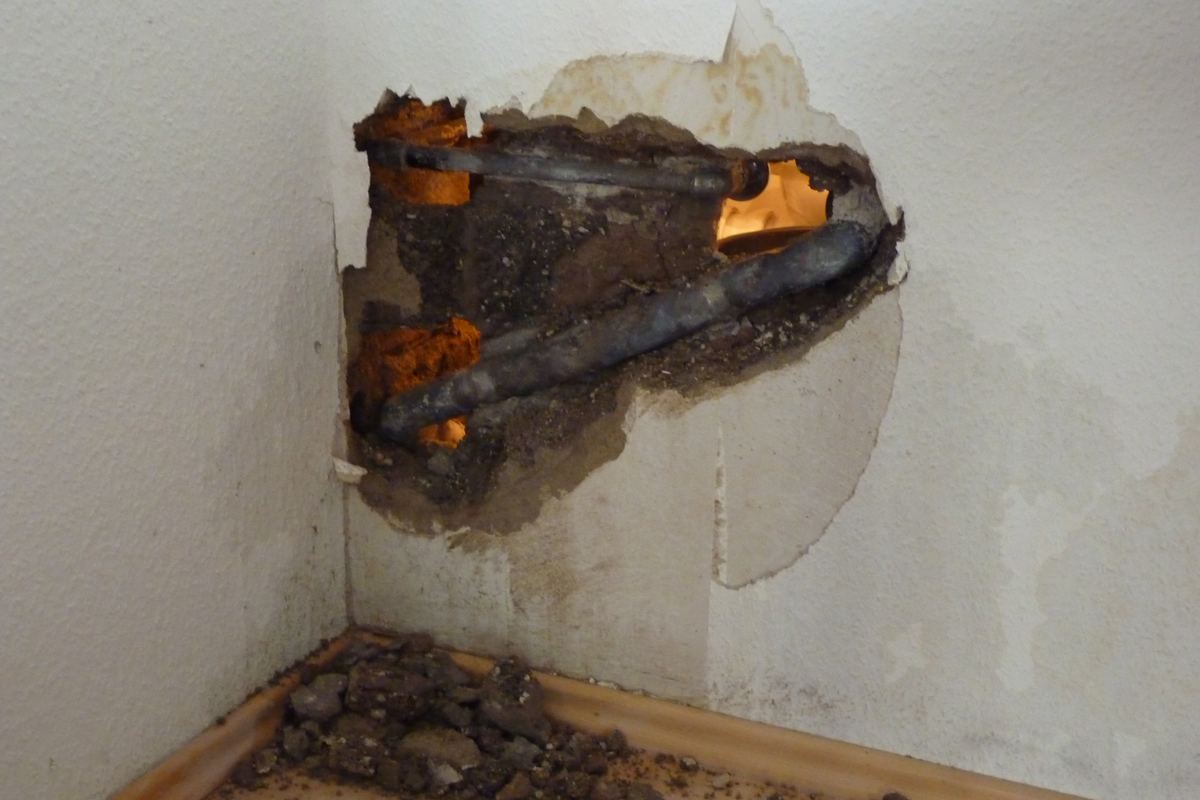
Pipes run where nobody looks. The EPA's course says the inside of walls where pipes and wires are run are common sites of mold growth.
Its advice in the Brief Guide is short: fix plumbing leaks and other water problems as soon as possible, and dry all items completely.
Mold after a hurricane
A hurricane can bring all three at once: flood water, roof damage and broken pipes. The Florida Department of Health names storm water and storm surge as outside flooding that feeds indoor mold.
The EPA's hurricane page repeats the clock for storm recovery. After the flood, it says, remove standing water and dry indoor areas, and remove and discard anything that has been wet for more than 24 to 48 hours.
When the power is out
Fans and dehumidifiers need electricity, and the federal disaster guide says to use them only when electricity is safe to use. If you run a portable generator, the guide says to use it outside and at least 20 feet away from buildings.
What to do in the first days
The steps below are not ours. They come from the federal Homeowner's and Renter's Guide to Mold Cleanup After Disasters and from the EPA, and we repeat them closely.
Before anyone goes in
After a flood, the federal guide says you and your family should wait to re-enter your home until professionals tell you it is safe, with no structural, electrical or other hazards.
It also says: "Before you start cleanup activities, contact your insurance company and take pictures of the home and your belongings."
Who the guides say should stay out
The federal guide says people with breathing problems like asthma, or who have weakened immune systems, should stay away from moldy sites. It says children should not take part in disaster cleanup work.
The CDC's cleanup page gives a similar list of people who should not take part in cleaning up, including people with allergies and people with chronic respiratory diseases.
Day one and day two: the guide's drying steps
The federal guide calls drying your home and removing water damaged items your most important step for preventing mold damage. Its drying steps run in this order:
- Remove standing water and wet materials. The guide says to use a wet vacuum to remove water from floors, carpets and hard surfaces.
- Open all doors and windows while you work. Open inside doors too, especially closets and interior rooms, so air can reach every area.
- Open kitchen cabinets and bathroom vanity doors. Remove the drawers, wipe them clean and stack them to dry.
- When electricity is safe to use, use fans and dehumidifiers to remove moisture.
- Throw away anything that was wet with flood water and cannot be cleaned and dried completely within 24 to 48 hours.
One warning from the same guide: do not use fans if mold has already started to grow, because the fans may spread the mold.
What the EPA says about each material
The EPA publishes a table of what to do with each wet material in the first 24 to 48 hours. It was written for schools and commercial buildings, and the EPA says the document is applicable to other building types.
| Carpet and backing | Dry within 24 to 48 hours. Remove water with a water extraction vacuum, reduce humidity with a dehumidifier, speed drying with fans. |
|---|---|
| Wallboard (drywall) | May be dried in place if there is no obvious swelling and the seams are intact. If not, remove, discard and replace. |
| Ceiling tiles | Discard and replace. |
| Fiberglass or cellulose insulation | Discard and replace. |
| Wood surfaces | Remove moisture immediately and use dehumidifiers, gentle heat and fans for drying. |
| Upholstered furniture | Remove water with a water extraction vacuum. May be difficult to completely dry within 48 hours. |
The table adds that the subfloor under carpet or other flooring must also be cleaned and dried.
The table is for clean water only
The EPA says these guidelines are for damage caused by clean water. If the water may be contaminated with sewage or chemical or biological pollutants, it says an experienced professional should be consulted, and that fans should not be used before determining that the water is clean or sanitary.
What the guides say not to do
- Painting over it: the federal guide says painting or caulking over mold will not prevent mold from growing.
- Mixing cleaning products: the guide says not to mix bleach and ammonia because it can create toxic vapors.
- Ozone generators: the Florida Department of Health says ozone irritates lungs and is not likely to be effective at addressing an indoor mold problem.
- Stopping at the mold: the EPA says that if you clean up the mold but do not fix the water problem, then, most likely, the mold problem will come back.
Signs of mold after water damage
The Florida Department of Health says indoor mold growth can usually be seen or smelled. Those are the two checks a homeowner can make without opening anything.
What you can see
The department says visible growth may look cottony, velvety, rough or leathery, in colors like white, gray, brown, black, yellow or green. It often appears as a staining or fuzzy growth on furniture or building materials.
It also says to look for signs of moisture or water damage: water leaks, standing water, water stains and condensation.
What you can smell
The department says to search areas where you notice mold odors. If you can smell an earthy or musty odor, it says, you may have a mold problem.
What you cannot see
The federal disaster guide says you may see or smell mold on clothing, drywall, furniture, cardboard boxes or books, but it may also be hidden under or behind items like carpet, cushions or walls.
After a cleanup
The same guide gives a plain test for whether the job is finished. If you still see or smell mold, you have more work to do, and after a remediation there should be no signs of water damage or mold growth.
When to call a mold inspector
The official sources describe situations where a professional is the better choice.
- You smell mold and cannot find it. The EPA says that if you believe you may have a hidden mold problem, consider hiring an experienced professional.
- Materials stayed wet past 48 hours and you are not sure about them. The EPA's table says items may be tested by professionals if there is doubt.
- There was a lot of water. The federal disaster guide says the job may be too difficult or dangerous for you, and that it may be best to get help from experienced and qualified professionals if you can.
- The water was dirty. The EPA says that if the damage was caused by sewage or other contaminated water, call in a professional who has experience with buildings damaged by contaminated water.
What an inspection is for
After water damage, an inspection is about where the damp went and how far any growth has spread. It is not about naming the mold: the CDC says it does not recommend mold testing, and the Florida Department of Health says you do not need to find out what type of mold you may have.
Our service page on mold inspection after water damage explains what a mold assessor checks and when sampling can help.
Who to call in Florida
The Florida Department of Business and Professional Regulation is responsible for licensing and regulating mold assessors and mold remediators. Our guide to Florida mold license rules shows what to check before you hire.
How we fit in
We do not inspect, test or remove mold. If you are in Plantation or nearby and send us a request, we may pass it to an independent company whose mold assessor holds a Florida license. That company may contact you and may pay us for the introduction.
We take the same requests for mold inspection in Fort Lauderdale and for nearby parts of Broward County, listed on our areas page.
Mold After Water Damage: Short Answers
Can mold start within 24 hours of a leak?
The Florida Department of Health says that when water stands for even 24 hours, common molds can take hold. That is why it tells people to dry out wet building materials and carpets within 24 hours. The EPA and the CDC give a slightly wider window of 24 to 48 hours.
I dried everything inside 48 hours. Is the house clear?
No source promises that, and neither can we. The EPA says that if wet materials are dried within 24 to 48 hours after a leak or spill, in most cases mold will not grow. Its water damage table adds that mold growth may have occurred even if materials are dried within 48 hours, and that items may be tested by professionals if there is doubt.
Should I run fans after a flood?
The federal disaster guide says to use fans and dehumidifiers to remove moisture once electricity is safe to use. It also says not to use fans if mold has already started to grow, because the fans may spread the mold. The EPA adds that fans should not be used before determining that the water is clean or sanitary.
Will bleach stop mold after water damage?
The official sources do not treat bleach as the fix. The EPA says the use of a chemical or biocide that kills mold, chlorine bleach for example, is not recommended as a routine practice during mold cleanup. It notes that dead mold may still cause allergic reactions in some people, so it is not enough to kill the mold; it must also be removed. The Florida Department of Health says using bleach to kill indoor mold growth is not needed in most cases.
Sources
- U.S. Environmental Protection Agency, A Brief Guide to Mold, Moisture and Your Home. https://www.epa.gov/mold/brief-guide-mold-moisture-and-your-home. Read 2026-11-22.
- U.S. Environmental Protection Agency, Mold Course Chapter 2. https://www.epa.gov/mold/mold-course-chapter-2. Read 2026-11-22.
- U.S. Environmental Protection Agency, Mold Remediation in Schools and Commercial Buildings Guide, Chapter 4 (Table 1: Water Damage, Cleanup and Mold Prevention). https://www.epa.gov/mold/mold-remediation-schools-and-commercial-buildings-guide-chapter-4. Read 2026-11-22.
- EPA, HUD, FEMA, NIH and CDC, Homeowner's and Renter's Guide to Mold Cleanup After Disasters (June 2015). https://www.epa.gov/sites/default/files/2017-08/documents/mold._homeowners_and_renters_guide_to_cleanup_after_disasters.pdf. Read 2026-11-22.
- U.S. Environmental Protection Agency, Hurricanes. https://www.epa.gov/natural-disasters/hurricanes. Read 2026-11-22.
- Centers for Disease Control and Prevention, Mold (September 26, 2024). https://www.cdc.gov/mold-health/about/index.html. Read 2026-11-22.
- Centers for Disease Control and Prevention, Mold Clean Up Guidelines and Recommendations (February 16, 2024). https://www.cdc.gov/mold-health/about/clean-up.html. Read 2026-11-22.
- Florida Department of Health, Indoor Mold and Your Health. https://www.floridahealth.gov/community-environmental-public-health/environmental-public-health/air-quality/mold/. Read 2026-11-22.
- Florida Department of Business and Professional Regulation, Mold-Related Services. https://www2.myfloridalicense.com/mold-related-services/. Read 2026-11-22.
The service
Mold inspection after water damage: what a Florida licensed mold assessor checks after a flood, a storm or a leak.
Other guides
Does homeowners insurance cover mold in Florida? and Mold inspection cost in South Florida.
How to ask
Send a short form on the contact page. We may pass your request to a company whose mold assessor holds a Florida license. It may contact you, and it may pay us for the introduction.