The short answer: Mold grows indoors when spores that are already in the air land on something damp that they can feed on. Of those parts, water is the one a homeowner can control; if you are past the cause and want to know what a sample can show, read about mold testing.
We are a referral service, not a mold company, so nothing here is our own science. Each statement is closely paraphrased or quoted from the agency named beside it.
Spores Are Already in Every Home
The EPA describes spores as tiny reproductive cells that waft through the air. It says they usually cannot be seen without magnification and are naturally present in both indoor and outdoor air.
The Florida Department of Health adds that spores can also travel by water and by insects. It compares live spores to seeds that start new colonies when conditions are right.
Why Spores Alone Do Not Cause a Mold Problem
The EPA's mold course says spores cannot be eliminated from indoor environments. It also says they will not grow if moisture is not present.
The Florida Department of Health puts it the same way from the other side: mold in the air is normal, and the thing to prevent is mold growing and multiplying indoors.
How Long a Spore Can Wait
The EPA says spores may remain able to grow for years after they are produced. So a dry room is not free of spores; it is simply not giving them what they need.
Moisture: The Main Thing That Causes Mold
Ask an agency what causes mold and the first answer is water. The EPA's course calls moisture the most important factor influencing mold growth indoors, and the Florida Department of Health says all molds require water to grow.
It does not take much. The EPA says a little condensation, in a bathroom or around a window sill, can be enough.
Where the Water Comes From
The Florida Department of Health lists the sources of indoor moisture. Some are obvious and some are part of ordinary daily life:
- Flooding from outside, such as storm water or an overflowing lake
- Overflowing sinks, tubs, toilets or air conditioner drain pans
- Roof, wall and floor leaks, and indoor plumbing leaks
- Sprinkler spray hitting the walls
- Steam from showers and cooking that is not vented
- Clothes dried indoors, or a dryer not vented outdoors
- Over watered house plants and liquid spills
- Sweat, breath and wet hair on pillows
Humidity and Condensation
Not every cause is a leak. The Florida Department of Health says condensation comes from indoor humidity that is too high or from surfaces that are too cold.
The agencies give slightly different humidity marks. The EPA's Brief Guide says to keep indoor humidity below 60 percent, ideally between 30 and 50 percent, and the CDC says no higher than 50 percent, all day long.
Condensation as a Warning Sign
The EPA treats water collecting on windows, walls or pipes as a signal. It says condensation can be a sign of high humidity, and to dry the wet surface and reduce the source quickly.
Leaks That Stay Out of Sight
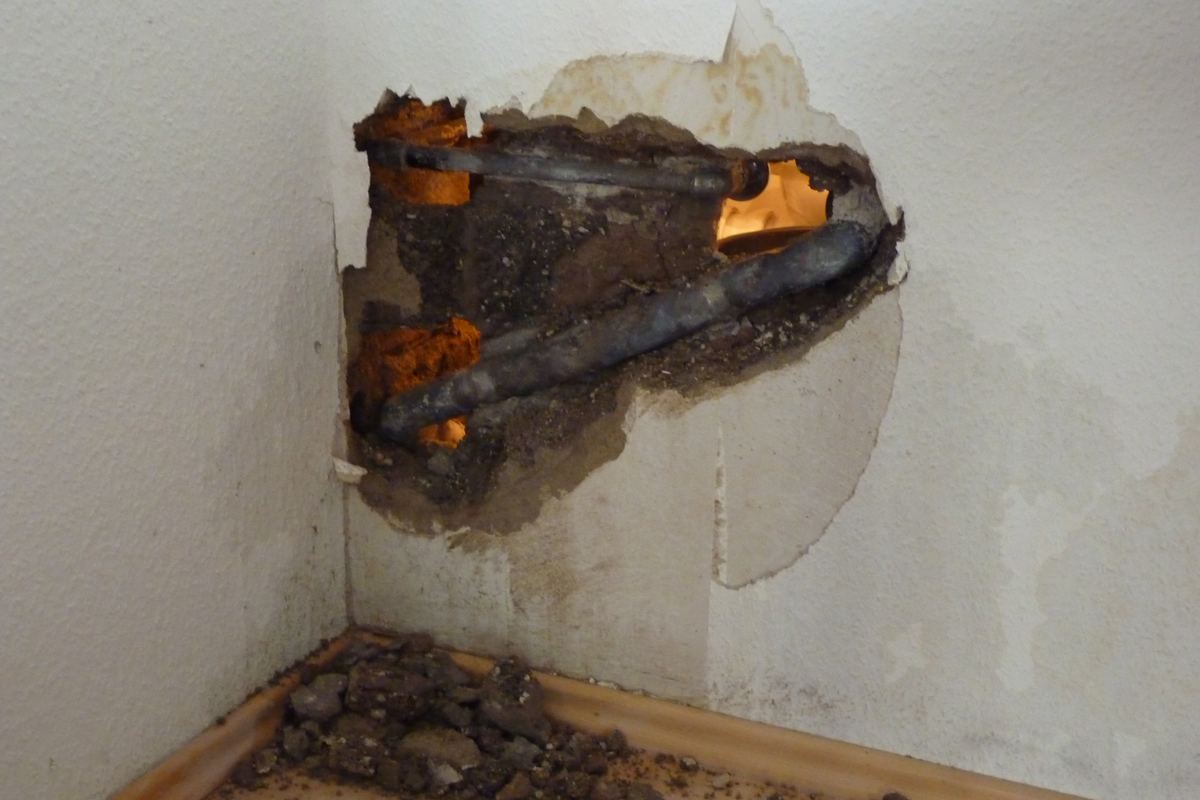
The CDC says mold will grow where there is moisture, such as around leaks in roofs, windows or pipes. Its advice is to fix leaks in the roof, walls or plumbing so mold does not have moisture to grow.
Food: Almost Anything in a House
Besides moisture, the EPA says mold needs nutrients, or food, and that it can grow on virtually any organic substance. Its course names paper, cloth, wood, plant material and soil.
The CDC's list reads like a tour of a house: paper, cardboard, ceiling tiles and wood, and also dust, paints, wallpaper, insulation, drywall, carpet, fabric and upholstery.
Dust Counts as Food
The Florida Department of Health says even dust settled on building materials or furniture can feed mold. That is one reason a clean surface can still grow mold if it stays damp.
What Happens to the Material
According to the EPA, mold that lands on a damp spot may begin digesting whatever it is growing on in order to survive. Over time, it says, molds destroy the things on which they grow.
Warmth: A Smaller Part Than Most People Think
Warmth is often named as a cause, but the EPA says that in most cases temperature is not an issue. Some molds grow in warm areas, it says, while others prefer cool places such as bread stored in a refrigerator.
The course adds that moisture, light and temperature may favor one kind of mold over another. So temperature shapes which mold grows more than whether any mold grows.
Warm, Humid Air and the Air Conditioner
Where warmth does matter is as a carrier of water. The Florida Department of Health lists warm, moist air from outdoors among the sources of indoor moisture.
That makes the air conditioner part of the picture for a house in Plantation or anywhere else in the state. The department says to use an air conditioner or a dehumidifier to keep humidity below 60 percent, and that if a central system needs a dehumidifier to get there, the system should be examined for problems.
When the Causes Line Up
Put together, the causes form a chain: spores that are always present, a material they can eat, and water that stays long enough. Take away the water and the chain breaks; the EPA's Brief Guide sums it up as the key to mold control is moisture control.
That is also why the agencies tie cleanup to the cause. The Florida Department of Health says that if mold returns quickly or spreads, there may be an underlying problem such as a water leak, and that leaks must be fixed first.
Finding the Cause in a Real House
Some causes are easy to see and some are inside walls or under floors. The EPA says to suspect hidden mold when a building smells moldy but you cannot see the source, and it suggests considering an experienced professional for a hidden problem.
Homes in Fort Lauderdale have their own page on mold inspection in Fort Lauderdale. If the question is about the dark mold people call black mold, what causes black mold has its own guide.
What Causes Mold: Short Answers
Can mold grow in a house with no leak?
Yes, according to the agencies. The EPA says a little condensation in a bathroom or around a window sill can be enough, and the Florida Department of Health lists everyday sources such as unvented shower steam, clothes dried indoors and even breath and sweat. High indoor humidity alone can supply the water.
Does bleach remove the cause of mold?
No. The Florida Department of Health says using bleach or other chemicals to kill indoor mold is not needed in most cases, and that the goal is to remove the growth by cleaning or removing moldy materials. It says to address the cause, usually moisture, and then remove the mold.
Is it normal to have some mold spores in a clean home?
Yes. The Florida Department of Health counts spores and bits of mold cells in the air as normal in any home. Growth is what it asks homeowners to prevent.
Will a mold test tell me what caused the mold?
The agencies point to the water, not the lab. The Florida Department of Health says it does not recommend testing or sampling to see if you have a mold problem, and tells people to look for visible growth and for signs of water damage such as leaks, stains and condensation. What sampling can and cannot show is on the mold testing page.
Sources
- U.S. Environmental Protection Agency, What Are Molds? (last updated January 14, 2026). https://www.epa.gov/mold/what-are-molds. Read 2026-11-23.
- U.S. Environmental Protection Agency, Mold Course Chapter 1. https://www.epa.gov/mold/mold-course-chapter-1. Read 2026-11-23.
- U.S. Environmental Protection Agency, A Brief Guide to Mold, Moisture and Your Home. https://www.epa.gov/mold/brief-guide-mold-moisture-and-your-home. Read 2026-11-23.
- Florida Department of Health, Mold. https://www.floridahealth.gov/community-environmental-public-health/environmental-public-health/air-quality/mold/. Read 2026-11-23.
- Centers for Disease Control and Prevention, Mold (September 26, 2024). https://www.cdc.gov/mold-health/about/index.html. Read 2026-11-23.
The service
Mold testing: what sampling by a Florida licensed mold assessor can and cannot tell you.
Other guides
How to ask
Send a request through the short form; you do not pay us to ask. A company whose mold assessor holds a Florida license may pay us for the introduction.