The short answer: The CDC says Stachybotrys chartarum, a greenish black mold, grows on material high in cellulose when there is constant moisture. The cause is water that keeps the material wet, and the mold testing page explains what a sample can and cannot add once you see dark growth.
We are a referral service, not a lab or a mold company. Every health statement below is quoted or closely paraphrased from the agency named beside it.
Black Mold Is a Nickname, Not a Species
The EPA is direct about the term. Its mold course says "black mold" is not a species or specific kind of mold, and neither is "toxic mold."
The same lesson says the news media sometimes use those terms for molds that may produce mycotoxins, or for one specific mold, Stachybotrys chartarum.
Many Molds Are Dark
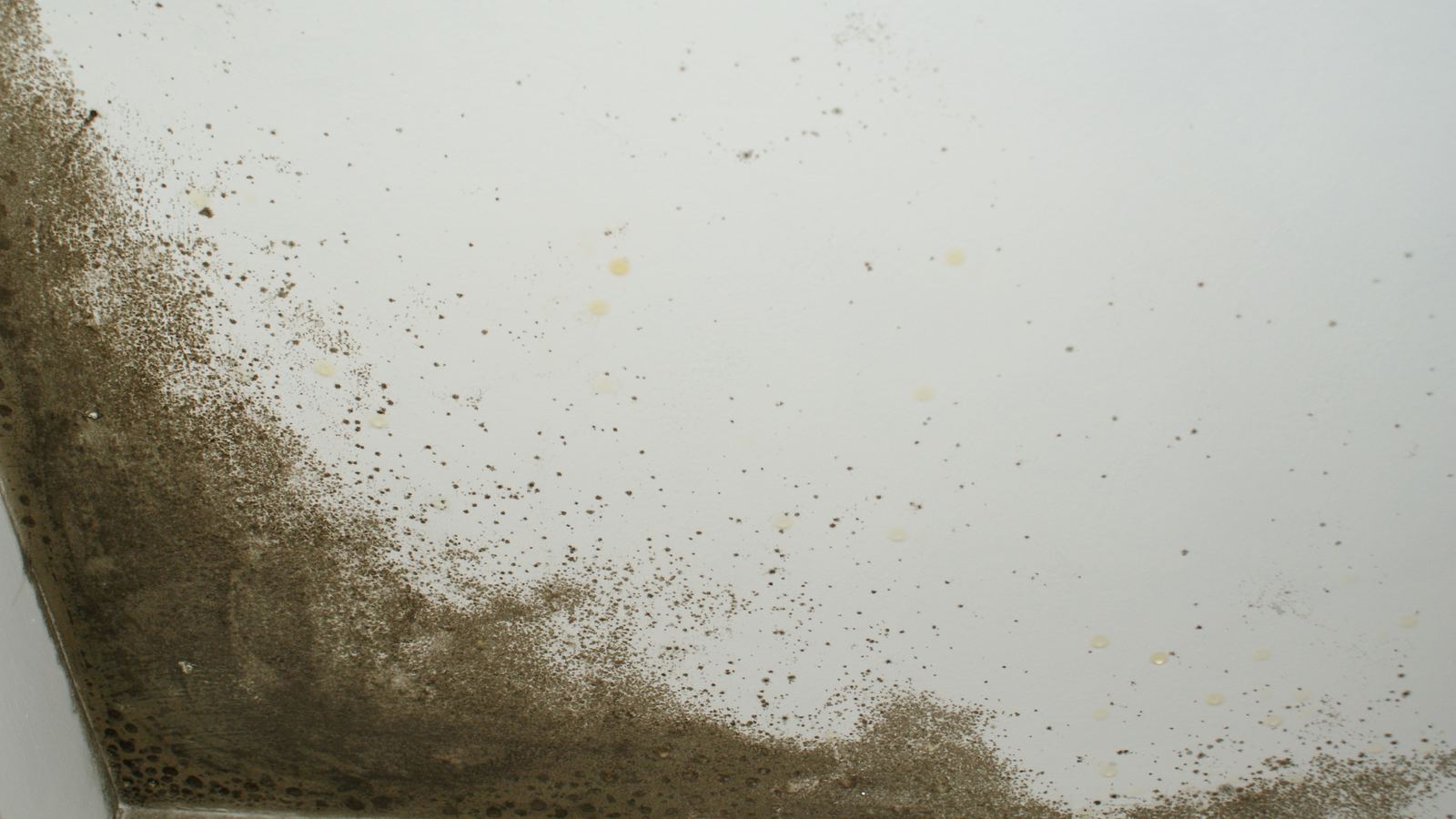
Dark color is common. The Florida Department of Health says visible mold can be white, gray, brown, black, yellow or green, and can look cottony, velvety, rough or leathery.
The EPA's Brief Guide shows a photo of mold on firewood with the caption that molds come in many colors, and that both white and black molds are shown.
What the Color Cannot Tell You
The EPA says no one can tell whether a mold is producing mycotoxins just by looking at it. A black patch on a wall therefore says nothing certain about its type or its toxins.
What Causes Black Mold: The CDC on Stachybotrys
The CDC's facts page on Stachybotrys chartarum is short, and it answers what causes black mold in two parts: the material and the water.
The Material: Cellulose
The CDC says it can grow on material with a high cellulose content, and gives fiberboard, gypsum board and paper as examples.
The Water: Constant Moisture
The CDC says growth occurs when there is moisture from water damage, water leaks, condensation, water infiltration or flooding. It adds one plain line: constant moisture is required for its growth.
Why Constant Matters
The list of water sources is one that feeds other molds too. What the CDC adds for this mold is the word constant: the material has to stay wet.
The general causes of indoor mold, from spores to humidity, are covered in what causes mold.
Is Black Mold More Toxic? What the Agencies Say
This is the question behind most searches for black mold, and it is a health question, so the answers below belong to the agencies. If you or your family have symptoms, the CDC says people with persistent symptoms should see their physician.
Mycotoxins
The EPA says some molds, but not all, may produce potentially toxic byproducts called mycotoxins under some conditions. It says the amount and types depend on many environmental and genetic factors.
The Florida Department of Health says molds that can produce mycotoxins are common and are sometimes called toxic mold. It adds that there are very few reports that toxic molds inside homes can cause unique or rare health conditions.
What Is Not Well Understood
The department says the toxic effects of certain molds are not well understood and are a controversial topic in the medical and scientific community. It names allergic disease as the most likely health problem related to mold exposure.
The Infant Bleeding Question
The CDC addresses one report often linked to Stachybotrys. It says a possible association between acute idiopathic pulmonary hemorrhage among infants and Stachybotrys chartarum has not been proven, and that further studies are needed.
All Molds Treated the Same
Both the CDC and the Florida Department of Health land in the same place. The CDC says it is not necessary to determine what type of mold you have, and that all molds should be treated the same with respect to potential health risks and removal.
The CDC also says that if Stachybotrys chartarum or other molds are found in a building, they should be removed.
Where That Leaves a Homeowner
The agencies do not sort mold by color. Whether a house in Plantation has black, green or white growth, the CDC says to remove it, and the Florida Department of Health says any water leaks must be fixed first.
If the house is in Fort Lauderdale, the mold inspection in Fort Lauderdale page covers what an assessor looks at.
Black Mold: Short Answers
Is black mold the same thing as toxic mold?
Not by the EPA's definition. It says neither "black mold" nor "toxic mold" is a species or specific kind of mold. The news media use both terms, it says, for molds that may produce mycotoxins or for Stachybotrys chartarum.
Does black mold need more water than other molds?
The CDC says constant moisture is required for Stachybotrys chartarum to grow. By contrast, the EPA says mold in general does not need a lot of water, and that a little condensation can be enough. So for this one mold, the CDC's wording is stricter.
Can a mold test show whether black mold is making someone sick?
The CDC says that at present no test exists that proves an association between Stachybotrys chartarum and particular health symptoms. What sampling is for, and its limits, is set out under mold testing.
Is black mold removed differently from other mold?
No. The CDC's rule that all molds be treated the same covers removal too, whatever the color. The Florida Department of Health says that if mold growth covers more than 10 square feet, or there was a lot of water damage, to consult the EPA's guide Mold Remediation in Schools and Commercial Buildings.
Sources
- Centers for Disease Control and Prevention, Facts about Stachybotrys chartarum (May 29, 2024). https://www.cdc.gov/mold-health/data-research/facts-stats/index.html. Read 2026-11-23.
- U.S. Environmental Protection Agency, Mold Course Chapter 1. https://www.epa.gov/mold/mold-course-chapter-1. Read 2026-11-23.
- U.S. Environmental Protection Agency, A Brief Guide to Mold, Moisture and Your Home. https://www.epa.gov/mold/brief-guide-mold-moisture-and-your-home. Read 2026-11-23.
- Florida Department of Health, Mold. https://www.floridahealth.gov/community-environmental-public-health/environmental-public-health/air-quality/mold/. Read 2026-11-23.
The service
Mold testing: what sampling by a Florida licensed mold assessor is used for, and its limits.
Other guides
How to ask
Send a request through the short form; you do not pay us to ask. A company whose mold assessor holds a Florida license may pay us for the introduction.