The short answer: To keep mold from coming back, keep the house dry: indoor humidity under the EPA's marks, spills and leaks dried within a day or two, and an air conditioner whose drain and filter are looked after. This picks up where a cleanup or mold remediation ends.
We connect homeowners with mold professionals; we do not do the work. The prevention steps here are the agencies' own, each named where it appears.
Why Mold Can Return After a Good Cleanup
A cleanup does not leave a house free of spores. The EPA's Brief Guide says it is impossible to get rid of all mold and spores indoors, since some float in the air and in house dust.
It also says those spores will not grow if moisture is not present. That puts the whole job of prevention on water and dampness.
Humidity Targets From the EPA
The EPA says to keep indoor relative humidity below 60 percent if possible, and ideally between 30 and 50 percent. The Florida Department of Health goes lower for best results: below 50 percent, it says, controls both mold growth and dust mites, though most experts suggest under 60.
Measuring Humidity at Home
A moisture or humidity meter tells you where you stand. The EPA describes it as a small instrument, about $10 to $50 at many hardware stores.
This page sticks to the checks after a cleanup. For the daily habits that lower indoor humidity and keep condensation off windows and pipes, read how to prevent mold in a Florida home.
Drying Wet Things Fast
Speed matters after any new leak or spill. The EPA says that if wet or damp materials are dried within 24 to 48 hours, in most cases mold will not grow.
The Florida Department of Health sets a tighter mark. It says to clean and dry spills within 24 hours, to dry out wet building materials and carpets within 24 hours, and that when water stands for even 24 hours, common molds can take hold.
After Mopping or Carpet Cleaning
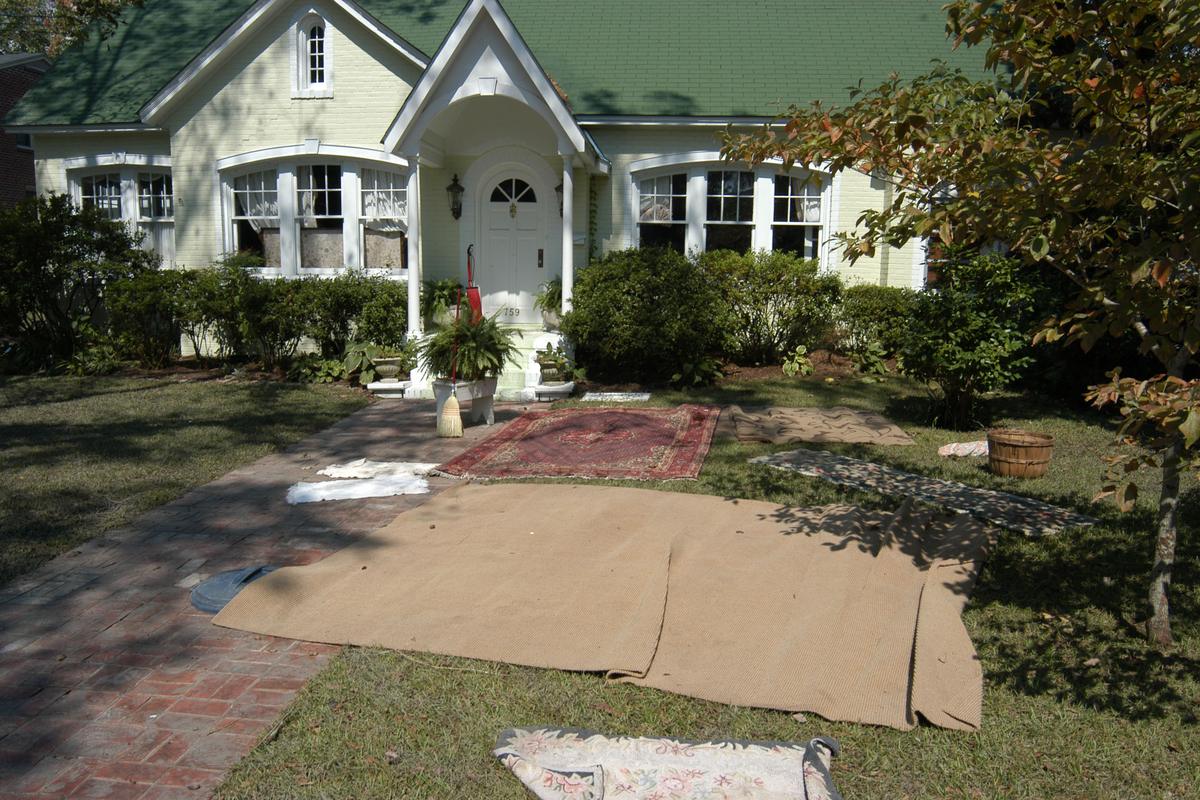
Cleaning with water adds moisture too. The EPA's mold course says to make sure carpets, drapes, furniture and other furnishings are dried promptly after they are cleaned.
Air Conditioning Upkeep
Once the mold is cleaned up, the air conditioner is the next place to look, since the agencies name several spots in and around it where water collects.
The Drain Pan and Drain Line
Clean drip pans and clear, properly flowing drain lines are on the EPA's list. Its mold course adds that drain pans should slope toward the drain so water does not stand under the cooling coils.
The ENERGY STAR maintenance checklist gives the reason: a plugged drain can cause water damage in the house and affect indoor humidity levels.
Coils, Liners and Filters
Around the air handling unit, the Florida Department of Health says to look for standing water, and it names the evaporator coils, liner surfaces, drain pans and drain lines as parts to inspect routinely. ENERGY STAR says to inspect, clean or change the air filter once a month.
Wet Insulation Inside the Ducts
Some parts cannot be cleaned. The EPA's course says that if insulation lining the inside of the air ducts gets wet or moldy, it should be removed and replaced.
What to Check Each Month
Only the filter check comes with a monthly mark from an agency, from ENERGY STAR. The rest are checks after a cleanup that the EPA and the Florida Department of Health name without a set schedule, so a monthly walk through is simply a way to remember them.
- Air filter: inspect, clean or change it (ENERGY STAR).
- Humidity: read the meter against the EPA's marks of below 60 percent, ideally 30 to 50 percent.
- Air handler: look for standing water around the unit and in the drain pan, and make sure the drain line flows (Florida Department of Health, EPA).
- The cleaned area: look for new spots, and treat quick regrowth as a sign of a leak to find (Florida Department of Health).
- Smell: a moldy smell with no visible source can point to hidden mold (EPA).
When Mold Shows Up Again
For a shower or bathroom where mold keeps reappearing, the EPA says more ventilation and more frequent cleaning will usually prevent it, or at least keep it to a minimum.
Elsewhere, the Florida Department of Health says mold that returns quickly or spreads may mean an underlying problem such as a water leak, which must be fixed first. A Florida licensed mold assessor can look for the source during a mold inspection.
If the mold is still there now, start with the three practices to get rid of mold in your home. The habits that keep mold from coming back are the same in Plantation as across the state, and a mold inspection in Fort Lauderdale follows the same rules.
Keeping Mold Away: Short Answers
Should the air conditioner stay on after mopping or carpet cleaning?
The EPA's mold course suggests so. It says the system removes moisture from the air, and that if it is turned off during or shortly after major cleaning with a lot of water, such as mopping and carpet shampooing, humidity may rise greatly and moisture or mold problems may develop.
How often should the air conditioner have a check up?
ENERGY STAR suggests an annual pre-season check up by a contractor, with the cooling system checked in the spring. It lists checking the condensate drain and cleaning the evaporator and condenser coils as part of a typical visit.
Should I have the air ducts cleaned after mold cleanup?
The EPA's course says to consider cleaning hard surface ducts, such as sheet metal, if substantial amounts of mold can be seen growing inside them, and points to its guide Should You Have the Air Ducts in Your Home Cleaned. It also notes that no antimicrobial products or biocides are approved by EPA for use on lined ductwork.
Is there a test that shows the cleanup worked?
The EPA says surface sampling may be useful to determine if an area has been adequately cleaned or remediated. It also says no EPA or other federal limits have been set for mold, and that sampling should be done by professionals with specific experience. The mold testing page explains how a Florida licensed mold assessor uses samples.
Sources
- U.S. Environmental Protection Agency, A Brief Guide to Mold, Moisture and Your Home (last updated February 18, 2026). https://www.epa.gov/mold/brief-guide-mold-moisture-and-your-home. Read 2026-11-23.
- U.S. Environmental Protection Agency, Mold Course Chapter 2 (last updated November 10, 2026). https://www.epa.gov/mold/mold-course-chapter-2. Read 2026-11-23.
- Florida Department of Health, Mold. https://www.floridahealth.gov/community-environmental-public-health/environmental-public-health/air-quality/mold/. Read 2026-11-23.
- ENERGY STAR, Maintenance Checklist. https://www.energystar.gov/saveathome/heating-cooling/maintenance-checklist. Read 2026-11-23.
The service
Mold remediation: what happens when the growth is too big for a homeowner and a Florida licensed mold remediator takes it on.
Other guides
What causes mold, mold cleaning and mold after water damage.
How to ask
Send a request through the short form; you do not pay us to ask. A company whose mold assessor or remediator holds a Florida license may pay us for the introduction.