The short answer: For a moldy area under about 10 square feet, the EPA says that in most cases you can do the mold cleaning yourself. Past that size, after heavy water damage, or where sewage was involved, the official guides move the job toward mold remediation and professional help.
We are a referral service, not a mold company. Every rule below comes from the EPA, the Florida Department of Health or the Florida Statutes, and each source is listed near the foot of the page.
The EPA's 10 Square Foot Line
The EPA starts with size. Its page on mold cleanup in your home says that if the moldy area is less than about 10 square feet, in most cases you can handle the job yourself.
The agency describes that as less than roughly a 3 foot by 3 foot patch. The Florida Department of Health gives Florida homeowners the same figure in the same words.
Measuring the Patch
Multiply the length of the moldy area by its width. A stain 2 feet by 4 feet is 8 square feet and sits under the line; a stain 3 feet by 4 feet is 12 square feet and sits over it.
When a Small Patch Is Still Not a Home Job
Size is one factor, not the only one. Both agencies list cases where they point a homeowner elsewhere:
- A lot of water damage. The EPA says to consult its guide Mold Remediation in Schools and Commercial Buildings, and notes that it applies to other building types too.
- Mold that may be in the heating or air conditioning system. The EPA says not to run the system if you know or suspect it is contaminated, because it could spread mold throughout the building.
- Sewage or other contaminated water. Both agencies say to call a professional who has experience cleaning and fixing buildings damaged by contaminated water.
- Health concerns. The EPA says to consult a health professional before starting cleanup, and the Florida Department of Health says to consult your doctor.
Mold You Cannot See
The EPA's Brief Guide to Mold, Moisture and Your Home says mold may hide on the back side of drywall, wallpaper or paneling, on the top side of ceiling tiles, and under carpets and pads.
It warns that removing wallpaper can lead to a massive release of spores if mold is growing on the underside. If you believe the problem is hidden, the guide says to consider hiring an experienced professional.
Cleaning a Small Patch Safely
The Florida Department of Health says mold should be cleaned as soon as it appears. It adds that the person doing the cleaning should be free of symptoms and allergies.
What the EPA Says to Wear
The Brief Guide names three items: gloves, goggles and an N-95 respirator.
- Gloves: long ones that reach the middle of the forearm. With water and a mild detergent, the EPA says ordinary household rubber gloves may be used.
- Goggles: the EPA recommends goggles without ventilation holes, to keep mold and spores out of your eyes.
- Respirator: to limit your exposure to airborne mold, the EPA says you may want to wear an N-95 respirator, sold at many hardware stores.
The guide also says to avoid touching mold or moldy items with your bare hands.
Hard Surfaces
The EPA's instruction for hard surfaces is short: scrub the mold off with detergent and water, then dry completely.
The state health department also allows a commercial mildew or mold cleaner. It says to dry the cleaned area thoroughly and to throw away any sponges or rags used on the mold.
Drywall, Carpet and Other Porous Materials
Absorbent materials are a different matter. The EPA says ceiling tiles, carpet and similar porous materials may have to be thrown away once moldy, because mold can fill their crevices and may be difficult or impossible to remove completely.
The Florida Department of Health names drywall, carpet padding and insulation as materials that are not easily cleanable. For those, it says removal and replacement may be necessary.
Stains That Stay
A cleaned surface may not look new again. The EPA notes that mold may cause staining and cosmetic damage, and that restoring an item's original appearance may not be possible.
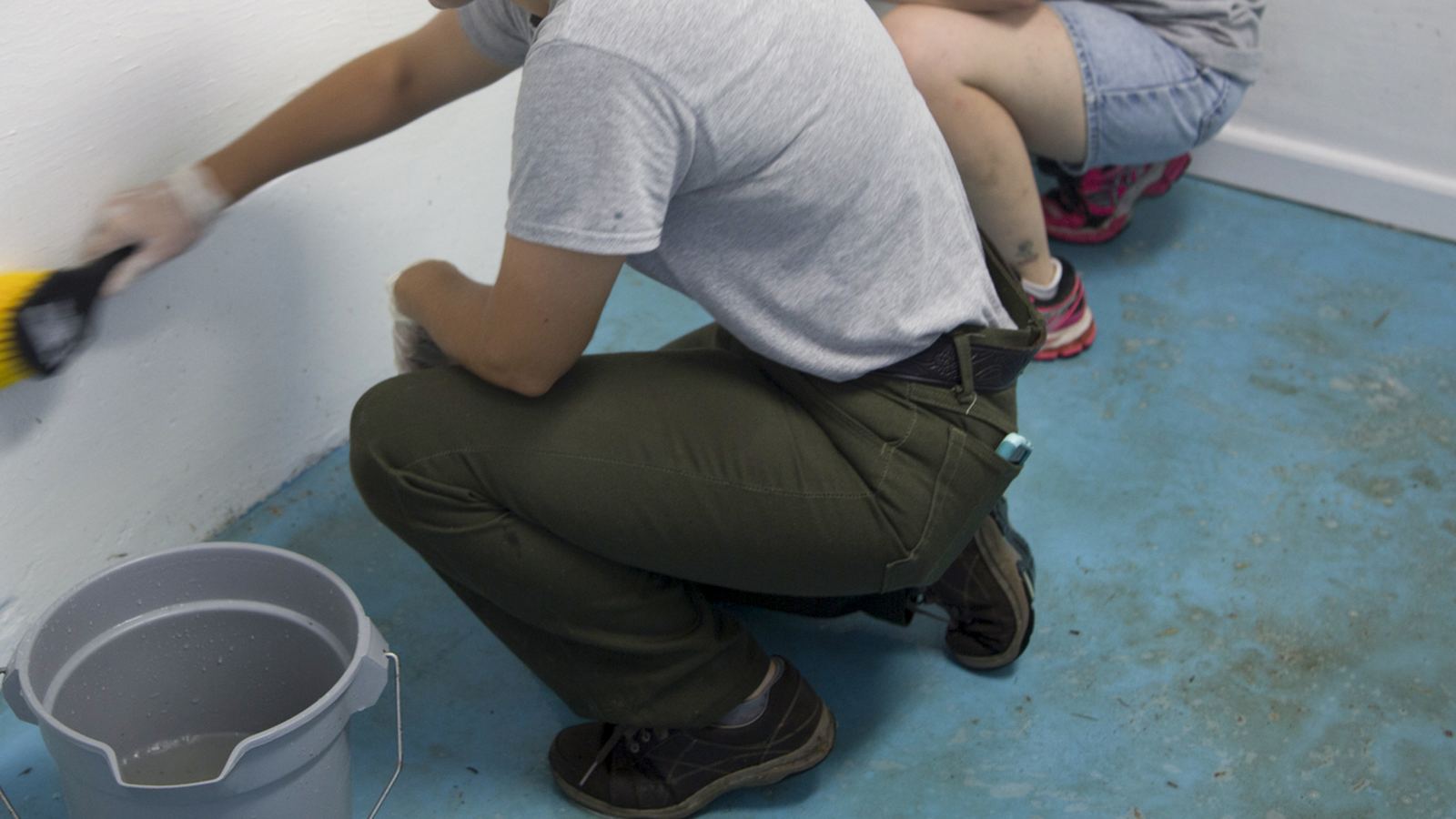
Bleach, Ozone and Paint
Bleach
Neither agency treats bleach as the main tool. The EPA says it does not recommend a chemical or biocide that kills mold, such as chlorine bleach, as a routine part of mold cleanup.
Killing mold is not the same as removing it. The EPA says dead mold may still cause allergic reactions in some people, so the mold has to be removed as well.
Both agencies warn against mixing chlorine bleach with ammonia cleaners. The EPA says toxic fumes could be produced; the Florida Department of Health says a dangerous chlorine gas may form, and it adds acids to the warning.
Ozone Generators
The Florida Department of Health answers this one with a plain no. It says ozone irritates lungs and is not likely to be effective against an indoor mold problem.
Paint and Caulk
Covering mold does not end it. The EPA says not to paint or caulk moldy surfaces, and that paint applied over them is likely to peel.
The Water Behind It
The EPA's first cleanup tip is to fix plumbing leaks and other water problems as soon as possible. The Florida Department of Health puts it in four words: water is the key.
When Cleaning Becomes Remediation
Florida law uses the same number as the EPA. Under section 468.8411 of the Florida Statutes, mold remediation covers removing, cleaning, sanitizing, demolishing or otherwise treating mold or mold contaminated matter of greater than 10 square feet that was not grown there on purpose.
Licenses for mold assessors and mold remediators come from the Florida Department of Business and Professional Regulation, which also regulates them.
Cleaning in Your Own Home
The statute carves out owners. Section 468.841 says a residential property owner who performs mold remediation on his or her own property is not required to comply with the mold remediation provisions of that part of the law.
That exemption answers who may do the work. The EPA's size and water limits above answer a different question: whether the job suits a homeowner with a scrub brush.
How the EPA's Professional Guide Sizes a Job
The EPA's remediation guide for schools and commercial buildings raises the level of protection as the moldy area grows. Its third chapter sets out these steps:
| A small area | When cleaning up a small area affected by mold, the guide says you should use an N-95 respirator at minimum. |
|---|---|
| 10 to 100 square feet | Limited containment is generally recommended: a single layer of 6 mil, fire retardant polyethylene sheeting around the moldy area. |
| More than 100 square feet | Full containment is recommended: double layers of polyethylene and a decontamination chamber or airlock for entry and exit. |
Size Is a Guide, Not a Rule
The same chapter says a heavy growth of mold in a relatively small area could release more spores than a lighter growth over a large one. It leaves the choice of containment to professional judgment.
Past the Line
In Plantation and the cities around it, a job past this line is one to ask about with a company whose mold remediator holds a Florida license. A Florida licensed mold assessor may look at the house first; mold inspection in Fort Lauderdale sets out what an assessor checks.
Mold Cleaning: Short Answers
Do I need to test the mold before I clean it?
The Florida Department of Health says that in most cases, if visible mold growth is present, sampling is not needed. It does not recommend testing to see whether you have a mold problem or what kind of mold is growing. It says all indoor mold growth should be removed promptly, no matter what type is present.
The mold in my shower keeps coming back. Is that a bigger problem?
The EPA says places that are often or always damp can be hard to keep completely free of mold. For mold in the shower or elsewhere in the bathroom that seems to reappear, it says more ventilation, such as running a fan or opening a window, and more frequent cleaning will usually prevent it or keep it to a minimum.
Should the air conditioning stay on while I clean?
The Florida Department of Health says that if a mold problem is found in the system, ideally the system should be shut down while cleaning or mold removal is performed. It accepts that this makes most Florida buildings very uncomfortable in hot and humid weather. The EPA's air duct guide is where both agencies send you before going further.
Will the area be free of mold once it is clean?
Not completely, and the EPA says that is normal. In most cases it is not possible or desirable to sterilize an area, and a background level of mold spores will remain. Those spores will not grow if the moisture problem has been resolved, which is why the guide to mold after water damage focuses on drying.
Sources
- U.S. Environmental Protection Agency, Mold Cleanup in Your Home (last updated June 4, 2026). https://www.epa.gov/mold/mold-cleanup-your-home. Read 2026-11-23.
- U.S. Environmental Protection Agency, A Brief Guide to Mold, Moisture and Your Home (last updated February 18, 2026). https://www.epa.gov/mold/brief-guide-mold-moisture-and-your-home. Read 2026-11-23.
- U.S. Environmental Protection Agency, Mold Remediation in Schools and Commercial Buildings Guide, Chapter 3 (last updated April 29, 2026). https://www.epa.gov/mold/mold-remediation-schools-and-commercial-buildings-guide-chapter-3. Read 2026-11-23.
- Florida Department of Health, Indoor Mold and Your Health. https://www.floridahealth.gov/community-environmental-public-health/environmental-public-health/air-quality/mold/. Read 2026-11-23.
- Florida Statutes, section 468.8411, Definitions. https://www.leg.state.fl.us/statutes/index.cfm?App_mode=Display_Statute&URL=0400-0499/0468/Sections/0468.8411.html. Read 2026-11-23.
- Florida Statutes, section 468.841, Exemptions. https://www.leg.state.fl.us/statutes/index.cfm?App_mode=Display_Statute&URL=0400-0499/0468/Sections/0468.841.html. Read 2026-11-23.
- Florida Department of Business and Professional Regulation, Mold-Related Services. https://www2.myfloridalicense.com/mold-related-services/. Read 2026-11-23.
The service
Mold remediation: what the work covers once a job is past what a homeowner can clean.
Other guides
Mold remediation cost, mold after water damage and how to get rid of mold in your home.
How to ask
Send a request on a short form of four fields. A company whose mold remediator holds a Florida license may pay us for the introduction.