The short answer: Stop the water, clean a small patch yourself only if it is under about 10 square feet, and leave anything bigger to mold remediation by a Florida licensed mold remediator. Doing them in that order is what lets you get rid of mold in your home rather than wipe it away for a while.
We are a referral service, not a mold company. Every rule below is quoted or closely paraphrased from the agency named beside it, and the documents are listed at the foot of the page.
Practice One: Stop the Water
The EPA's Brief Guide opens with one line: the key to mold control is moisture control. It says that if you clean up the mold but do not fix the water problem, the mold problem will most likely come back.
So the first practice is not cleaning at all. It is finding where the water comes from and stopping it.
Where the Water Usually Comes From
The Florida Department of Health keeps a list of where indoor moisture comes from. The ones a homeowner can usually find and stop include:
- Indoor plumbing leaks or broken water pipes
- Leaks from outside through the roof, walls or floors
- Sinks, tubs, toilets or air conditioner drain pans that overflow
- Steam from showers and cooking that is not vented
- Condensation, when indoor humidity runs too high or a surface is too cold
Fix the Leak, Then Dry Everything
The EPA's cleanup tips start with the same step: fix plumbing leaks and other water problems as soon as possible, and dry all items completely. It adds a warning that mold damages what it grows on, and the longer it grows, the more damage it can cause.
When the Water Was Sewage
One kind of water changes the plan from the start. The EPA says that if the water or mold damage was caused by sewage or other contaminated water, call in a professional who has experience cleaning and fixing buildings damaged by contaminated water.
Practice Two: Clean a Small Area Safely
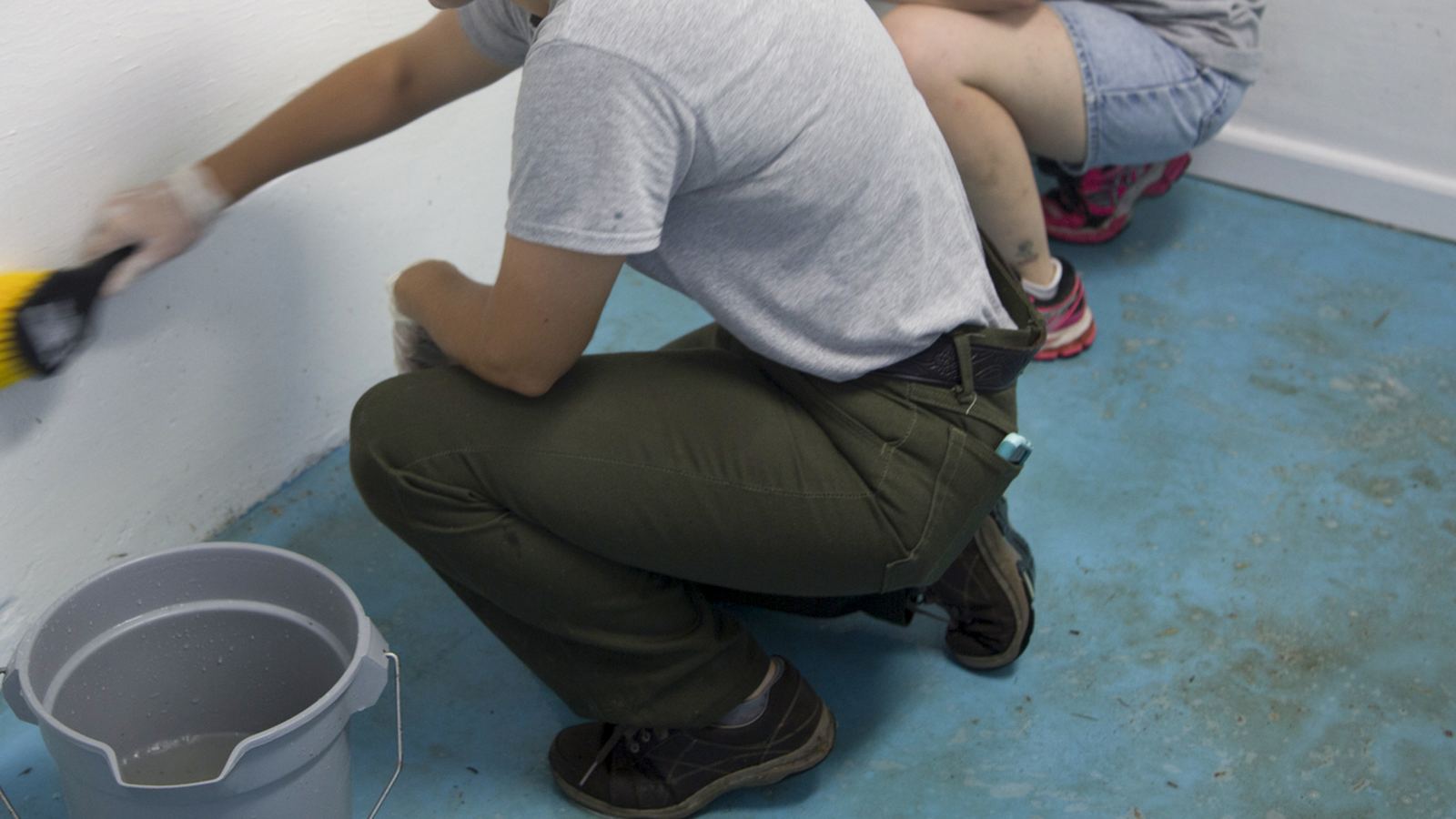
The size of the patch decides who should clean it. Under about 10 square feet, roughly 3 feet by 3 feet, the EPA says the job is in most cases one you can handle yourself; the Florida Department of Health draws the same line.
Small Jobs: What the EPA and the Health Department Say
The two agencies describe a small cleanup in a few plain steps, set out in more detail in the mold cleaning guide:
- Hard surfaces: scrub with detergent and water, then dry completely (EPA).
- Ceiling tiles, carpet and other absorbent materials: may need to go, since mold fills their crevices and may never come out completely (EPA).
- Paint and caulk: not over mold; clean and dry the surface first, or the paint is likely to peel (EPA).
- Throw away the sponges and rags used to clean the mold (Florida Department of Health).
What to Wear
The EPA says to avoid breathing in mold or spores and suggests an N-95 respirator that fits properly. It also recommends long gloves that reach the middle of the forearm and goggles without ventilation holes, and says not to touch mold or moldy items with bare hands.
Bleach Is Not the Main Tool
Bleach is not the EPA's routine tool: it does not recommend a biocide such as chlorine bleach as a routine practice during mold cleanup. It notes that dead mold can still set off allergic reactions in some people, so the goal is removal, not killing.
If you do use bleach, the EPA says never to mix it with cleaners that contain ammonia, because toxic fumes could be produced.
Before You Start
The Florida Department of Health wants the person cleaning to be clear of symptoms and allergies. The EPA says that if you have health concerns, consult a health professional before starting cleanup.
Practice Three: A Florida Licensed Mold Remediator for Bigger Jobs
Past the 10 square feet line, the EPA points away from do it yourself. It says that if there has been a lot of water damage, or mold covers more than 10 square feet, to consult its guide Mold Remediation in Schools and Commercial Buildings, which it says applies to other buildings too.
The state's line sits at the same 10 square feet. Section 468.8411, Florida Statutes defines mold remediation as the removal, cleaning, sanitizing, demolition or other treatment of mold of greater than 10 square feet, and a mold remediator as any person who performs it.
The Florida Department of Business and Professional Regulation is responsible for licensing mold assessors and mold remediators. Its FAQ page says only individuals are licensed to perform these services, not businesses.
Other Signs the Job Is Not a Small One
- The air conditioner may hold mold. If you know or suspect the system is contaminated, the EPA says to leave it off, since running it could spread mold through the building.
- The mold may be hidden. The EPA says to suspect it when a building smells moldy but you cannot see the source, and warns that pulling off wallpaper with mold behind it can release a massive amount of spores.
- The material cannot be cleaned. Drywall, carpet padding and insulation that do not clean easily may have to be removed and replaced, the Florida Department of Health says.
What the EPA Says to Ask Whoever Does the Work
The EPA says to make sure the person hired has experience cleaning up mold and to check references. It also says to ask them to follow its remediation guide or the guidelines of the ACGIH, the IICRC or another professional or government body.
How You Know the Job Is Finished
Whoever does the cleanup, the EPA gives the same signs that it is done:
- The water or moisture problem has been completely fixed.
- Visible mold and moldy odors are gone, though staining may remain.
- A visit shortly after cleanup shows no signs of water damage or mold growth.
- People can use the area again without health complaints or physical symptoms.
The EPA calls this, in the end, a judgment call with no easy answer. Keeping the house dry afterward is its own subject, covered in how to keep mold from coming back.
The steps to get rid of mold in your home are the same in Plantation as anywhere else in the state. For a house in Fort Lauderdale, the mold inspection in Fort Lauderdale page sets out what an assessor looks at.
Getting Rid of Mold: Short Answers
Do I need to know what kind of mold it is before I clean it?
No, according to the Florida Department of Health. It says you do not need to find out what type of mold you may have, and that all molds should be treated the same with respect to health risks and removal. It says all indoor mold growth should be removed promptly.
Should I have the mold tested before I clean it up?
The Florida Department of Health says it does not recommend mold testing or sampling to see if you have a mold problem. Where growth is already visible, the EPA calls sampling unnecessary in most cases. The mold testing page explains what sampling by a Florida licensed mold assessor is used for.
Will an ozone machine get rid of mold?
The Florida Department of Health answers no. It says ozone irritates lungs, is not likely to be effective against an indoor mold problem, and that no one should expose themselves or others to it on purpose. Its advice is to address the cause, usually moisture, and then remove the mold.
Sources
- U.S. Environmental Protection Agency, A Brief Guide to Mold, Moisture and Your Home (last updated February 18, 2026). https://www.epa.gov/mold/brief-guide-mold-moisture-and-your-home. Read 2026-11-23.
- U.S. Environmental Protection Agency, Mold Cleanup in Your Home (last updated June 4, 2026). https://www.epa.gov/mold/mold-cleanup-your-home. Read 2026-11-23.
- Florida Department of Health, Mold. https://www.floridahealth.gov/community-environmental-public-health/environmental-public-health/air-quality/mold/. Read 2026-11-23.
- Florida Statutes, Section 468.8411, Definitions. https://www.leg.state.fl.us/statutes/index.cfm?App_mode=Display_Statute&URL=0400-0499/0468/Sections/0468.8411.html. Read 2026-11-23.
- Florida Department of Business and Professional Regulation, Mold-Related Services. https://www2.myfloridalicense.com/mold-related-services/. Read 2026-11-23.
- Florida Department of Business and Professional Regulation, Mold-Related Services FAQs. https://www2.myfloridalicense.com/mold-related-services/faqs/. Read 2026-11-23.
The service
Mold remediation: what the work over 10 square feet involves when a Florida licensed mold remediator does it.
Other guides
How to ask
Send a request through the short form; you do not pay us to ask. A company whose mold remediator holds a Florida license may pay us for the introduction.