The short answer: Tell the assessor your home's water history, ask who is doing the work and how they will judge what they find, and keep every page they hand you. The service itself is described on the mold inspection page.
We are a referral service, not a mold company, so we do not inspect homes. The points below come from Florida law, the U.S. Environmental Protection Agency (EPA) and the Florida Department of Health, named as each one comes up.
Whether you need a visit at all is a separate question, covered in when should you get a mold inspection.
Before the Visit: What to Tell the Assessor
Florida law describes a mold assessment as drawing on data from a building history and an inspection (Florida Statutes 468.8411). Much of that history is in your head, so it pays to write it down first.
The Water History
The Florida Department of Health lists the places indoor moisture comes from. Among them:
- flooding from outside, such as storm water
- overflow from sinks, tubs, toilets or air conditioner drain pans
- condensation from indoor humidity that is too high or surfaces that are too cold
- leaks from outside through the roof, walls or floors
- plumbing leaks or broken water pipes
- sprinkler spray hitting the walls
- steam from showers and cooking that is not vented
Mark each one your home has had, with the room it touched and roughly when it happened. A rough date is more useful to the assessor than none.
How Long Things Stayed Wet
EPA's Brief Guide says that if wet or damp materials are dried within 24 to 48 hours after a leak or spill, in most cases mold will not grow. So note how long each area stayed wet and what was done to dry it.
What You Smell and What You See
The health department says indoor mold growth can usually be seen or smelled, and that an earthy or musty odor may mean a mold problem. Write down which rooms smell, and whether it is worse at certain times, such as when the air conditioner runs.
EPA says you may suspect hidden mold when a building smells moldy but you cannot see the source. If that is your situation, say so in the first minutes of the visit, because it changes where the assessor looks.
Stains, Spots and Peeling Paint
List every spot you have noticed, even small ones in closets or behind furniture. Leave them as they are rather than wiping or painting over them, so the assessor sees what you saw.
Repairs and Upkeep
EPA's guide for larger buildings lists questions to consider before mold work, among them whether there are existing moisture problems and whether maintenance has been delayed (EPA, Chapter 3). The same two questions apply to a house.
Tell the assessor about roof repairs, plumbing work and air conditioner service, and about anything you have been putting off.
The Air Conditioner
The health department says that if a home with central air needs a dehumidifier to bring relative humidity below 60 percent, the air conditioning system should be examined for problems. If that describes your house, mention it.
Getting the House Ready
- Clear a path to the air handler, the attic hatch and the water heater.
- Empty the cabinets under the kitchen and bathroom sinks.
- Pull furniture a little away from outside walls where you have seen stains.
- Have your written notes and any photos of past leaks ready to hand over.
During the Visit: What to Ask
A few direct questions tell you who is doing the work and how they will reach their conclusions. None of them are rude, and a good assessor expects them.
Who Is Doing the Assessment
Florida's Department of Business and Professional Regulation (DBPR) defines a mold assessor as any person who performs or directly supervises a mold assessment. Ask for the name of that person: DBPR's FAQs say "only individuals are licensed to perform these services."
DBPR says its online records let you verify a license by name or license number. You can look the name up while the assessor is still there.
Whether Anything Could Sway the Findings
Florida Statutes 468.8419 says a person may not inspect for a fee any property in which the assessor or the assessor's company has any financial or transfer interest. It also bars an assessment where the assessment itself, or its fee, depends on the conclusions.
Two plain questions follow from that.
Does anyone at your company have an interest in this property? Is your fee the same whatever you find?
If Removal Comes Up
Florida law treats removal as separate work done by a licensed mold remediator, with its own rules about who may do it. The Florida mold license rules guide sets those out.
Whether Samples Will Be Taken, and Why
EPA says that in most cases, if visible mold growth is present, sampling is unnecessary, and that no EPA or other federal limits have been set for mold or mold spores. So if samples are proposed, ask what question they are meant to answer.
EPA also says sampling should be done by professionals with specific experience in designing sampling plans and interpreting results. Ask who will read the lab results and how they will compare them.
Where They Looked and Where They Did Not
EPA names places mold can hide: the back side of drywall or paneling, the top of ceiling tiles, the underside of carpet and pads, and inside ductwork. Ask which of these were checked in your home.
EPA adds that investigating hidden mold calls for caution when it means disturbing places where mold may be growing. If the assessor wants to open a wall or lift carpet, ask what they will open and how they will contain it.
What the Report Will Look Like
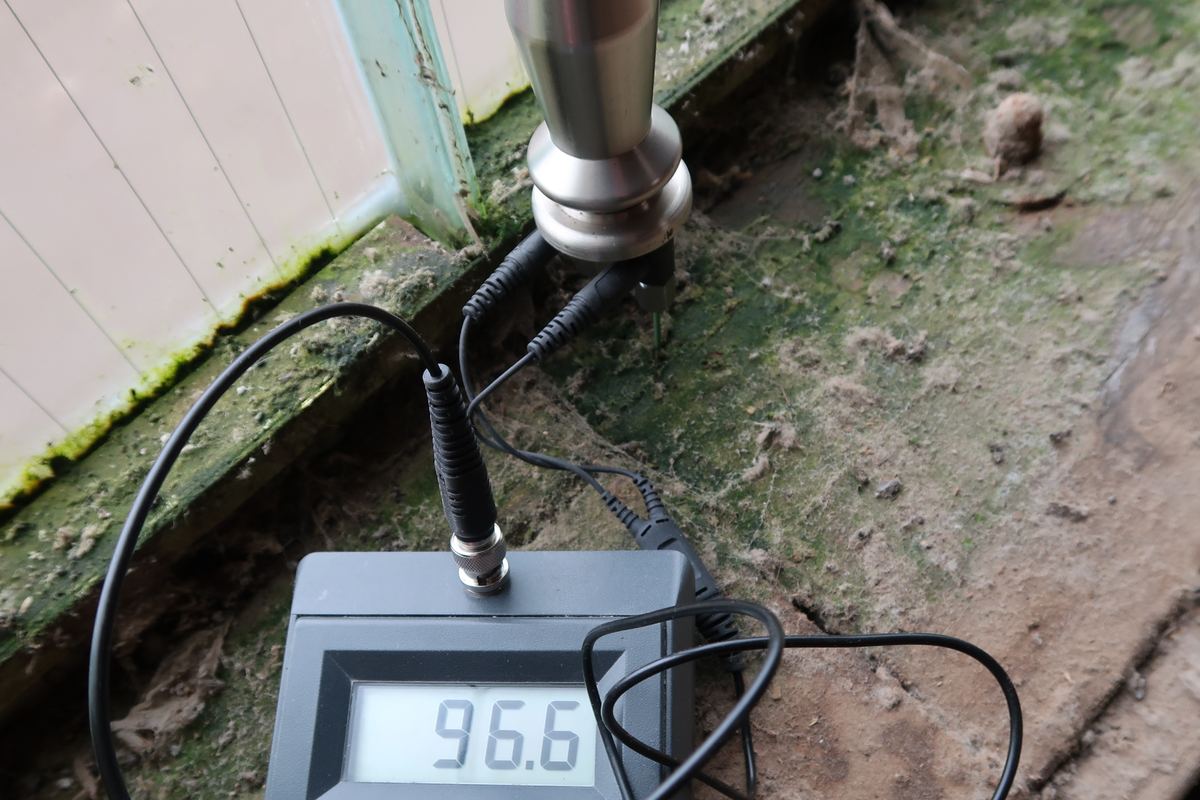
Ask when the written report will arrive and whether it will include photos, moisture readings and any lab results. The parts of a good one are explained in what a mold inspection report should include.
After the Visit: What to Keep
Put everything from the visit in one folder, paper or digital. Months later, it is often the only record of how things looked before any work began.
- the written report and any lab results
- the assessor's name and license number, as you looked it up
- your water history notes and leak photos, with dates
- invoices for repairs to the water source
- any later moisture readings or follow up notes
The Proof the Water Was Fixed
EPA says the water or moisture problem must be completely fixed before cleanup or remediation can be considered finished. The health department puts it the same way: any water leaks must first be fixed when solving mold problems.
That makes the repair invoice one of the most useful papers in the folder. It shows what was fixed, where and when.
A Baseline for Later
EPA says visible mold and moldy odors should not be present when a cleanup is finished, and that surface sampling may be useful to determine if an area has been adequately cleaned. Your first report is what any later check gets compared with.
If the Mold Comes Back
The health department says that if mold returns quickly or spreads, it may mean an underlying problem such as a water leak. Your notes and the first report give the next person somewhere to start.
The Mold Inspection Checklist in Short
| Before | Water history with rooms and dates, smells, spots, repairs, a clear path to the air handler and attic |
|---|---|
| During | The assessor's name, any interest in the property, how the fee is set, why samples are taken, what was not checked |
| After | Report, lab results, license lookup, your notes and photos, repair invoices |
The same mold inspection checklist works for a house anywhere in Florida, and the page on mold inspection in Plantation explains how a request from the city works. If your home is in the city next door, there is a page on mold inspection in Fort Lauderdale.
Mold Inspection Visit Questions
Should I clean up the mold before the assessor arrives?
It helps to leave visible spots as they are, so the assessor can see their size and where they sit. EPA advises caution about disturbing places where mold may be growing. Write down what you have seen instead, and point it out during the visit.
Can I ask the assessor to test the air?
You can ask, and it is fair to ask what question an air sample would answer in your home. Where mold can be seen, EPA's view is that sampling is unnecessary in most cases, and it notes that no federal limits exist for mold or mold spores. More on when samples are used is on the mold testing page.
The inspection found nothing, but I still smell mold. What now?
A moldy smell with no source in sight is the case EPA gives for suspecting hidden mold. Look at the report for the places that were not checked, such as the back of drywall or inside ductwork, and ask the assessor about them. Keep your notes on when the smell is strongest.
How do I know the assessor holds a Florida license?
Ask for the name of the person who did or supervised the assessment. DBPR licenses mold assessors as individuals, and its online records let you verify a license by name or license number.
Sources
- Florida Statutes 468.8411, Definitions (Mold-Related Services). http://www.leg.state.fl.us/statutes/index.cfm?App_mode=Display_Statute&URL=0400-0499/0468/Sections/0468.8411.html. Read 2026-11-23.
- Florida Statutes 468.8419, Prohibitions; penalties. http://www.leg.state.fl.us/statutes/index.cfm?App_mode=Display_Statute&URL=0400-0499/0468/Sections/0468.8419.html. Read 2026-11-23.
- Florida Department of Business and Professional Regulation, Mold-Related Services. https://www2.myfloridalicense.com/mold-related-services/. Read 2026-11-23.
- U.S. Environmental Protection Agency, A Brief Guide to Mold, Moisture and Your Home. https://www.epa.gov/mold/brief-guide-mold-moisture-and-your-home. Read 2026-11-23.
- U.S. Environmental Protection Agency, Mold Remediation in Schools and Commercial Buildings Guide: Chapter 3. https://www.epa.gov/mold/mold-remediation-schools-and-commercial-buildings-guide-chapter-3. Read 2026-11-23.
- Florida Department of Health, Mold. https://www.floridahealth.gov/community-environmental-public-health/environmental-public-health/air-quality/mold/. Read 2026-11-23.
- Florida Department of Business and Professional Regulation, Mold-Related Services FAQs. https://www2.myfloridalicense.com/mold-related-services/faqs/. Read 2026-11-23.
The service
Mold inspection: the visit this checklist prepares you for, by a Florida licensed mold assessor.
Other guides
What a mold inspection report should include and mold inspection cost.
How to ask
Send a request through the short form. A company whose mold assessor holds a Florida license may pay us for the introduction.