The short answer: A useful report ties each finding to a spot in your home, names the water behind it, and ends with a written scope a remediator can follow. The walk through that produces those findings is explained on the mold visual inspection page.
We are a referral service, not a mold company, so we do not write reports. What follows is drawn from Florida law and from the U.S. Environmental Protection Agency (EPA), named beside each point.
If you want help preparing for the visit itself, the mold inspection checklist covers what to tell the assessor and what to keep.
What a Mold Inspection Report Is Meant to Answer
Florida law describes a mold assessment as a process done by a mold assessor that uses physical sampling and a detailed look at the building history and an inspection (Florida Statutes 468.8411). Its purpose, in the statute's words, is an initial hypothesis about the origin, identity, location and extent of amplification of mold growth.
Those four words make a fair yardstick for any mold inspection report. Read it and ask whether it tells you where the mold started, what it is, where it is and how far it reaches.
The Size the Law Has in Mind
The same section defines an assessment as covering mold growth of greater than 10 square feet. A report that gives the area of each patch lets you see which side of that line your home falls on.
The Name on the Report
The statute defines a mold assessor as any person who performs or directly supervises a mold assessment, and the Florida Department of Business and Professional Regulation (DBPR) licenses those people. So the report should say which person did or supervised the work.
Checking That Name
DBPR's online records can be searched by name or by license number, the department says. Looking up the name printed on the report is a simple check you can make yourself.
The Findings
The findings are the body of the report. EPA's guide for larger buildings lists two of them among its key steps: assess the size of the mold problem and note the type of damaged materials, then identify the source or cause of the water or moisture (EPA, Chapter 3).
A findings section that answers both, room by room, gives the next person something to plan from.
What Material Is Affected
Material matters because cleanup depends on it. EPA says porous materials that are wet and have mold growing on them may have to be discarded, because mold can be difficult or impossible to remove from them completely.
So a line that says drywall, carpet, wood or tile tells you more than a line that only says mold was observed.
Where the Water Comes From
EPA's guide says that when mold is addressed, the source of the moisture must be addressed too, or the mold problem may simply reappear. It names four things to check:
- high humidity and condensation
- actual water leaks
- maintenance issues
- problems with the heating and air conditioning system
A finding with no likely cause attached is only half a finding. If yours reads that way, it is fair to ask the assessor what they think is feeding the growth.
Places That Were Not Opened
EPA lists surfaces where growth can hide: the back side of drywall, wallpaper and paneling, the top of ceiling tiles and the underside of carpets and pads. A clear report says which of these were checked and which were not.
EPA also says that if hidden mold is found later, the remediation plan should be revised to cover the total area. A note on what was not seen tells you where that could happen.
The Air Conditioning System
EPA says not to run a heating and air conditioning system you know or suspect is contaminated with mold. It gives two reasons to suspect it: the system is part of an identified moisture problem, or there is mold growth near its intake.
If the findings mention either one, that line deserves a direct question to the assessor.
The Photos
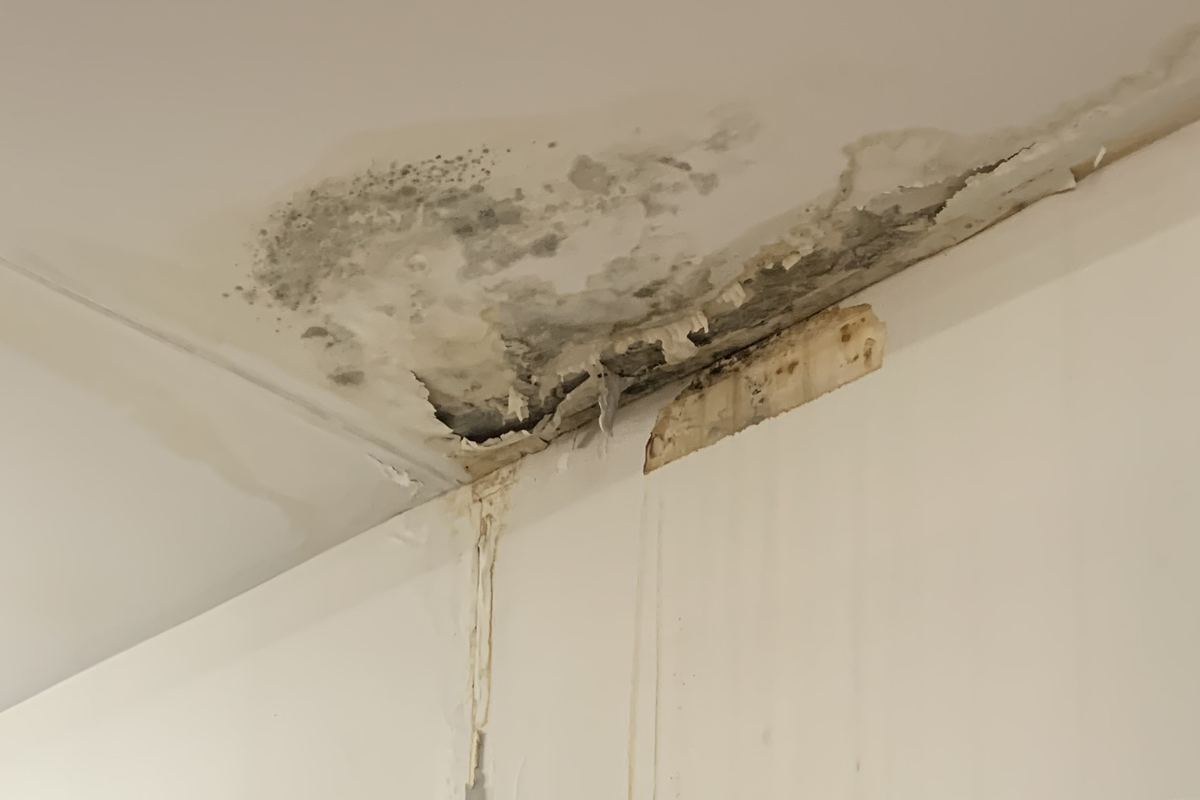
Photos let you match each finding to a real place. The most useful ones carry a label with the room and the spot, and a close view next to a wider one so you can find it again.
Why One Side of a Wall Is Not the Whole Story
EPA's guide shows a piece of wallboard whose front looks fine while its back side is covered with mold. A photo of a clean surface is a record of that surface, not proof of what sits behind it.
The Moisture Readings
Readings put numbers beside what the eye sees. EPA says moisture meters can measure the moisture content of building materials after water damage, using a thin probe pushed into the material or pressed against its surface.
It names carpet, wallboard, wood, brick and concrete as materials they work on. A good report gives each reading with its location and the material it was taken on.
Humidity in the Air
Some reports also record indoor humidity. EPA's Brief Guide says to keep it below 60 percent relative humidity if possible, ideally between 30 and 50 percent, so a reading can be set against that mark.
Readings as a Starting Point
EPA says the same meters can be used to monitor the drying of damaged materials. That makes the first readings in the report a baseline that later ones can be compared with.
Readings to Look For
| Material moisture | A reading per spot, with the room and the material named |
|---|---|
| Indoor humidity | Relative humidity, compared with EPA's below 60 percent mark |
| Drying checks | Later readings at the same spots, if drying is under way |
Sample Results, If There Are Any
Not every report has a lab section. Where visible growth is present, EPA says sampling is in most cases unnecessary (EPA, Mold Testing or Sampling).
EPA names the cases where sampling may be considered: litigation, an unclear source of the mold, and health concerns. Surface sampling may also be used to check whether an area has been adequately cleaned.
What a Sampling Section Should Explain
EPA says sampling should follow a plan built on a theory about where the mold is coming from, one the samples can prove or disprove. A report with samples should state that theory in plain words.
It should also say which kind of sample was taken. EPA lists air samples, surface samples, bulk samples such as pieces of carpet or wallboard, and water samples from condensate drain pans.
The Outdoor Comparison
Among the mistakes EPA lists for inexperienced sampling is leaving out outdoor control samples. It also says that after remediation, the kinds and amounts of mold indoors should be similar to the local outdoor air, which is why an outdoor sample gives indoor results something to stand against.
Air Samples Are a Snapshot
EPA compares air sampling to a snapshot: it shows what was in the air at the moment the sample was taken. A single air result describes that moment, not every day in the house.
No Pass or Fail Number
EPA says no EPA or other federal limits have been set for mold or mold spores. The Florida Department of Health says there are no health or exposure based standards for judging a mold sampling result.
So a lab number in your report is read against the assessor's theory and the outdoor sample, not against a legal limit. More on sampling is on the mold testing page.
The Scope for Remediation
The remediation scope is the part that says what should be done. EPA says a remediation plan should include steps to fix the water or moisture problem, cover protective equipment, and contain and remove moldy materials so the mold does not spread.
Area and Containment
EPA's guidelines tie containment to the size of the area. They generally recommend limited containment for 10 to 100 square feet of mold and full containment for more than 100 square feet.
EPA adds that the choice of containment should rest on professional judgment, since heavy growth in a small area can release more spores than light growth in a large one. A scope that explains its choice is easier to compare between companies.
Cleaned or Removed
EPA describes four cleanup methods: wet vacuum, damp wipe, HEPA vacuum, and discarding damaged materials sealed in plastic bags. A clear scope says which method applies to which material in which room.
When the Plan Changes
A plan can change, EPA says, when circumstances change or new facts come to light. A scope written for what could be seen may grow once walls are opened.
Who Carries It Out
Florida law defines mold remediation separately, as the removal, cleaning, sanitizing, demolition or other treatment of more than 10 square feet of mold, done by a mold remediator. What that work involves is on the mold remediation and removal page.
How the Report Should Define Done
A scope is easier to judge when it says how the end will be recognized. EPA's list for knowing remediation is finished starts with the water: the moisture problem must be completely fixed.
- no visible mold, mold damaged materials or moldy odors
- if samples were taken, indoor mold should be similar to what is found outside
- a visit shortly after the work should show no signs of water damage or mold growth
EPA closes that list by calling the end of a job a judgment call with no easy answer. That is one more reason to have the finish line written into the report before work starts.
The Same Parts Wherever You Live
The parts of a report are the same for a house in Plantation or anywhere else in the state. For a home in a neighboring city, see what a mold inspection in Fort Lauderdale covers.
Mold Inspection Report Questions
Does every mold inspection report include lab results?
No. EPA says that in most cases, if visible mold growth is present, sampling is unnecessary, so a report may rest on the findings, photos and moisture readings alone. Where samples were taken, the report should say why and which kind.
Can I use the report to compare remediation quotes?
That is one of its uses. EPA says its remediation guidelines can help a remediation manager assess a plan submitted by outside professionals, and a written scope gives each company the same areas, materials and methods to price. What changes the price is covered in mold remediation cost.
What does more than 10 square feet mean in a report?
Florida's definitions of mold assessment and mold remediation both cover mold growth of greater than 10 square feet. EPA's Brief Guide also says that if mold growth covers more than 10 square feet, its guide for schools and commercial buildings should be consulted. A report that measures each area shows which side of that line you are on.
Who can I check the assessor's license with?
DBPR, the Florida Department of Business and Professional Regulation. Look up the name printed on the report in its online records, by name or license number. The rules are explained in Florida mold license rules.
Sources
- Florida Statutes 468.8411, Definitions (Mold-Related Services). http://www.leg.state.fl.us/statutes/index.cfm?App_mode=Display_Statute&URL=0400-0499/0468/Sections/0468.8411.html. Read 2026-11-23.
- Florida Department of Business and Professional Regulation, Mold-Related Services. https://www2.myfloridalicense.com/mold-related-services/. Read 2026-11-23.
- U.S. Environmental Protection Agency, Mold Remediation in Schools and Commercial Buildings Guide: Chapter 3 (last updated April 29, 2026). https://www.epa.gov/mold/mold-remediation-schools-and-commercial-buildings-guide-chapter-3. Read 2026-11-23.
- U.S. Environmental Protection Agency, Mold Testing or Sampling (last updated January 14, 2026). https://www.epa.gov/mold/mold-testing-or-sampling. Read 2026-11-23.
- U.S. Environmental Protection Agency, A Brief Guide to Mold, Moisture and Your Home (last updated February 18, 2026). https://www.epa.gov/mold/brief-guide-mold-moisture-and-your-home. Read 2026-11-23.
- Florida Department of Health, Mold. https://www.floridahealth.gov/community-environmental-public-health/environmental-public-health/air-quality/mold/. Read 2026-11-23.
The service
Mold visual inspection: the walk through by a Florida licensed mold assessor that the findings come from.
Other guides
How to ask
Send a request through the short form; you do not pay us to ask. A company whose mold assessor holds a Florida license may pay us for the introduction.