The short answer: A mold inspection earns its place when water got somewhere it should not have, when you smell mold you cannot find, when health complaints line up with a damp home, or when a cleanup needs checking. Each section below quotes the agency that says so.
We are a referral service, not a mold assessor. The inspection itself is done by a company whose mold assessor holds a Florida license, which may pay us for the introduction.
After a Leak or Water Damage
Water comes first because mold cannot grow without it. The Florida Department of Health says "controlling moisture is the key to stopping indoor mold growth, because all molds require water to grow" (Florida Department of Health, Indoor Mold and Your Health).
The department names where that water comes from:
- flooding from outside, such as storm water or storm surge
- leaks from outside the building through the roof, walls or floors
- indoor plumbing leaks or broken water pipes
- house plants that are watered too much
The first day or two
The EPA says that "if wet or damp materials or areas are dried 24-48 hours after a leak or spill happens, in most cases mold will not grow" (EPA, A Brief Guide to Mold, Moisture and Your Home).
The Florida Department of Health puts it more sharply: "When water stands for even 24 hours, common molds can take hold."
When the water reached places you cannot see
A spill wiped off a tile floor is one thing. Water that ran into a wall cavity, under carpet pad or above a ceiling is harder to judge from the room.
Where the EPA says mold hides
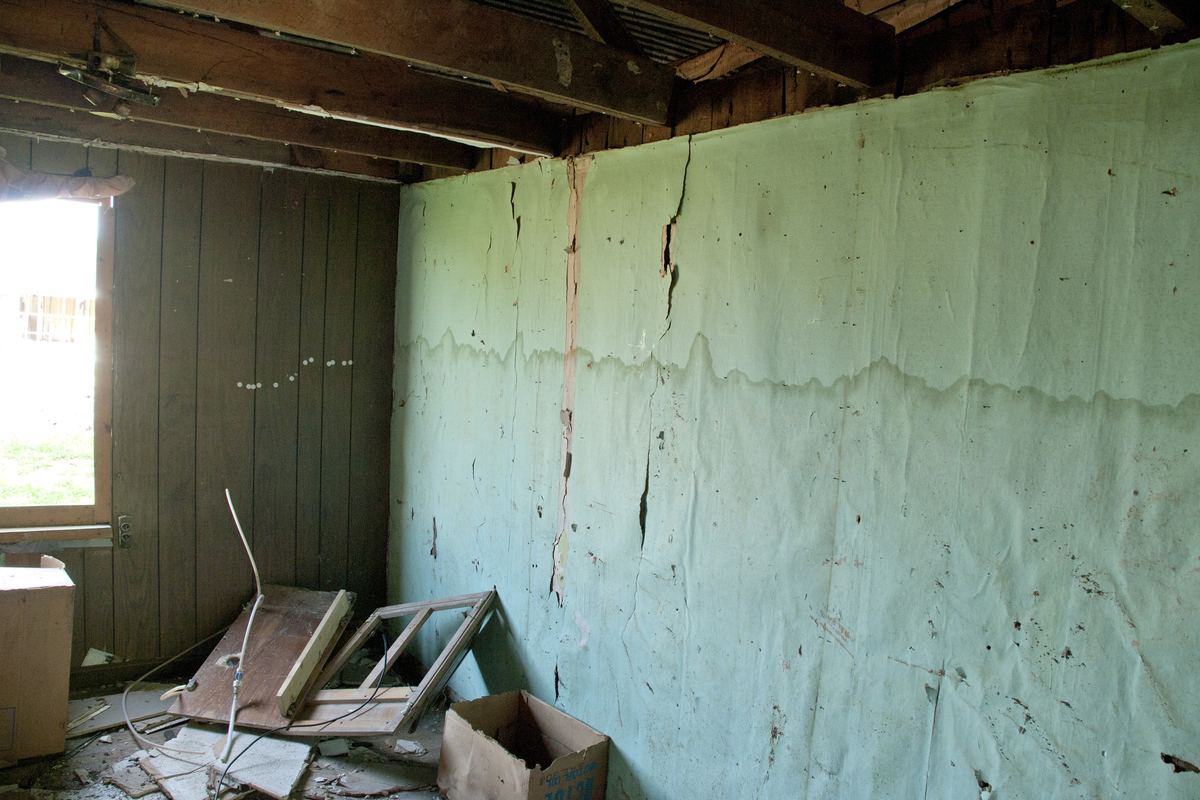
The EPA lists the back side of drywall, wallpaper or paneling, the top side of ceiling tiles, the underside of carpets and pads, inside walls around leaking or condensing pipes, inside ductwork, and roof materials above ceiling tiles.
How wetness is measured
In its remediation guide, the EPA says moisture meters "may be helpful for measuring the moisture content in a variety of building materials following water damage" and can also be used "to monitor the process of drying damaged materials" (EPA, Mold Remediation in Schools and Commercial Buildings, chapter 3).
Readings like these show whether a wall or floor is still wet after the visible water is gone. The mold inspection after water damage page covers that kind of visit.
A Musty Smell With No Mold in Sight
A smell is often the first sign. The Florida Department of Health says: "If you can smell an earthy or musty odor, you may have a mold problem."
The EPA ties the smell to hidden growth: "You may suspect hidden mold if a building smells moldy, but you cannot see the source."
Why opening things up calls for care
The EPA warns that investigating hidden mold "may be difficult and will require caution when the investigation involves disturbing potential sites of mold growth."
Its example is wallpaper: removing it "can lead to a massive release of spores if there is mold growing on the underside of the paper." The EPA's advice for a suspected hidden problem is to "consider hiring an experienced professional."
When the growth is already in plain view
The Florida Department of Health says "indoor mold growth can usually be seen or smelled" and that "in most cases, if visible mold growth is present, sampling is not needed."
It also says "you do not need to find out what type of mold you may have," because "all molds should be treated the same when it comes to health risks and removal."
When People in the Home Report Symptoms
The EPA names a second trigger for suspecting hidden mold: "if you know there has been water damage and residents are reporting health problems."
The Florida Department of Health makes a similar link: "If mold-allergic people have some of the symptoms listed above when in your home, you may have a mold problem."
The symptoms the health department lists
For people sensitive to molds, the department lists "nasal and sinus irritation or congestion, dry hacking cough, wheezing, skin rashes or burning, watery or reddened eyes." It adds that molds "can also trigger asthma attacks in persons with asthma."
Who the agencies send you to
Both agencies point health questions to a doctor or health professional. The Florida Department of Health says "those with special health concerns should consult a medical doctor if they feel their health is affected by indoor mold."
The EPA's remediation guide says: "If building occupants are reporting serious health concerns, you should consult a health professional."
When the EPA says sampling may be considered
The same guide says sampling may be considered as part of a site evaluation in specific instances:
- cases where litigation is involved
- when the source of the mold contamination is unclear
- when health concerns are a problem
It also cautions that "the results of sampling may have limited use or application."
After a Cleanup: Checking the Work
The fourth moment comes at the end, once the mold has been removed. The EPA gives three tests for knowing a cleanup is finished:
- The water or moisture problem has been completely fixed.
- Mold removal is complete, and visible mold and moldy odors are gone.
- People can occupy or re-occupy the area without health complaints or physical symptoms.
What a check after cleanup can show
The EPA says "surface sampling may be useful to determine if an area has been adequately cleaned or remediated" (EPA, Mold Testing or Sampling).
Its remediation guide adds that "pre- and post-remediation sampling may also be useful in determining whether remediation efforts have been effective."
The outdoor comparison
There is no federal pass mark for the numbers. In place of one, the EPA says that after remediation "the types and concentrations of mold in indoor air samples should be similar to what is found in the local outdoor air."
The return visit
The EPA also says: "You should revisit the site(s) shortly after remediation, and it should show no signs of water damage or mold growth."
Who may do the check
Florida law sets limits on one person or company both cleaning a home and assessing it. Our Florida mold license rules guide sets out those limits with the statute text.
Small Visible Patches: What the Health Department Says
Not every patch of mold leads to a visit. The Florida Department of Health says that if the moldy area is less than about 10 square feet, "in most cases, you can handle the job yourself."
It also says that "if the mold returns quickly or spreads, it may mean you have an underlying problem, such as a water leak." A patch that keeps coming back points back to the first moment in this guide.
Asking From Plantation or Nearby
If one of these moments fits your home, the page on mold inspection requests in Plantation explains how the referral works. If you live in Fort Lauderdale, open the page on mold inspection in Fort Lauderdale.
Buying a home raises its own timing question, which the guide on mold inspection before buying a house answers.
When Should You Get a Mold Inspection: More Questions
Does the Florida Department of Health inspect homes for mold?
No. The department says it "does not provide mold testing or support to professional consultants." It does give advice to the public, help identify mold problems and answer questions about health effects, according to its Indoor Mold and Your Health page.
Who licenses mold assessors in Florida?
The Florida Department of Business and Professional Regulation. Its Mold-Related Services page says the department "is responsible for licensing and regulating mold assessors and mold remediators." Its FAQs say "only individuals are licensed to perform these services," so the license to look up belongs to a person, not a company.
What do the agencies say about the leak itself?
Both put the water first. The EPA says to "fix plumbing leaks and other water problems as soon as possible" and to "dry all items completely." The Florida Department of Health says "any water leaks must first be fixed when solving mold problems."
Does it cost anything to ask through this site?
No. You do not pay us to ask. Any company that receives your request sets its own fee, so ask for it in writing before you agree to a visit.
Sources
- Florida Department of Health, Indoor Mold and Your Health. https://www.floridahealth.gov/community-environmental-public-health/environmental-public-health/air-quality/mold/. Read 2026-11-23.
- U.S. EPA, A Brief Guide to Mold, Moisture and Your Home. https://www.epa.gov/mold/brief-guide-mold-moisture-and-your-home. Read 2026-11-23.
- U.S. EPA, Mold Testing or Sampling. https://www.epa.gov/mold/mold-testing-or-sampling. Read 2026-11-23.
- U.S. EPA, Mold Remediation in Schools and Commercial Buildings Guide, chapter 3. https://www.epa.gov/mold/mold-remediation-schools-and-commercial-buildings-guide-chapter-3. Read 2026-11-23.
- Florida DBPR, Mold-Related Services. https://www2.myfloridalicense.com/mold-related-services/. Read 2026-11-23.
- Florida DBPR, Mold-Related Services FAQs. https://www2.myfloridalicense.com/mold-related-services/faqs/. Read 2026-11-23.
- Florida Statutes 468.8419, Prohibitions; penalties. https://www.leg.state.fl.us/statutes/index.cfm?App_mode=Display_Statute&URL=0400-0499/0468/Sections/0468.8419.html. Read 2026-11-23.
The service
Mold inspection and testing: what a Florida licensed mold assessor looks at and when samples are taken.
More guides
Mold after water damage: how soon it starts. What goes into an inspection quote.
How to ask
Send a request. The inspection is done by a company whose mold assessor holds a Florida license, which may pay us for the introduction; you do not pay us to ask.