The short answer: Mold remediation in a Miami home or condo runs in four stages: find and fix the water, contain the work area, remove or clean the moldy material, and confirm the result. In a condo, a fifth question sits on top of all four: which parts of the building are yours to fix and which belong to the association.
Cobalt Heron Mold Referrals is a referral service run by Pensacola SEO Company. We do not assess or remove mold, and nothing here is legal advice.
Before the Work: Stop the Water
The EPA says a remediation plan should include steps to fix the water or moisture problem, "or the problem may reoccur" (EPA remediation guide, chapter 3). Removal without that repair treats the result and leaves the cause.
The same EPA chapter lists questions to settle before work begins, among them whether materials have been wet for more than 48 hours and whether there are hidden sources of water.
In a Tower, the Water May Start Next Door
Many Miami homes share walls, floors and pipes. The Census Bureau estimates that 48.8 percent of the city's housing units are in buildings of 20 or more units (ACS 2020 to 2024, table DP04).
In a building like that, the wet drywall in your unit can trace back to a riser, a roof or the unit above. Who repairs that source is often a condo association question, covered further down.
When Florida Calls It Remediation
Florida law defines mold remediation as removal, cleaning, demolition or other treatment of mold "of greater than 10 square feet" (Florida Statutes 468.8411). The Florida Department of Business and Professional Regulation licenses the people who do it, called mold remediators (DBPR, Mold-Related Services).
The same definition says a mold remediator may not do work that needs a chapter 489 contractor license unless also licensed under that chapter. Rebuilding a wall or fixing a pipe can therefore fall to a second company.
Containment: Closing Off the Work Area
The EPA gives containment one purpose: to limit the release of mold into the air and surroundings so that workers and occupants are exposed as little as possible. Moldy debris should stay inside the work area.
The EPA ties the level of containment to the size of the moldy area, with professional judgment on top, since dense growth on a small patch can release more spores than light growth on a large one.
Limited Containment
For roughly 10 to 100 square feet of mold, the EPA generally recommends an enclosure of one layer of 6 mil, fire retardant polyethylene sheeting with a slit entry and a covering flap.
Vents, doors and risers sealed
Inside that enclosure, the EPA says supply and air vents, doors, chases and risers must be sealed with sheeting. In a high rise, ask the company which vents, chases and risers in your unit it plans to seal.
Full Containment
Above 100 square feet, or wherever the living space would likely be further contaminated, the EPA recommends double layers of polyethylene and a decontamination chamber or airlock for going in and out.
That chamber should be big enough to hold a waste container and let a worker put on and take off protective gear. Used gear, except respirators, goes into a sealed bag there.
A sign you can see from outside
Containment is kept under negative pressure, with fans exhausting to the outdoors. The EPA says that when it works, the sheeting should billow inwards on all surfaces; if it flutters or billows outward, containment has been lost.
The Air Conditioning During the Job
The EPA's advice is plain: "Do not run the HVAC system if you know or suspect that it is contaminated with mold." Ask the company how it will handle the air conditioning while the work is under way.
Removal and Cleaning
The EPA says the purpose of remediation is to remove the mold, "not just to kill the mold," because dead mold is still allergenic and some dead molds are potentially toxic.
What Can Be Cleaned
On hard, nonporous surfaces such as tile or metal, the EPA says mold can generally be wiped or scrubbed off with water, or water and detergent. Those surfaces then need to be dried quickly and thoroughly.
What Usually Comes Out
The Florida Department of Health names drywall, carpet padding and insulation as materials that are not easily cleanable, where "removal and replacement may be necessary" (Florida Department of Health, Mold).
Bagged before it leaves the room
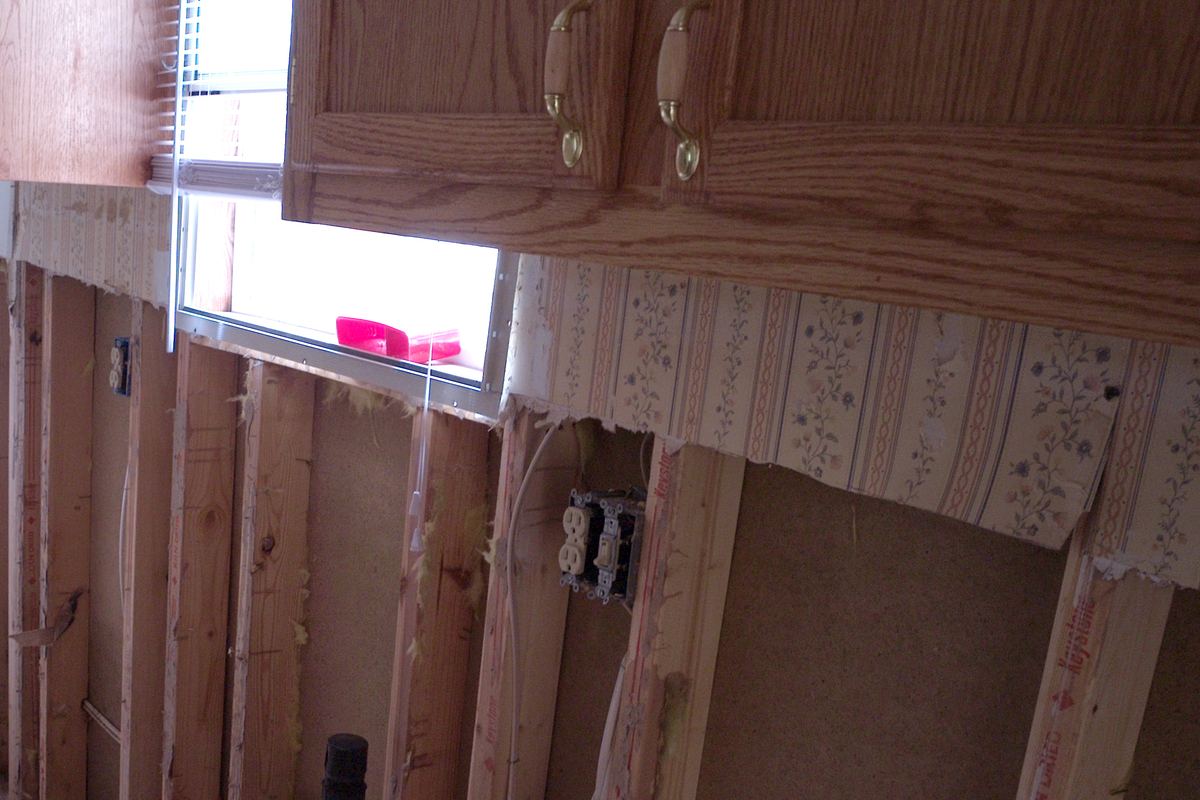
The EPA says moldy material that cannot be saved should be double bagged in 6 mil polyethylene and sealed before it leaves the containment area. After that it can usually be thrown out as ordinary construction waste.
Large items with heavy growth are wrapped in sheeting and taped first. In a tower, that matters on the way to the elevator, the hallway and the loading area.
HEPA vacuuming at the end
Once the material is dry and the moldy pieces are gone, the EPA recommends HEPA vacuums for the final cleanup, and for settled dust outside the work area too.
Bleach, Biocides and Paint
The EPA does not recommend a biocide such as chlorine bleach as a routine part of remediation, though it allows that professional judgment may call for one in some cases. It also says not to paint or caulk moldy surfaces, since paint over mold is likely to peel.
Clearance: How You Know It Is Finished
The EPA lists what a finished job looks like, and calls the final decision "a judgment call":
- The water or moisture problem is completely fixed.
- Mold removal is complete, with no visible mold, mold damaged materials or moldy odors left.
- If samples were taken, the kinds and amounts of mold indoors are similar to those found outside.
- A visit shortly after the work shows no new water damage or mold growth.
- People can live in the space again without health complaints or physical symptoms.
Who Checks the Work
Under Florida law, a mold assessment is done by a mold assessor and includes sampling and a detailed evaluation of the building's history and inspection. Ask before the job starts who will do the final check and what the written result will show; the mold inspection and testing page explains that side of the work.
Before you sign off
Walk the area with the company and compare it with the list above. Keep the written scope, the photos and any clearance report together, because a condo association or a later buyer may ask for them.
Condo Association Questions
Florida's condominium law starts the answer. Section 718.113 says maintenance of the common elements is the association's responsibility, "except for any maintenance responsibility for limited common elements assigned to the unit owner by the declaration" (Florida Statutes 718.113).
Under that wording, the declaration of condominium for your building is the document that assigns any of that maintenance to unit owners. Ask the association for a copy, and a lawyer if the answer is in dispute.
Questions to Bring to the Association
- Where did the water start: in my unit, in another unit, or in a common element such as a riser or the roof?
- Under our declaration, which of the damaged parts does the association maintain and which do I?
- Has the association already hired anyone to find or repair the leak?
- Does the building have rules for outside workers, such as hours, elevator use or debris removal?
- Who will check the work at the end, and will the association want a copy of the result?
When the Association Needs Into Your Unit
Section 718.111 gives the association "the irrevocable right of access to each unit during reasonable hours" when that is needed to maintain, repair or replace common elements or parts of a unit it maintains, or to prevent damage (Florida Statutes 718.111).
The same section lets the board enter an abandoned unit and "repair the unit if mold or deterioration is present." The statute sets its own test for when a unit counts as abandoned.
Renters and Insurance
The Census Bureau estimates that 69.2 percent of occupied homes in Miami are rented. If you rent, start with the guide for renters with mold in a Florida apartment.
Whether a policy pays for any of this is set by the policy and Florida law, not by us. The guide does homeowners insurance cover mold in Florida quotes the statute.
Asking About Mold Remediation in Miami
The EPA suggests that anyone hiring help with a mold cleanup make sure the contractor has experience cleaning up mold, check references, and ask it to follow the EPA's remediation guide or other professional or government guidelines (EPA, A Brief Guide to Mold, Moisture and Your Home).
Checking a remediator's license and comparing scopes is the subject of choosing a mold removal company in Miami. The state rules themselves are in mold remediation law in Florida and Miami.
Our mold inspection in Miami page covers the city's rain, tides and buildings. If you want to ask a company about mold remediation in Miami for your home, you can send a request; any work is done by a company whose mold remediator holds a Florida license, which may pay us for the introduction.
Requests from across South Florida go through the same form, described on the Plantation mold inspection page.
Miami Remediation Questions
Do I have to move out during mold remediation?
Not always. For some jobs, the EPA says, especially those with large areas of mold, the plan may move some or all occupants out for a time. It lists what that decision should weigh, including the size and type of the area and the health effects people report. Ask the company whether its plan for your home includes it.
Should the air be tested after the work?
The EPA says that if samples were taken, the mold indoors should be similar to the mold outside once cleanup is done. The Florida Department of Health notes that there are no health or exposure based standards for judging a mold sampling result. Ask the person doing the final check what any sample will be compared with and why.
How long does a remediation job take?
The EPA says a remediation plan may vary greatly with the size and complexity of the job and may need revision if circumstances change or new facts are discovered. In a condo, building rules and a second company for repairs can add to it. The guide how long does mold removal take goes through what changes the timeline.
Who pays when the leak came from the unit above?
We cannot answer that for your building. Florida Statutes 718.113 puts maintenance of common elements on the association, with exceptions the declaration assigns to unit owners, and each policy sets its own coverage. Ask the association, your insurer, or a lawyer who has read your declaration.
Sources
- U.S. EPA, Mold Remediation in Schools and Commercial Buildings Guide, Chapter 3. https://www.epa.gov/mold/mold-remediation-schools-and-commercial-buildings-guide-chapter-3. Read 2026-11-23.
- U.S. EPA, A Brief Guide to Mold, Moisture and Your Home. https://www.epa.gov/mold/brief-guide-mold-moisture-and-your-home. Read 2026-11-23.
- Florida Department of Health, Mold (Indoor Mold and Your Health). https://www.floridahealth.gov/community-environmental-public-health/environmental-public-health/air-quality/mold/. Read 2026-11-23.
- Florida DBPR, Mold-Related Services. https://www2.myfloridalicense.com/mold-related-services/. Read 2026-11-23.
- Florida Statutes 468.8411, Definitions. https://www.leg.state.fl.us/statutes/index.cfm?App_mode=Display_Statute&URL=0400-0499/0468/Sections/0468.8411.html. Read 2026-11-23.
- Florida Statutes 718.111, The association. https://www.leg.state.fl.us/statutes/index.cfm?App_mode=Display_Statute&URL=0700-0799/0718/Sections/0718.111.html. Read 2026-11-23.
- Florida Statutes 718.113, Maintenance; limitation upon improvement. https://www.leg.state.fl.us/statutes/index.cfm?App_mode=Display_Statute&URL=0700-0799/0718/Sections/0718.113.html. Read 2026-11-23.
- U.S. Census Bureau, American Community Survey 2020 to 2024 five year estimates, table DP04 (Selected Housing Characteristics), Miami city, Florida. https://data.census.gov/table/ACSDP5Y2024.DP04?g=160XX00US1245000. Read 2026-11-23.
The service
Mold remediation and removal: what the job covers and how the stages fit together.
Other guides
How to ask
Send a request. Any work is done by a company whose mold remediator holds a Florida license, which may pay us for the introduction.