The short answer: The length of mold remediation depends on the plan for your home. The EPA says a remediation plan "may vary greatly depending on the size and complexity of the job" (EPA remediation guide, chapter 3).
Cobalt Heron Mold Referrals is a referral service run by Pensacola SEO Company. We do not remove mold and we do not set anyone's schedule.
Why No Official Day Count Exists
The same EPA sentence goes on: the plan "may require revision if circumstances change or new facts are discovered." A start and finish written before a wall is opened is an estimate, and it can move.
The EPA wrote that guide for schools and commercial buildings, and its home guide says the document is applicable to other building types (EPA brief guide). It is the guide the Florida Department of Health points to when there is a lot of mold growth.
How Long Does Mold Removal Take? Start With the Size
The EPA says its remediation guidelines "are based on the area and type of material affected by water damage and/or mold growth". The area also decides how much setup happens before any mold comes off a wall.
Under About 10 Square Feet
The EPA describes this as less than roughly a 3 foot by 3 foot patch, and says that in most cases you can handle the job yourself. Florida's legal definition of mold remediation covers mold of greater than 10 square feet (Florida Statutes 468.8411).
Between 10 and 100 Square Feet
Here the EPA generally recommends limited containment: one layer of fire retardant plastic sheeting around the moldy area. The space inside is kept under negative pressure so that contaminated air does not flow into the rooms around it.
That enclosure is built before the removal starts. It is part of the job's length even though no mold is touched while it goes up.
More Than 100 Square Feet
For larger areas the EPA recommends full containment, with double layers of plastic and an airlock for going in and out. The EPA says the airlock should be large enough to hold a waste container and let a person put on and take off protective gear.
When a Small Area Needs More
Square footage is a starting point, not the rule. The EPA notes that heavy growth in a small area could release more spores than lighter growth in a large one, and says the choice of containment should be based on professional judgment.
Mold Found Partway Through
Hidden mold is one of the plainest reasons a schedule grows. The EPA lists the back side of drywall, wallpaper or paneling, the top of ceiling tiles and the underside of carpets and pads among the places it hides.
If hidden mold turns up, the EPA says the remediation plan should be revised "to account for the total area affected by mold growth." A bigger area means more containment, more removal and more drying.
Time Away From the House
The EPA says that in some cases, especially those involving large areas of contamination, the plan may include temporary relocation of some or all of the people in the building.
The factors it lists for that decision are the size and type of the area, the health effects people report, the possible health risks from debris, and how much disruption the work is likely to cause. Ask the company whether its plan has you out of the house, and for how long.
The Materials Involved
Hard surfaces and soft ones lead to different jobs. The EPA says mold can generally be removed from hard surfaces by wiping or scrubbing with water, or water and detergent, and that those surfaces should be dried quickly and thoroughly.
Materials That Come Out
The Florida Department of Health says that when moldy material is not easily cleanable, "such as drywall, carpet padding and insulation, then removal and replacement may be necessary" (Florida Department of Health, Mold).
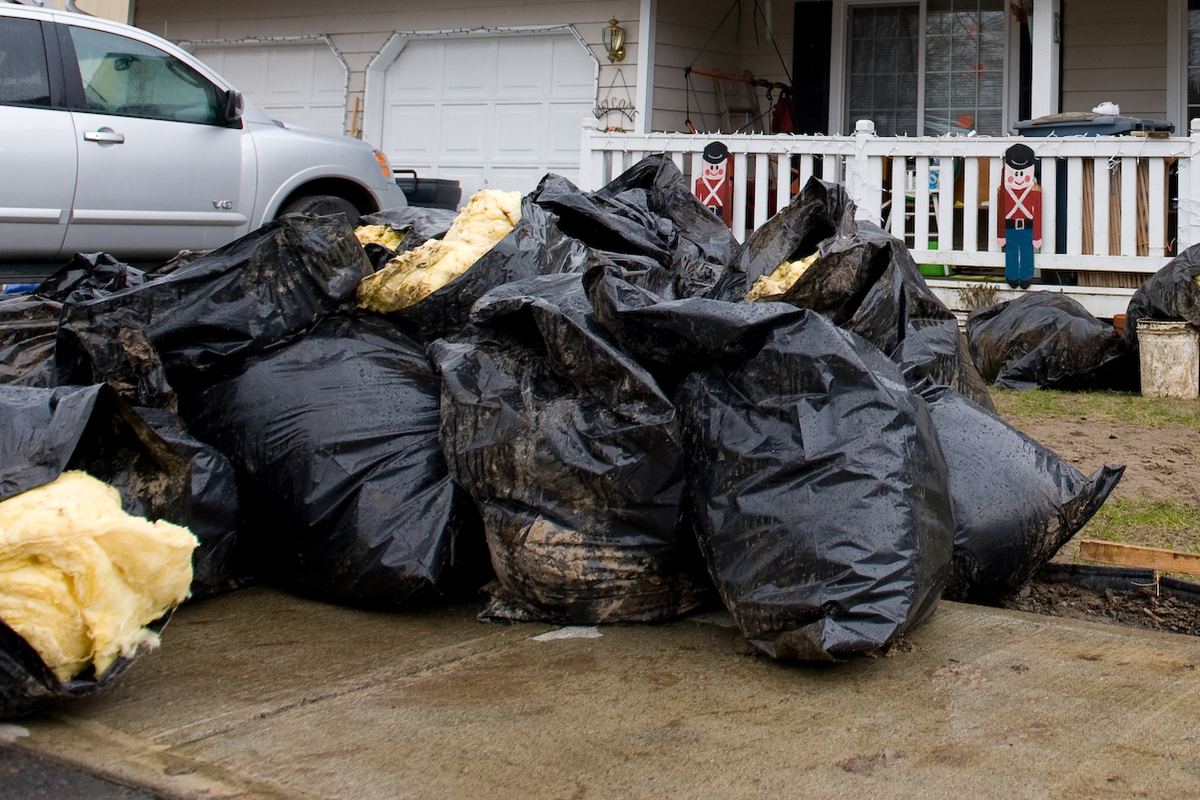
Removal has its own steps. The EPA says moldy materials that cannot be saved should be double bagged in 6 mil plastic sheeting, and sealed in bags before they leave the containment area.
Putting the Room Back Together
New drywall, flooring or a roof repair may be outside the remediator's license. Florida law says a mold remediator may not perform work that requires a license under chapter 489 unless the remediator also holds that license or complies with that chapter (Florida Statutes 468.8411).
So the rebuild can be a separate job with its own start date. Ask whether the time you were given ends when the mold is gone or when the room is usable again.
The Air Conditioning System
The Florida Department of Health says that ideally the air conditioning system should be shut down while cleaning or mold removal is performed. The same page notes that stopping it would make most Florida buildings very uncomfortable in hot and humid weather.
If the system itself may hold mold, the health department points to the EPA's guide on whether to have air ducts cleaned. Ask whether the ducts and air handler are in the plan, since that changes how long the house goes without cooling.
Drying Before and During the Work
Water comes before mold. The Florida Department of Health says "any water leaks must first be fixed when solving mold problems."
The First Two Days After a Leak
The EPA says that if wet or damp materials are dried 24 to 48 hours after a leak or spill, in most cases mold will not grow. Our guide to mold after water damage covers those first days in detail.
Drying as a Step of Its Own
The EPA recommends HEPA vacuums for the final cleanup "after materials have been thoroughly dried and contaminated materials removed." Final cleanup waits for dry materials, so a wet wall stretches the whole job.
Drying can be measured rather than guessed. The EPA says moisture meters can be used to monitor the drying of damaged materials such as carpet, wallboard, wood, brick and concrete.
Paint Waits Too
The EPA says not to paint or caulk moldy surfaces, and to clean and dry them before painting. Paint applied over moldy surfaces is likely to peel.
The Check at the End
A job is finished when it meets a standard, not when a set number of days has passed. The EPA's signs that remediation is finished are these.
- The water or moisture problem has been completely fixed.
- Mold removal is complete: visible mold, mold damaged materials and moldy odors should not be present.
- A return visit shortly after the work shows no signs of water damage or mold growth.
- The people in the home can use the area again with no health complaints or physical symptoms.
The EPA adds: "Ultimately, this is a judgment call; there is no easy answer." The return visit alone means the job does not close on the last day of work.
Clearance Sampling
The EPA says surface sampling may be useful to determine if an area has been adequately cleaned or remediated. If samples are taken, the kinds and concentrations of mold indoors should be similar to those found outside once the cleanup is done.
The EPA also calls an air sample a snapshot of the moment it was taken. If the plan includes samples, ask when results are expected and who will read them.
Who Does the Sampling
Under Florida law, a mold assessment is performed by a mold assessor and includes physical sampling. The Florida Department of Business and Professional Regulation licenses both mold assessors and mold remediators (Florida DBPR, Mold-Related Services).
Getting a Schedule for Your Home
A Florida licensed mold remediator who has seen the job can put a schedule in writing. These questions cover each part of the timeline above.
- How large is the moldy area, and what containment does the plan use?
- Which materials will be cleaned and which will come out?
- How will drying be measured, and what reading counts as dry?
- Will the air conditioning be off, and for how long?
- Who repairs the leak and rebuilds, and when does that start?
- Who checks the work at the end, and how?
- What would make the schedule longer?
Florida's definition of a mold assessment includes forming a view of the origin, location and extent of the growth, which is what a schedule is built on. Our pages on mold inspection in Plantation and mold inspection in Fort Lauderdale explain what that visit covers.
Mold Removal Timing Questions
How long does mold removal take for a small patch?
No agency gives a time. The EPA says a patch under about 10 square feet is, in most cases, a job you can handle yourself, and that hard surfaces should be scrubbed with detergent and water and dried completely. The Florida Department of Health says that if the mold returns quickly or spreads, it may mean an underlying problem such as a water leak.
Why did the job take longer than the first estimate?
The EPA says a remediation plan may require revision if circumstances change or new facts are discovered. Hidden mold is one example the EPA names: once found, the plan should cover the total area affected. Slow drying also adds time, because the EPA places final cleanup after materials are thoroughly dried.
Is the job done when the crew leaves?
Not by the EPA's standard. Its list of signs that remediation is finished includes a return visit shortly after the work that shows no signs of water damage or mold growth. The EPA also says the water or moisture problem must be completely fixed first.
Sources
- U.S. EPA, Mold Remediation in Schools and Commercial Buildings Guide, Chapter 3. https://www.epa.gov/mold/mold-remediation-schools-and-commercial-buildings-guide-chapter-3. Read 2026-11-23.
- U.S. EPA, A Brief Guide to Mold, Moisture and Your Home. https://www.epa.gov/mold/brief-guide-mold-moisture-and-your-home. Read 2026-11-23.
- U.S. EPA, Mold Cleanup in Your Home. https://www.epa.gov/mold/mold-cleanup-your-home. Read 2026-11-23.
- Florida Department of Health, Mold. https://www.floridahealth.gov/community-environmental-public-health/environmental-public-health/air-quality/mold/. Read 2026-11-23.
- Florida DBPR, Mold-Related Services. https://www2.myfloridalicense.com/mold-related-services/. Read 2026-11-23.
- Florida Statutes 468.8411, Definitions. https://www.leg.state.fl.us/statutes/index.cfm?App_mode=Display_Statute&URL=0400-0499/0468/Sections/0468.8411.html. Read 2026-11-23.
The service
Mold remediation and removal: what the job covers, step by step.
Other guides
How to ask
Send a request for your home. The company that takes it may pay us for the introduction.