This guide is about the first two days after a leak, a storm or a flood reaches a Miami home or unit. If you think mold may already be growing, our page on mold inspection after water damage explains what a Florida licensed mold assessor looks at.
We are a referral service, not a mold company. Each rule and figure below comes from a government agency or the Florida Statutes, and the sources are listed at the foot of the page.
Where the Water Comes From in Miami Homes
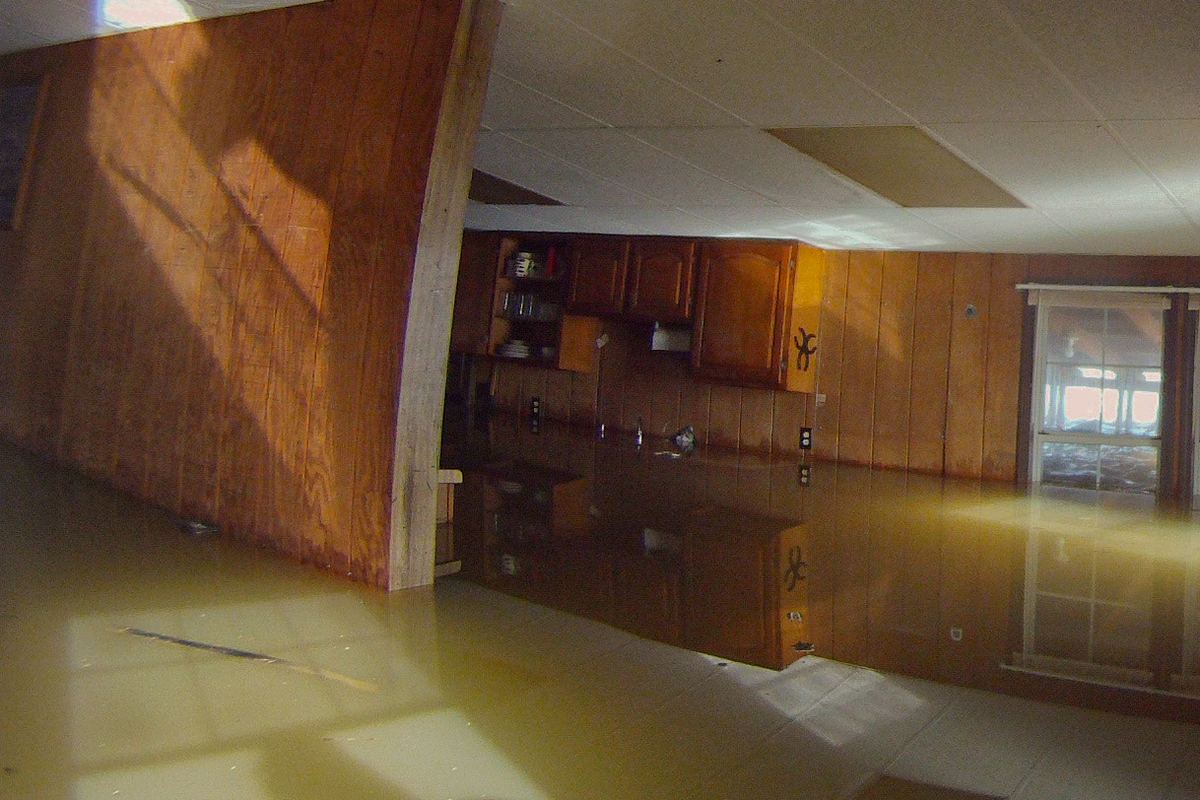
The Florida Department of Health lists the usual ways water gets indoors: flooding from outside, such as storm water and storm surge, and overflows inside from sinks, tubs, toilets and air conditioner drain pans.
Its list goes on to roof, wall and floor leaks, plumbing leaks, broken pipes and condensation. In Miami, several of them follow the calendar.
Rain Season and Hurricane Season
NOAA's 1991 to 2020 climate normals for the Miami International Airport station give a normal year of 67.41 inches of rain (NOAA, U.S. Climate Normals).
June, at 10.51 inches, and September, at 10.22 inches, are the two wettest months. Adding up May through October gives about 77 percent of the year's rain, by our arithmetic on NOAA's monthly figures.
The National Hurricane Center says the Atlantic hurricane season runs from June 1 to November 30. So the wet months and the storm months overlap.
Rain That Has Nowhere to Drain
Miami-Dade County says the county lies close to sea level and its underground water supply is just below the ground surface. It adds that after a major rain event, rainwater sometimes has nowhere to drain, and some areas see occasional flooding.
That matters for a ground floor unit or a house on a slab. Water that sits against a wall or under flooring after a storm keeps the clock running even after the rain stops.
High Tides in the Fall
The county's king tides page says the highest tides in southeast Florida occur in the fall. It says they often cause nuisance flooding in coastal and low lying areas, and that flooding may be worse when they meet heavy rain, strong winds or big waves.
Leaks That Start Next Door
In the city of Miami, 48.8 percent of housing units sit in buildings of 20 or more units, and 69.2 percent of occupied homes are rented, according to the Census Bureau's 2020 to 2024 American Community Survey (Census Bureau, table DP04).
For many residents, the pipe or roof that leaked belongs to someone else. The EPA says to report all plumbing leaks and moisture problems immediately to your building owner, manager or superintendent.
The First 24 Hours After Water Gets In
The Florida Department of Health uses the shortest mark. It says that when water stands for even 24 hours, common molds can take hold.
The same 24 hours applies in its prevention list, both for cleaning and drying up spills and for drying out wet building materials and carpets.
Stop the Water First
The EPA puts the leak ahead of the mold. Its guide says to fix plumbing leaks and other water problems as soon as possible, and that if you clean up mold but do not fix the water problem, the mold problem will most likely come back.
In a condo or apartment, that usually means telling the building manager or the association about the unit above or beside you, so the source can be found and shut off.
Flood Water From Outside
Miami-Dade County advises against walking through flood water if possible and says it can be a health hazard. If you must, the county says to follow good hygiene and wash your hands, clothes and pets afterward.
The EPA says that if the water or mold damage was caused by sewage or other contaminated water, you should call in a professional who has experience cleaning and fixing buildings damaged by contaminated water.
If the Power Is Out
After a storm, drying often waits on electricity. The EPA's hurricane page says never to use a generator inside homes, garages, crawlspaces, sheds or similar areas, and to keep it outside well away from doors, windows and vents.
Hours 24 to 48: Drying in Humid Air
The EPA's window is a little wider than the state's. It says it is important to dry water damaged areas and items within 24 to 48 hours to prevent mold growth, and that materials dried in that time will, in most cases, not grow mold.
With water damage and mold in Miami, the agencies' advice on indoor humidity matters as much as the clock.
Air Conditioning and Dehumidifiers
To get indoor humidity under 60%, the Florida Department of Health names two tools: an air conditioner or a dehumidifier. It adds that if a home with central air needs a dehumidifier to get below 60%, the air conditioning system should be examined for problems.
The EPA says the ideal range is between 30 and 50 percent relative humidity. It notes that a moisture or humidity meter is a small, inexpensive instrument, priced at $10 to $50, sold at many hardware stores.
When the Air Handler Is Part of the Leak
Air conditioner drain pans are on the health department's list of indoor flooding sources. If mold is found in the system, the department says that ideally it should be shut down while cleaning or mold removal is done.
What Cannot Be Saved
The EPA's hurricane guidance says to remove standing water, dry indoor areas, and remove and discard anything that has been wet for more than 24 to 48 hours.
The health department says that when moldy material is not easily cleanable, such as drywall, carpet padding and insulation, removal and replacement may be necessary.
After 48 Hours: What to Check
Once the two day window has passed, the question changes from drying to looking. The health department says indoor mold growth can usually be seen or smelled.
Signs You Can See or Smell
The department describes visible mold as cottony, velvety, rough or leathery, in colors from white and gray to black, yellow or green. It says an earthy or musty odor may mean you have a mold problem.
Places You Cannot See
The EPA lists where hidden mold tends to be: the back side of drywall or paneling, the underside of carpets and pads, inside walls around leaking or condensing pipes, and inside ductwork.
It warns that investigating hidden mold can be difficult, because disturbing a moldy spot, such as peeling back wallpaper, can release a large number of spores.
When to Call a Professional
The official sources name the situations where they point you to someone with training:
- The water was sewage or otherwise contaminated. The EPA says to call a professional with experience in buildings damaged by contaminated water.
- A lot of material got wet, or the growth covers more than about 10 square feet. The EPA says to consult its guide for schools and commercial buildings, which it says applies to other building types too.
- You smell mold but cannot find it. For a suspected hidden mold problem, the EPA's advice is to consider hiring an experienced professional.
- Mold keeps coming back after cleaning. The health department says that may mean an underlying problem, such as a water leak.
- Someone in the home has health concerns. The EPA says to consult a health professional before starting cleanup.
Who Does the Work in Florida
The Florida Statutes define mold assessment and mold remediation by size: both cover mold growth or moldy material of greater than 10 square feet. An assessment is done by a mold assessor, and remediation is the removal, cleaning or other treatment of the mold.
The Department of Business and Professional Regulation says it is responsible for licensing and regulating mold assessors and mold remediators. Its license search lets you verify a license by name or license number.
A Word on Testing
After a leak, people often ask for a mold test first. The Florida Department of Health's advice runs the other way: it does not recommend mold testing or sampling to see whether you have a mold problem or what kind is growing.
How We Fit In
We do not dry, inspect or remove anything. If you send us a request about water damage and mold in Miami, any work is done by an independent company whose mold assessor or remediator holds a Florida license, which may pay us for the introduction.
Our page on mold inspection in Miami covers the city's housing and flood facts in more depth. Our page on mold inspection in Plantation explains how a referral works.
Water Damage in Miami: Short Answers
Water came through my ceiling from the unit above. Who do I tell?
The EPA says to report plumbing leaks and moisture problems immediately to your building owner, manager or superintendent. In a condo or apartment building, that may be a manager or an association; in a rented house, it may be the landlord. The EPA adds that where persistent water problems are not addressed, you may want to contact local, state or federal health or housing authorities, or your state health department.
Is the 24 to 48 hour window shorter in Miami because of the humidity?
The government sources on this page give no separate window for Miami or for humid places. The Florida Department of Health uses 24 hours and the EPA uses 24 to 48 hours. Both say to keep indoor humidity below 60 percent.
Can I clean up a small patch of mold myself after a leak?
The EPA says that if the moldy area is less than about 10 square feet, in most cases you can handle the job yourself, following its guidelines. Florida's license law for mold assessment and remediation covers growth greater than 10 square feet. The EPA also says to fix the water problem, or the mold will most likely return.
Should I turn off the air conditioning after water damage?
The Florida Department of Health says that if a mold problem is found in an air conditioning system, ideally the system should be shut down while cleaning or mold removal is done. It also says to use an air conditioner or a dehumidifier to keep indoor humidity below 60 percent.
Sources
- U.S. Environmental Protection Agency, A Brief Guide to Mold, Moisture and Your Home. https://www.epa.gov/mold/brief-guide-mold-moisture-and-your-home. Read 2026-11-23.
- U.S. Environmental Protection Agency, Hurricanes. https://www.epa.gov/natural-disasters/hurricanes. Read 2026-11-23.
- Florida Department of Health, Mold. https://www.floridahealth.gov/community-environmental-public-health/environmental-public-health/air-quality/mold/. Read 2026-11-23.
- Florida Department of Business and Professional Regulation, Mold-Related Services. https://www2.myfloridalicense.com/mold-related-services/. Read 2026-11-23.
- Florida Statutes, section 468.8411, Definitions. https://www.leg.state.fl.us/statutes/index.cfm?App_mode=Display_Statute&URL=0400-0499/0468/Sections/0468.8411.html. Read 2026-11-23.
- NOAA National Centers for Environmental Information, U.S. Climate Normals 1991 to 2020, MIAMI INTL AP. https://www.ncei.noaa.gov/access/us-climate-normals/#dataset=normals-annualseasonal&timeframe=30&location=FL&station=USW00012839. Read 2026-11-23.
- NOAA NCEI, monthly precipitation normals data, MIAMI INTL AP (USW00012839). https://www.ncei.noaa.gov/access/services/data/v1?dataset=normals-monthly-1991-2020&stations=USW00012839&format=json&dataTypes=MLY-PRCP-NORMAL. Read 2026-11-23.
- NOAA National Hurricane Center, Tropical Cyclone Climatology. https://www.nhc.noaa.gov/climo/. Read 2026-11-23.
- Miami-Dade County, Floodplain Management. https://www.miamidade.gov/global/economy/building/flood-protection/home.page. Read 2026-11-23.
- Miami-Dade County, King Tides. https://www.miamidade.gov/initiative/weather-ready/flooding/king-tides.page. Read 2026-11-23.
- U.S. Census Bureau, American Community Survey 2020 to 2024, table DP04, Miami city. https://data.census.gov/table/ACSDP5Y2024.DP04?g=160XX00US1245000. Read 2026-11-23.
The service
Mold inspection after water damage: what a Florida licensed mold assessor checks once a home has been wet.
Other guides
Mold after water damage: how soon it starts and Mold remediation in Miami.
How to ask
Send a request about your Miami home or unit. Any work is done by a company whose mold assessor holds a Florida license, which may pay us for the introduction.