The short answer: Where mold grows in a house is where water collects or lingers, which in most homes means wet rooms, cold surfaces and the closed spaces behind them. Several of the places below are hard to see into, and checking them is part of what a mold inspection by a Florida licensed mold assessor covers.
Every location in this guide comes from a government page, named where it is used and listed at the end. We are a referral service and add no findings of our own.
What These Spots Have in Common
The EPA's mold course says mold can grow in wet or damp spots in a building, or where humidity is high. It names bathrooms, laundry and utility rooms and basements as common locations in homes because they are always or often damp.
Darkness is no protection. The course says mold does not need light to grow and can grow in dark areas and on hidden surfaces.
Bathrooms
The first chapter of the EPA course lists bathroom tile and grout among the common sites for indoor mold growth. The Florida Department of Health gives showers as an example of the high humidity places where mold is found indoors.
Shower Mold That Keeps Returning
The EPA's Brief Guide admits that places often or always damp can be hard to keep completely free of mold. For mold in the shower that seems to reappear, it says more ventilation, from a fan or an open window, and more frequent cleaning will usually keep it to a minimum.
Steam With Nowhere to Go
The health department counts poor venting of bathroom moisture, the steam from a shower, as a source of indoor water. The EPA's Brief Guide says to vent that steam while you shower, with the bathroom fan or an open window.
Carpet on a Bathroom Floor
Both the health department and the CDC say not to carpet bathrooms. The CDC gives the reason: places like bathrooms may have a lot of moisture.
The Air Handler and Ducts
The Florida Department of Health tells homeowners to check around air handling units for standing water. It says to routinely inspect the evaporator coils, liner surfaces, drain pans and drain lines.
Cooling Coils and the Drain Pan
The EPA's page on air duct cleaning says condensation on or near the cooling coils of an air conditioner is a major factor in moisture getting into the system. It says to make sure the condensate pan drains properly, and that substantial standing water or debris there indicates a problem requiring immediate attention.
The same page says to check any insulation near the cooling coils for wet spots. The Brief Guide adds a maintenance line: keep air conditioning drip pans clean and drain lines flowing.
Inside the Ductwork
The EPA's course chapter on moisture lists porous thermal or acoustic liners inside ductwork among the places hidden mold grows. It says lined duct insulation that gets wet or moldy should be removed and replaced, because it cannot be cleaned effectively.
The ducts matter beyond their own surfaces. The course says a contaminated ventilation system may spread mold spores throughout the building.
Something That Looks Like Mold
A dark patch in a vent is not proof on its own. The EPA's duct page says that although a substance may look like mold, only an expert can make a positive determination, which may require laboratory analysis.
The Attic and Roof
Water from above often stops in the ceiling. The EPA's Brief Guide names the top side of ceiling tiles and the roof materials above them, from roof leaks or insufficient insulation, as possible spots for hidden mold.
The CDC says mold will grow where there is moisture, such as around leaks in roofs.
Ducts That Run Through the Attic
The attic is also where many ducts pass through air that is not cooled. The EPA's duct page says ducts in non air conditioned spaces, attics and crawl spaces included, should be properly sealed and insulated so moisture from condensation does not enter the system.
Gutters That Send Water Back In
The roof's edge is part of the attic story. The EPA course lists gutters and downspouts that direct water into or under a building as a common moisture problem, and the Brief Guide says to clean and repair roof gutters regularly.
Under Sinks
The EPA course lists the area around sinks among common sites for indoor mold growth, and slow leaks in plumbing fixtures among common sources of water. The cabinet below a sink holds both the fixture and its pipes.
The Florida Department of Health adds overflow from sinks and indoor plumbing leaks or broken water pipes to its list of moisture sources.
Pipes That Sweat
A pipe can wet a cabinet without leaking at all. A photo caption in the EPA's Brief Guide calls rust an indicator that condensation occurs on a drainpipe, and the guide says to cover cold surfaces such as cold water pipes with insulation.
Where the Pipes Go Next
The plumbing keeps going into the wall. The EPA course says the inside of walls where pipes and wires are run are common sites of mold growth, and the Brief Guide names areas inside walls around leaking or condensing pipes.
Window Frames
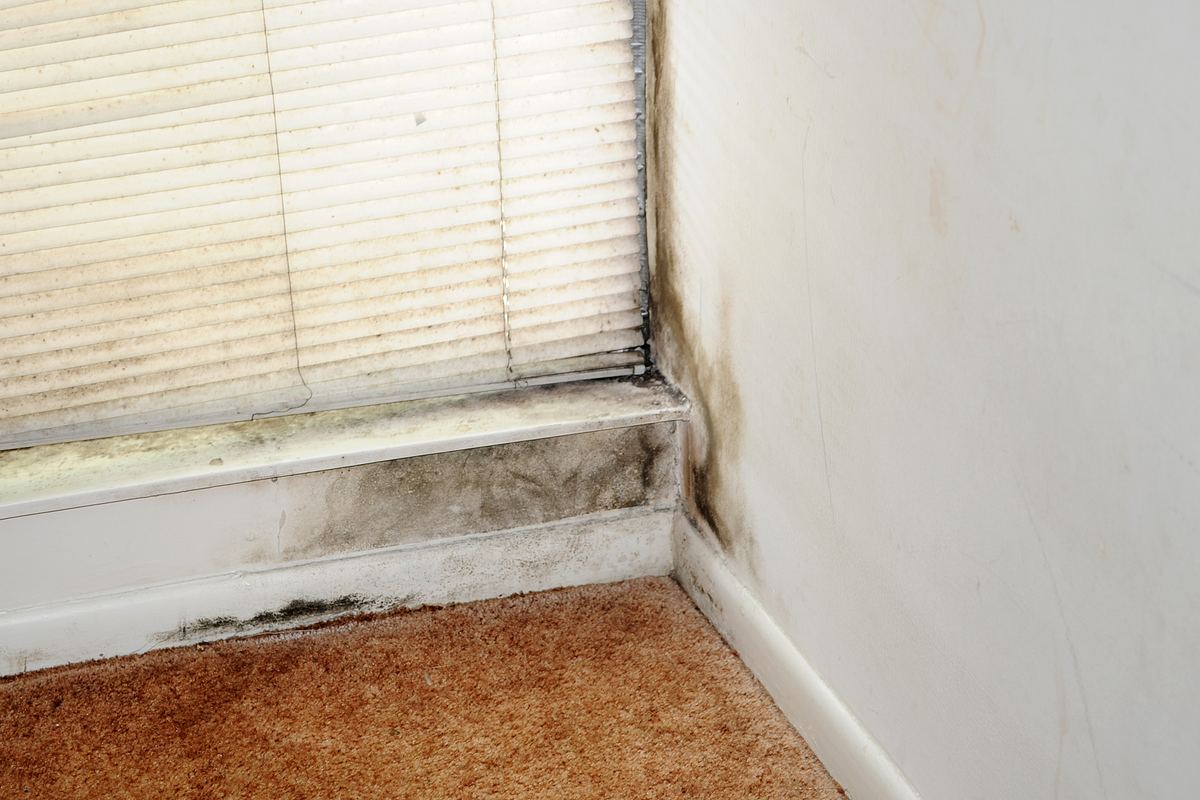
The EPA course lists areas around windows as a common site, and notes that a little condensation around a window sill can be enough for mold. The CDC names leaks around windows as well.
Windows are among the cold surfaces the EPA's Ten Things You Should Know about Mold names when it says to reduce the potential for condensation by adding insulation.
Behind Furniture on Outside Walls
The EPA course says mold is frequently found on walls in cold corners behind furniture where condensation forms. A sofa or a dresser pushed against the wall keeps that patch out of view.
Outside walls are the ones the EPA names. Its Ten Things page lists exterior walls among the cold surfaces where condensation can form, beside windows, piping, the roof and floors.
The Side of the Wall You Cannot See
The wall surface facing the room is only half of it. The EPA's Brief Guide says mold may be hidden on the back side of drywall, wallpaper or paneling, and on the underside of carpets and pads.
Why These Spots Are Opened With Care
The EPA course warns that investigating hidden mold requires caution, since disturbing moldy areas may spread mold through the building. It gives opening and closing air handlers as one example that can send high levels of dust and mold into the air.
Keeping an Eye on These Places
The EPA course says to regularly check areas that have been or are likely to get wet. If you hire someone to locate a water or mold problem, it says to make sure that person has experience identifying and locating mold and water problems.
If you are unsure what counts as a warning, the companion guide on common signs of mold in a house covers what to look and smell for.
For a house in Plantation, you can send a request to be introduced to a company whose mold assessor holds a Florida license; that company may pay us for the introduction. For a home in Fort Lauderdale, see the mold inspection in Fort Lauderdale page.
Where Mold Grows in a House: Short Answers
Can mold grow in a closet or cabinet that is always dark?
Yes. The EPA's mold course says mold does not need light to grow and can grow in dark areas and on hidden surfaces. What it needs is moisture, so a dark space that stays dry is a poor place for it.
Should the air conditioner be turned off if mold is found in it?
The Florida Department of Health says ideally yes, and that the system should be shut down while cleaning or mold removal is performed. It also acknowledges that stopping the air conditioning would make most Florida buildings very uncomfortable in hot and humid weather.
Will cleaning the ducts stop mold from coming back?
Not by itself, according to the EPA. Its air duct page says that if the conditions causing the mold growth in the first place are not corrected, mold growth will recur. It calls controlling moisture the most effective way to prevent biological growth in air ducts.
Sources
- U.S. Environmental Protection Agency, Mold Course Chapter 1 (last updated February 18, 2026). https://www.epa.gov/mold/mold-course-chapter-1. Read 2026-11-23.
- U.S. Environmental Protection Agency, Mold Course Chapter 2 (last updated November 10, 2026). https://www.epa.gov/mold/mold-course-chapter-2. Read 2026-11-23.
- U.S. Environmental Protection Agency, Mold Course Chapter 3 (last updated November 10, 2026). https://www.epa.gov/mold/mold-course-chapter-3. Read 2026-11-23.
- U.S. Environmental Protection Agency, A Brief Guide to Mold, Moisture and Your Home (last updated February 18, 2026). https://www.epa.gov/mold/brief-guide-mold-moisture-and-your-home. Read 2026-11-23.
- U.S. Environmental Protection Agency, Should You Have the Air Ducts in Your Home Cleaned? (last updated February 19, 2026). https://www.epa.gov/indoor-air-quality-iaq/should-you-have-air-ducts-your-home-cleaned. Read 2026-11-23.
- U.S. Environmental Protection Agency, Ten Things You Should Know about Mold (last updated September 8, 2026). https://www.epa.gov/mold/ten-things-you-should-know-about-mold. Read 2026-11-23.
- Florida Department of Health, Mold: Indoor Mold and Your Health. https://www.floridahealth.gov/community-environmental-public-health/environmental-public-health/air-quality/mold/. Read 2026-11-23.
- Centers for Disease Control and Prevention, Mold (September 26, 2024). https://www.cdc.gov/mold-health/about/index.html. Read 2026-11-23.
The service
Mold inspection: how a Florida licensed mold assessor looks into the spots a homeowner cannot easily open.
Other guides
How to ask
Send a request through the short form; you do not pay us to ask. A company whose mold assessor holds a Florida license may pay us for the introduction.