The short answer: The signs of mold in house walls and rooms usually reach the eye or the nose first, and the agencies say to start there. When the signs point to growth you cannot find, or to more than a small patch, a mold inspection by a Florida licensed mold assessor is the service meant for that question.
We run a referral service and do no mold work ourselves. The signs below are quoted or closely paraphrased from the agency named next to each one.
What Mold Looks Like
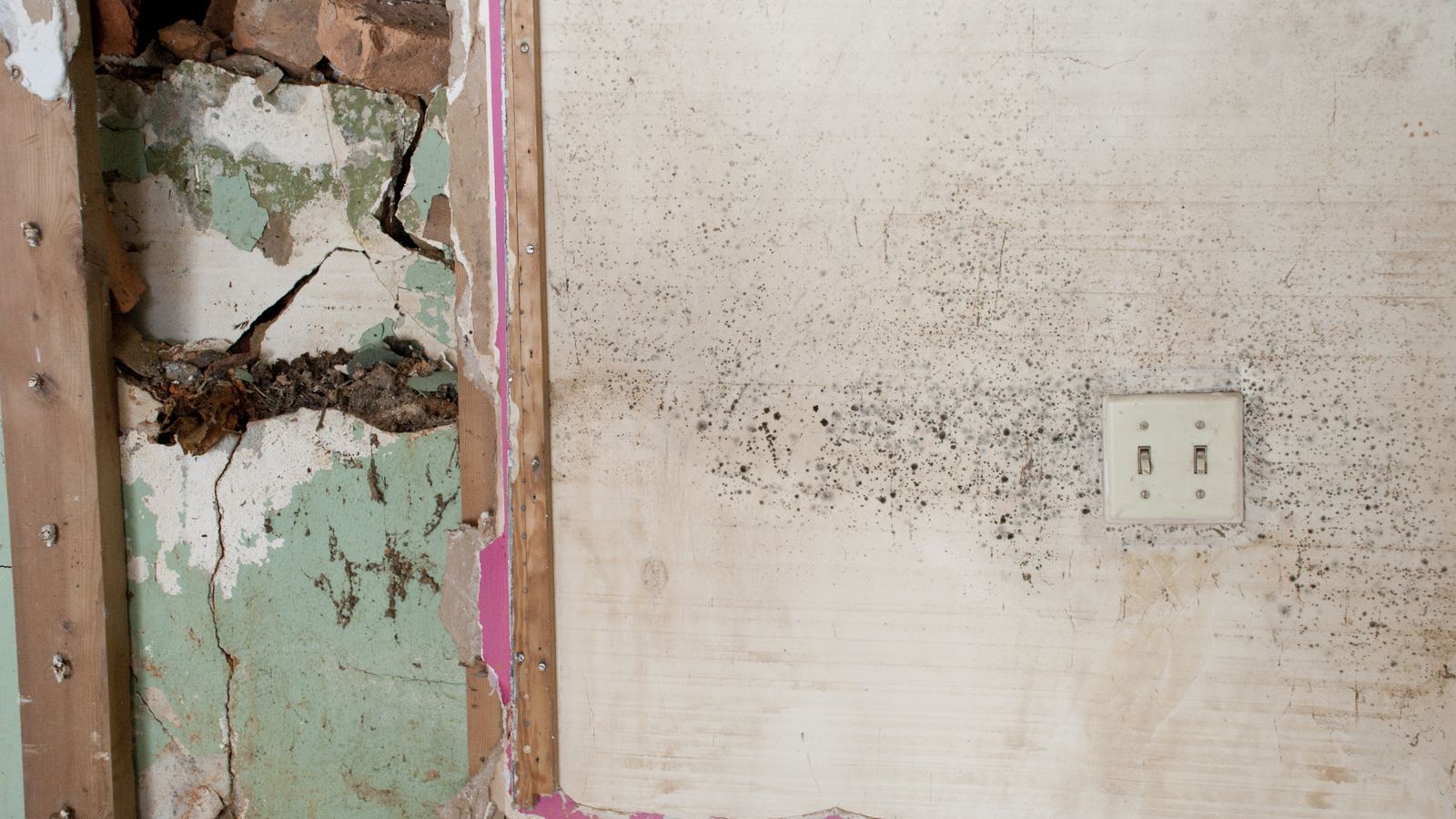
The Florida Department of Health says visible mold may look cottony, velvety, rough or leathery. It lists white, gray, brown, black, yellow and green among its colors.
The department adds that mold often appears as a stain or a fuzzy growth. It names furniture and building materials: walls, ceilings, and anything made of wood or paper.
Color Does Not Settle It
A gray smudge counts as much as a black one. The EPA's mold course reminds readers that mold comes in many colors, not just black.
The Sign the EPA Ranks First
The same course calls visible mold the most important sign of a mold problem. It also notes that most mold is found by simply looking.
A patch you can see may not be the whole story. The EPA says areas of hidden mold may surround the areas of visible mold.
Signs of Water Around the Growth
The health department tells homeowners to look for signs of moisture or water damage along with the mold itself. Its examples are water leaks, standing water, water stains and condensation.
Beads of Water on Cold Surfaces
Water forming on a window, a wall or a pipe is a clue about the air, not only the surface. The EPA's Brief Guide says condensation can be a sign of high humidity.
Paint That Peels Over a Stain
A painted over patch can give itself away later. The EPA's Brief Guide warns that paint applied over moldy surfaces is likely to peel, and it says not to paint or caulk moldy surfaces.
What Mold Smells Like
The Florida Department of Health says that if you can smell an earthy or musty odor, you may have a mold problem. It tells people to search the areas where they notice the odor.
The EPA reads the smell as a clue about water. Its course says damp or musty odors suggest that water is or was present and mold growth is likely.
A Musty Room With Nothing to See
A smell with no visible source is the case the EPA singles out. Its Brief Guide says you may suspect hidden mold if a building smells moldy but you cannot see the source.
Eyes, Nose and a Flashlight
The EPA's course says the most important equipment for finding mold is your own eyes and nose, and that a good flashlight may help. For growth out of sight, it says equipment such as borescopes and moisture meters may help.
What You May Feel
Some signs are felt rather than seen. They come from the house, in damp air and soft materials, and from the people living in it.
Air That Stays Damp
The Florida Department of Health says molds can grow almost anywhere there is enough moisture or high humidity. It notes that most experts suggest keeping relative humidity under 60 percent, and that below 50 percent is best.
The EPA's mold course says humidity can be measured with a humidity gauge or meter. A reading gives a number to the sticky feeling a room can have.
Wood That Feels Soft
Damage to the building itself is a later sign. The EPA says that if a roof is allowed to leak long enough, molds can weaken floors and walls by feeding on the wet wood.
When mold is suspected of harming a building's structure, the EPA says a structural engineer or another professional with relevant expertise should be consulted.
Symptoms the Health Department Names
The Florida Department of Health lists symptoms that may occur in people who are sensitive to molds:
- Nasal and sinus irritation or congestion
- Dry hacking cough
- Wheezing
- Skin rashes or burning
- Watery or reddened eyes
The department says that if mold allergic people have some of these symptoms when in your home, you may have a mold problem. For anyone with special health concerns, its advice is to see a medical doctor if indoor mold seems to be affecting their health.
When a Sign Means Calling for an Inspection
The agencies draw a line between a small patch in plain view and everything else. Where a sign falls on that line decides whether the next step is a sponge or a professional.
A Small Patch in Plain View
The EPA and the Florida Department of Health both say that if the moldy area is less than about 10 square feet, roughly a 3 foot by 3 foot patch, in most cases you can handle the job yourself.
The health department pairs that with a warning sign of its own. If the mold returns quickly or spreads, it says, there may be an underlying problem such as a water leak, which must be fixed first.
Signs the Agencies Hand to a Professional
These are the cases where the EPA and the health department point past cleaning it yourself:
- A moldy smell with no visible source; for a hidden mold problem the EPA says to consider hiring an experienced professional.
- Known water damage while people in the house report health problems, which the EPA names as another reason to suspect hidden mold.
- A lot of water damage, or growth covering more than 10 square feet, where both agencies point to the EPA's guide for larger cleanups.
- Damage from sewage or other contaminated water, where the EPA says to call a professional with experience in buildings damaged that way.
- Mold that keeps coming back after cleaning, which the health department links to an underlying water problem.
What Florida Law Calls a Mold Assessment
The 10 square foot line also appears in state law. Section 468.8411, Florida Statutes defines a mold assessment as a process performed by a mold assessor that looks at the origin, identity, location and extent of mold growth of greater than 10 square feet.
That section also defines a mold assessor: any person who performs or directly supervises a mold assessment. The licensing department's mold FAQ says it does not license mold assessment or remediation businesses; only individuals are licensed.
Why Opening a Wall Can Wait
Following a smell into a wall has a cost. The EPA's Brief Guide says investigating hidden mold requires caution, and that removing wallpaper can lead to a massive release of spores if mold is growing on its underside.
Asking for a Look
If the signs are in a house in Plantation, you can send a request through our short form to be introduced to a company whose mold assessor holds a Florida license. That company may pay us for the introduction.
For a home farther east, see what a mold inspection in Fort Lauderdale covers. To see the rooms and hidden spots where these signs tend to turn up, read where mold grows in a house.
Signs of Mold in a House: Short Answers
Does a musty smell always mean mold?
Not always, but the agencies treat it as a strong hint. The Florida Department of Health says an earthy or musty odor means you may have a mold problem, and the EPA's course says damp or musty odors suggest water is or was present and mold growth is likely. The smell is a reason to look, not a finding.
Do I need a test to confirm what I see?
The Florida Department of Health says indoor mold growth can usually be seen or smelled, and that in most cases sampling is not needed if visible mold growth is present. The mold testing page explains the cases where sampling is used.
Do I need to know what kind of mold it is?
No, according to the Florida Department of Health. It says that if you think you have a mold problem in your home, you do not need to find out what type of mold you may have. It adds that all molds should be treated the same with respect to health risks and removal.
Who licenses the person who looks for hidden mold in Florida?
The Florida Department of Business and Professional Regulation. Its mold related services page says the department is responsible for licensing and regulating mold assessors and mold remediators, and, as noted above, the license belongs to the individual.
Sources
- Florida Department of Health, Mold: Indoor Mold and Your Health. https://www.floridahealth.gov/community-environmental-public-health/environmental-public-health/air-quality/mold/. Read 2026-11-23.
- U.S. Environmental Protection Agency, A Brief Guide to Mold, Moisture and Your Home (last updated February 18, 2026). https://www.epa.gov/mold/brief-guide-mold-moisture-and-your-home. Read 2026-11-23.
- U.S. Environmental Protection Agency, Mold Course Chapter 2. https://www.epa.gov/mold/mold-course-chapter-2. Read 2026-11-23.
- U.S. Environmental Protection Agency, Mold Course Chapter 3. https://www.epa.gov/mold/mold-course-chapter-3. Read 2026-11-23.
- Florida Statutes, Section 468.8411, Definitions. https://www.leg.state.fl.us/statutes/index.cfm?App_mode=Display_Statute&URL=0400-0499/0468/Sections/0468.8411.html. Read 2026-11-23.
- Florida Department of Business and Professional Regulation, Mold-Related Services. https://www2.myfloridalicense.com/mold-related-services/. Read 2026-11-23.
- Florida Department of Business and Professional Regulation, Mold-Related Services FAQs. https://www2.myfloridalicense.com/mold-related-services/faqs/. Read 2026-11-23.
The service
Mold inspection: how a Florida licensed mold assessor checks for growth you cannot see.
Other guides
How to ask
Send a request through the short form; you do not pay us to ask. A company whose mold assessor holds a Florida license may pay us for the introduction.