The short answer: The visual check is part of a mold assessment, and Florida law says a mold assessor is the person who performs or directly supervises one. What the look itself covers is on the mold visual inspection page; this guide is about the person doing it and the visit to a Plantation home.
We are a referral service run by Pensacola SEO Company. The rules below are quoted or closely paraphrased from the Florida statute or agency named beside each one.
Who May Do a Mold Visual Inspection in Florida
Florida Statutes 468.8411 defines a mold assessment as a process performed by a mold assessor that includes physical sampling and the evaluation of data from a building history and an inspection. The looking you see during a visit is that inspection.
The same section defines a mold assessor as any person who performs or directly supervises a mold assessment. The Florida DBPR says it is responsible for licensing and regulating mold assessors and mold remediators.
The License Belongs to a Person
DBPR's mold page lists two license types, mold assessor and mold remediator, and defines each one as a person. The license you check is the assessor's own.
The Size in the Definition
The statute's definition of a mold assessment refers to mold growth "of greater than 10 square feet." How that line applies to a given job is a question for DBPR, and we do not answer it for you.
Certified, Registered, Licensed: Titles the Law Protects
Florida Statutes 468.8419 says a person may not use the title "certified mold assessor," "registered mold assessor," "licensed mold assessor," "mold assessor" or "professional mold assessor" unless the person has complied with the mold part of the law.
A word such as certified or specialist in an ad is a claim. The record to look at is the state license, held by the person who will walk through your home.
Training the Statute Names
The same section requires documented training in water, mold and respiratory protection before an assessor may perform or offer a mold assessment.
Two Limits on the Assessor
- No paid inspection of a property in which the assessor, or the assessor's company, has a financial or transfer interest.
- No job where the assessment or its fee is contingent on the assessment's conclusions.
People the Law Exempts
Florida Statutes 468.841 lists people who do not have to follow the mold assessment rules. Two of them matter most to a homeowner.
You, in Your Own Home
A residential property owner who performs mold assessment on his or her own property is exempt. That covers a homeowner looking over his or her own house.
Home Inspectors and Other License Holders
People acting within certain other Florida licenses, home inspectors among them, are exempt, except when they hold themselves out for hire as a "mold assessor" or under any title implying a mold license.
Florida law describes home inspection services as a limited visual examination of readily accessible parts of a home, such as the structure, the HVAC system, the roof covering and the plumbing, for a written opinion of its condition (Florida Statutes 468.8311).
How to Check a Mold Assessor's License
DBPR's Verify a Licensee search works by name, license number, city or county, or license type. DBPR's mold page lists the assessor license as type MRSA.
- Get the full name of the person who will do the visit, and that person's Florida license number, from the company.
- Open the DBPR search and choose search by license number, or by name.
- Check that the name on the record matches, and that the license is a mold assessor license.
- Look at the expiration date. DBPR says mold assessor and mold remediator licenses expire July 31st every even year.
Insurance DBPR Says an Assessor Must Carry
The DBPR mold FAQ sets the assessor's insurance at not less than $1,000,000: general liability and errors and omissions coverage, for both preliminary and post remediation mold assessment.
For the required general liability insurance, it adds that a company may carry the policy instead, as long as the licensed individual is named on it. You can ask whether the assessor's name is on the policy.
The Full Set of Rules
Both license types, the exemptions and where complaints go are set out in our guide to Florida mold license rules.
What a Mold Visual Inspection in Plantation Can Cover
The places below are the ones the Florida Department of Health and the EPA name, set beside what the Census Bureau records about homes in Plantation. An assessor may look at more; these are the parts you can ask about before the visit.
The Homes in Plantation
Of the 40,014 housing units the Census Bureau's 2020 to 2024 American Community Survey records in Plantation (U.S. Census Bureau, table DP04, Plantation city, Florida), 26.7 percent went up in the 1980s, 24.2 percent in the 1970s and 18.6 percent in the 1990s.
Detached single family houses make up 45.3 percent of those units, buildings of 20 or more units hold 23.8 percent, and 35.7 percent of occupied homes are rented.
If You Rent
A renter can still look for the signs below. What Florida law says about the landlord's part is in our guide to mold in an apartment in Florida.
The Places the Agencies Name
Growth and Water Marks
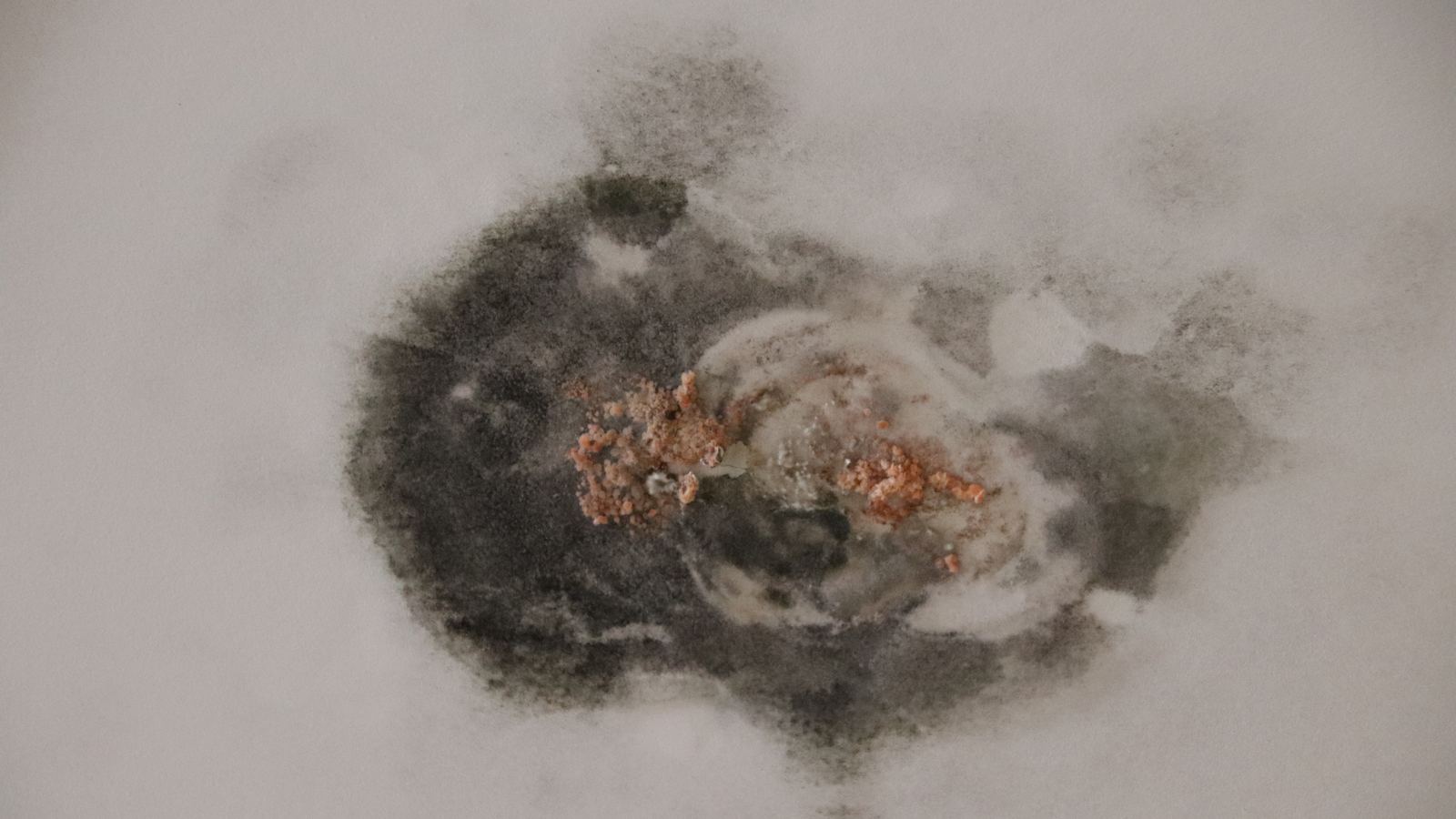
The Florida Department of Health says mold often appears as staining or fuzzy growth on furniture or building materials, such as walls, ceilings, or anything made of wood or paper. It tells people to look for water leaks, standing water, water stains and condensation.
The Air Conditioning Unit
Standing water around air handling units is the first thing the department says to check for. It also lists the evaporator coils, liner surfaces, drain pans and drain lines for routine inspection.
The EPA adds its own line for the unit: clean drip pans, and drain lines that are unobstructed and flowing properly.
Indoor Humidity
EPA says to keep indoor humidity below 60 percent if possible, ideally between 30 and 50 percent, and that relative humidity can be measured with a moisture or humidity meter. It calls condensation a possible sign of high humidity.
Smell
The health department says that an earthy or musty odor may mean a mold problem, and to search the areas where you notice it.
What a Look Cannot Reach
EPA says mold may hide on the back side of drywall, wallpaper or paneling, on the top side of ceiling tiles, under carpets and pads, inside walls around leaking or condensing pipes, and inside ductwork.
It warns that investigating hidden mold may be difficult and will require caution when it means disturbing places where mold may grow. Ask before the visit whether anything will be opened.
When the Look Is Enough
"Indoor mold growth can usually be seen or smelled. In most cases, if visible mold growth is present, sampling is not needed." Source: Florida Department of Health, Mold, read 2026-11-23.
When a sample is still suggested, mold testing explains what it can and cannot show.
Questions to Ask the Company
- Who will do the visit, and what is that person's Florida mold assessor license number?
- Is the assessor named on the company's insurance policy?
- Will the air handler, its drain pan and its drain line be looked at?
- Will anything be opened, moved or lifted, and who decides?
- What will the written findings include?
For a house in Fort Lauderdale, the mold inspection in Fort Lauderdale page covers what is known about that city's homes.
Visual Inspection in Plantation: Short Answers
Can a home inspector do a mold visual inspection?
Florida law describes a home inspection as a limited visual examination of a home's readily accessible systems and components. Florida Statutes 468.841 exempts people acting within certain licenses, home inspectors among them, from the mold assessment rules. That exemption ends when they hold themselves out for hire as a "mold assessor" or under a title implying a mold license.
Does "certified mold specialist" mean the person holds a Florida license?
The ad's wording does not show it; the DBPR record does. Florida Statutes 468.8419 bars titles such as "certified mold assessor" for anyone who has not complied with the mold part of the law, but an ad can use other words. Check the person's name or license number on the DBPR license search.
Can I look for mold in my own house without a license?
Florida Statutes 468.841 exempts a residential property owner who performs mold assessment on his or her own property. The Florida Department of Health lists what to look for: visible growth, signs of water, the air handler and its drain parts, and musty odors.
How do I ask for a mold visual inspection in Plantation?
Send a request through the short form; you do not pay us to ask. A company whose mold assessor holds a Florida license may pay us for the introduction, and it sets its own fee and schedule. Check the assessor's license before you agree to a visit.
Sources
- Florida Statutes 468.8411, Definitions. https://www.leg.state.fl.us/statutes/index.cfm?App_mode=Display_Statute&URL=0400-0499/0468/Sections/0468.8411.html. Read 2026-11-23.
- Florida Statutes 468.8419, Prohibitions; penalties. https://www.leg.state.fl.us/statutes/index.cfm?App_mode=Display_Statute&URL=0400-0499/0468/Sections/0468.8419.html. Read 2026-11-23.
- Florida Statutes 468.841, Exemptions. https://www.leg.state.fl.us/statutes/index.cfm?App_mode=Display_Statute&URL=0400-0499/0468/Sections/0468.841.html. Read 2026-11-23.
- Florida Statutes 468.8311, Definitions (home inspection). https://www.leg.state.fl.us/statutes/index.cfm?App_mode=Display_Statute&URL=0400-0499/0468/Sections/0468.8311.html. Read 2026-11-23.
- Florida DBPR, Mold-Related Services. https://www2.myfloridalicense.com/mold-related-services/. Read 2026-11-23.
- Florida DBPR, Mold-Related Services FAQs. https://www2.myfloridalicense.com/mold-related-services/faqs/. Read 2026-11-23.
- Florida DBPR, Verify a Licensee. https://www.myfloridalicense.com/portalsearches/VerifyLicensee. Read 2026-11-23.
- Florida Department of Health, Mold. https://www.floridahealth.gov/community-environmental-public-health/environmental-public-health/air-quality/mold/. Read 2026-11-23.
- U.S. EPA, A Brief Guide to Mold, Moisture and Your Home. https://www.epa.gov/mold/brief-guide-mold-moisture-and-your-home. Read 2026-11-23.
- U.S. Census Bureau, American Community Survey 2020 to 2024, table DP04, Plantation city, Florida. https://data.census.gov/table/ACSDP5Y2024.DP04?g=160XX00US1257425. Read 2026-11-23.
The service
Mold visual inspection: what the look covers, what it cannot find, and when sampling follows.
Other guides
Florida mold license rules and what a mold inspection report should include.
How to ask
Send a request through the short form; you do not pay us to ask. A company whose mold assessor holds a Florida license may pay us for the introduction.