The short answer: Before you hire a mold removal company in Plantation, look up the license of the person who will do the work, check who will assess the mold and who will remove it, and get the scope in writing. Our page on mold remediation explains what the cleanup itself involves.
This guide is general information drawn from state and federal sources, not legal advice. We are a referral service and hold no mold license of our own.
Check One: Look Up the License
The License Belongs to a Person
The state does not license the business. DBPR says it "does not license mold assessment or mold remediation businesses" and that "Only individuals are licensed to perform these services" (DBPR, Mold-Related Services FAQs).
A company name on a truck or a website tells you little by itself. Ask which person will assess or remediate your home, and look that person up.
How to Search the State's Records
DBPR's Verify a Licensee page gives information about licensed individuals in the professions the department regulates. It lets you search by name, by license number, by city or county, or by license type.
- Ask the company for the full name and the license number of the person who will work on your home.
- Search by license number if you have it, or by name if you do not.
- Read the license type. DBPR issues two: Mold Assessor (MRSA) and Mold Remediator (MRSR) (DBPR, Mold-Related Services).
- Read the status. Florida Statutes 468.842 lists "Practicing on a revoked, suspended, inactive, or delinquent license" among the grounds for discipline.
Proof of Insurance
Florida Statutes 468.8421 requires a mold assessor to carry coverage "of at least $1 million" and a mold remediator to carry a liability policy of "not less than $1,000,000 that includes specific coverage for mold-related claims."
DBPR adds that each assessor or remediator "will need their own coverage or specifically be named on the policy of the company" (DBPR FAQs). Asking to see the page that names the person is a fair request before you sign.
Experience and References
For a hired cleanup, the EPA's home guide says to "make sure the contractor has experience cleaning up mold" and to "Check references" (EPA, A Brief Guide to Mold, Moisture and Your Home).
Online reviews are a separate question, covered in our guide to checking mold company reviews.
Check Two: Who Assesses and Who Removes
Florida keeps the person who assesses mold apart from the person who removes it. Under Florida Statutes 468.8419(1)(d), an assessor may not perform or offer mold remediation on a structure that the assessor or the assessor's company assessed "within the last 12 months."
Paragraph (2)(d) of the same section sets the same limit the other way, for a remediator asked to assess a structure its company remediated.
The Division I Contractor Exception
Both paragraphs say they do not apply to "a certified contractor who is classified in s. 489.105(3) as a Division I contractor." When such a contractor does both jobs, the statute lets the department require the contract to tell the homeowner of the "right to request competitive bids."
What to Ask When One Company Offers Both
DBPR's FAQs answer yes when asked whether a person whose company does both mold assessments and mold remediations needs two licenses, one for each, and point to section 468.8419(1)(d) (DBPR FAQs).
If one company offers to test your house and then clean it, ask which person holds which license and how the job fits that section. Then look up both names.
Referral Payments Between Assessor and Remediator
The same section bars an assessor from accepting "any compensation, inducement, or reward" from a mold remediator or a remediator's company for the referral of business. Paragraph (2)(f) bars a remediator from accepting the same from an assessor.
Our guide to Florida mold license rules sets out the whole section, the exemptions and the penalties.
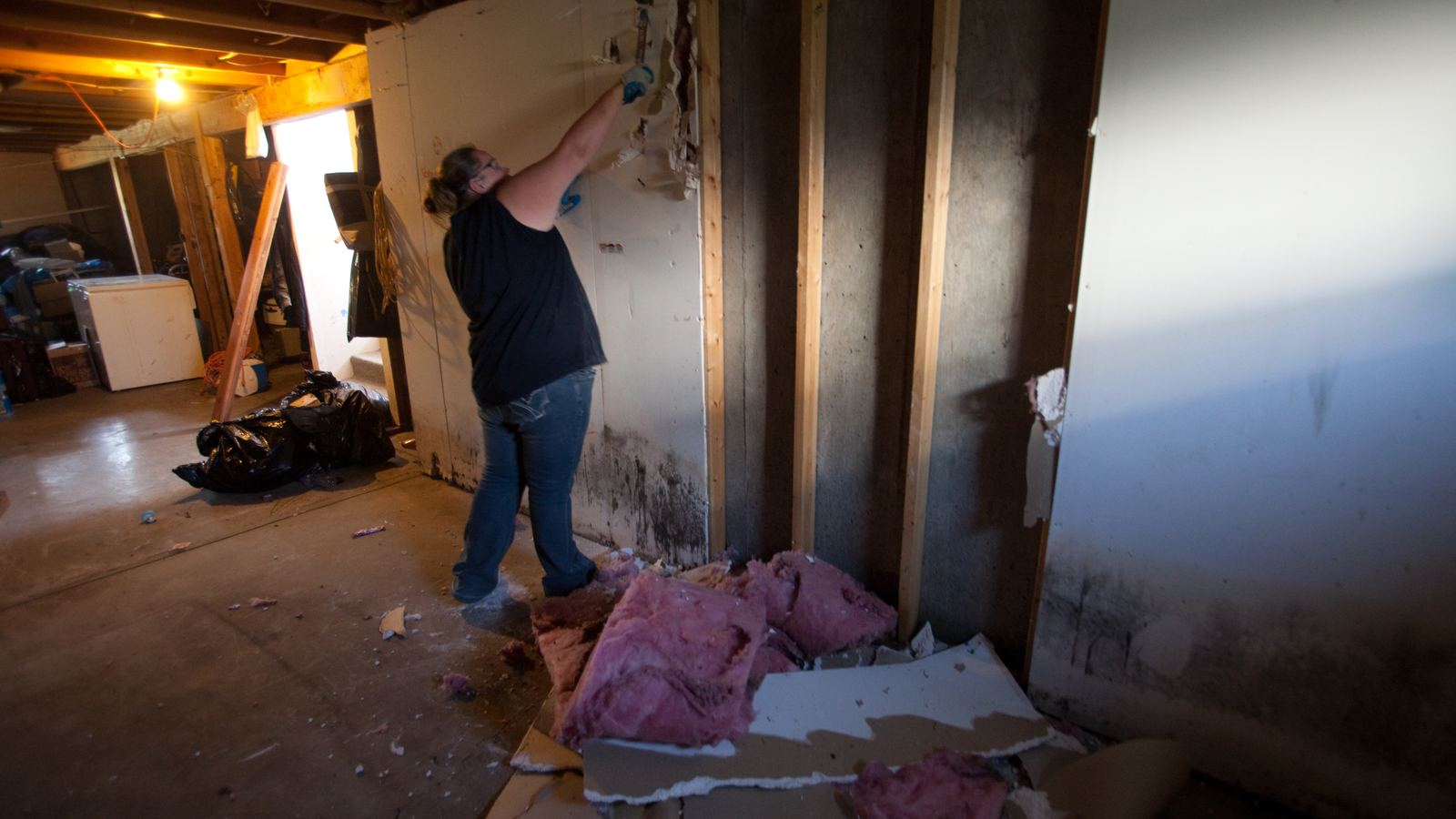
Check Three: Get the Scope in Writing
Florida law calls for a written contract. Florida Statutes 468.8422 says a contract to perform mold assessment or mold remediation "shall be in a document or electronic record, signed or otherwise authenticated by the parties."
The same section says a mold assessment contract "is not required to provide estimates," so the assessor's paperwork may carry no repair figure.
What the EPA Says a Remediation Plan Covers
The EPA says the plan "should include steps to fix the water or moisture problem, or the problem may reoccur" (EPA, Mold Remediation in Schools and Commercial Buildings, Chapter 3).
It adds that the plan should cover protective equipment and "include steps to carefully contain and remove moldy building materials to avoid spreading the mold."
Questions to Ask About the Written Scope
- Where is the water coming from, and who repairs it?
- Which rooms and which materials will be removed, cleaned or left in place?
- How will the work area be closed off from the rest of the house?
- Who checks the work at the end, and what will that person look for?
- What happens to the contract if more mold turns up once walls are open?
When the Plan Changes
The EPA says a remediation plan "may require revision if circumstances change or new facts are discovered." If hidden mold turns up, it says to revise the plan "to account for the total area affected by mold growth" (EPA, Chapter 3).
A change of that size is worth having in writing, under the signed contract the statute describes.
Rebuilding After the Removal
A remediator license does not cover construction work. Florida Statutes 468.8411(6) says a mold remediator "may not perform any work that requires a license under chapter 489" unless also licensed under that chapter or in compliance with it.
So ask who will put back drywall or other building parts that come out, and which license that person holds.
Check Four: The Clearance Check
Clearance means the check, after the cleanup, that the job is finished. The statute does not use that word, but section 468.8421 requires an assessor's insurance to cover "both preliminary and postremediation mold assessment."
Check two's rule bars a remediator's company from performing a mold assessment on a structure it remediated in that period. So ask, before you sign, who will do the check after the work and which license that person holds.
The EPA's Signs of a Finished Job
The EPA's guide for schools and commercial buildings, which its home guide says "is applicable to other building types," lists these points (EPA, Chapter 3):
- "You must have completely fixed the water or moisture problem."
- "Visible mold, mold-damaged materials and moldy odors should not be present."
- "If you have sampled, the kinds and concentrations of mold and mold spores in the building should be similar to those found outside, once cleanup activities have been completed."
- "You should revisit the site(s) shortly after remediation, and it should show no signs of water damage or mold growth."
The EPA ends the list plainly: "Ultimately, this is a judgment call; there is no easy answer."
Where Sampling Fits After a Cleanup
The same chapter says "Surface sampling may also be useful in order to determine if an area has been adequately cleaned or remediated." It also says sampling "should be done only after developing a sampling plan."
Ask the person doing the after-check whether samples are part of it, and to put the result in writing.
Asking for a Mold Removal Company in Plantation
We take requests from homes in Plantation and from the rest of Broward County. For a home in Fort Lauderdale, see mold inspection in Fort Lauderdale.
Send a request through the short form. Any work is done by a company whose mold remediator holds a Florida license, which may pay us for the introduction.
Before you sign anything with any company, run the four checks above.
Questions Before You Hire
Should I have my house tested before I choose a company?
The Florida Department of Health says "In most cases, if visible mold growth is present, sampling is not needed," and that it "does not recommend mold testing or sampling to see if you have a mold problem, or to see what kind of mold might be growing" (Florida Department of Health, Mold). It adds that air sampling "can be expensive and, if done, should only be done by experienced professionals." Our mold testing page covers what testing involves when someone does order it.
Does a small patch of mold fall under the license rules?
The Florida definitions of mold assessment and mold remediation both speak of mold "of greater than 10 square feet" (Florida Statutes 468.8411). The EPA's home guide says that if mold growth covers more than 10 square feet, consult its guide for schools and commercial buildings (EPA, A Brief Guide). Neither source says more than that about smaller patches, and this page does not either.
What if a company will not give me a license number?
The state's Verify a Licensee page also searches by name, so a full name is enough to start. For a complaint about an unlicensed assessor or remediator, DBPR takes complaints online through its File a Complaint page (DBPR FAQs).
Sources
- Florida DBPR, Mold-Related Services. https://www2.myfloridalicense.com/mold-related-services/. Read 2026-11-23.
- Florida DBPR, Mold-Related Services FAQs. https://www2.myfloridalicense.com/mold-related-services/faqs/. Read 2026-11-23.
- Florida DBPR, Verify a Licensee (license search). https://www.myfloridalicense.com/portalsearches/VerifyLicensee. Read 2026-11-23.
- Florida DBPR, File a Complaint. https://www2.myfloridalicense.com/file-a-complaint/. Read 2026-11-23.
- Florida Statutes 468.8411, Definitions. https://www.leg.state.fl.us/statutes/index.cfm?App_mode=Display_Statute&URL=0400-0499/0468/Sections/0468.8411.html. Read 2026-11-23.
- Florida Statutes 468.8419, Prohibitions; penalties. https://www.leg.state.fl.us/statutes/index.cfm?App_mode=Display_Statute&URL=0400-0499/0468/Sections/0468.8419.html. Read 2026-11-23.
- Florida Statutes 468.842, Disciplinary proceedings. https://www.leg.state.fl.us/statutes/index.cfm?App_mode=Display_Statute&URL=0400-0499/0468/Sections/0468.842.html. Read 2026-11-23.
- Florida Statutes 468.8421, Insurance. https://www.leg.state.fl.us/statutes/index.cfm?App_mode=Display_Statute&URL=0400-0499/0468/Sections/0468.8421.html. Read 2026-11-23.
- Florida Statutes 468.8422, Contracts. https://www.leg.state.fl.us/statutes/index.cfm?App_mode=Display_Statute&URL=0400-0499/0468/Sections/0468.8422.html. Read 2026-11-23.
- U.S. EPA, A Brief Guide to Mold, Moisture and Your Home. https://www.epa.gov/mold/brief-guide-mold-moisture-and-your-home. Read 2026-11-23.
- U.S. EPA, Mold Remediation in Schools and Commercial Buildings Guide, Chapter 3. https://www.epa.gov/mold/mold-remediation-schools-and-commercial-buildings-guide-chapter-3. Read 2026-11-23.
- Florida Department of Health, Mold. https://www.floridahealth.gov/community-environmental-public-health/environmental-public-health/air-quality/mold/. Read 2026-11-23.
The service
Mold remediation and removal: the stages of the job and how its end is checked.
Other guides
How to ask
Send a request through the short form. Any work is done by a company whose assessor or remediator holds a Florida license, which may pay us for the introduction.